
A 32-year-old Chinese citizen and resident of Queens, New York, Wenjian Zhuo, was sentenced to 27 months in prison by the Northern District Federal Court in New York on August 24th for being found with approximately 207 pounds of marijuana inside his van. The controversy of the case lies in whether he unknowingly accepted a long-distance transport job or deliberately chose not to verify the truth upon suspecting the cargo might be marijuana.
The incident took place on January 22, 2025. Zhuo operated a private shuttle service in Queens, having previously worked as an Uber driver and later taking orders independently through platforms such as WeChat and Xiaohongshu, catering to international students, tourists, and private clients.
He received a $940 long-distance order, believing it was to pick up an international student in upstate New York and return them to New York City. Zhuo departed from Queens in the early morning and drove for about 7 hours to arrive near the Akwesasne Mohawk reserve close to the Canadian border.
Upon arrival, the intended passenger did not show up. A white man in a white pickup truck arrived and loaded about 12 items, including boxes and bags, into Zhuo’s Toyota Sienna van but did not get in the vehicle.
Zhuo contacted the client who arranged the trip, and they instructed him not to pick up the passenger but to transport the cargo back to New York City. Zhuo accepted the change and immediately drove back.
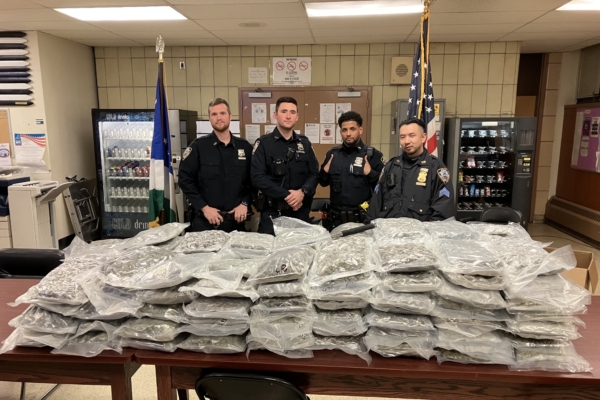
Approximately 22 minutes later, he was stopped by U.S. Border Patrol. Law enforcement officers stated that Zhuo’s driving behavior raised suspicion, and upon approaching the vehicle, they detected a “strong” smell of marijuana. Subsequent vehicle search revealed 211 vacuum-sealed packages containing around 207 pounds (about 94 kilograms) of marijuana.
After his arrest, Zhuo informed law enforcement officers that he was not fluent in English and explained the situation through translation software. He voluntarily allowed investigators to view his phone and the interior and exterior cameras of the van. The dashcam footage confirmed that the marijuana was indeed loaded into the vehicle by another man, not by Zhuo himself. The related videos also helped authorities identify the white man involved.
Zhuo also expressed willingness to cooperate with the investigation and even proposed continuing to deliver the goods to the designated location to help authorities arrest the recipients. However, law enforcement officers deemed the risk too high and did not accept his offer. These pieces of evidence were crucial in the defense’s argument that Zhuo was “unaware of the circumstances”.
However, the jury ultimately did not completely accept Zhuo’s claim of being entirely unaware. The prosecution’s key evidence also came from the dashcam footage.
After leaving the pickup location, Zhuo called a driver friend, describing the unusual situation that arose during the trip. He mentioned that instead of picking up a passenger, he ended up transporting a batch of boxes, and the client was willing to pay almost a thousand dollars.
During this call, Zhuo mentioned a strange smell inside the vehicle, asked his friend how marijuana smells like, and his friend attempted to describe the smell over the phone. The friend suggested at least three times that Zhuo open the boxes to confirm, but Zhuo refused each time.
Zhuo jokingly remarked that if these items were worth millions, he could sell them and retire, and he stated that he could use his chat records with the client to prove he was “just a deliveryman” if intercepted by the authorities.
The prosecution argued that although Zhuo may have initially been unaware of the contents inside the vehicle, upon loading the cargo, he started to strongly suspect but chose not to confirm the truth and continued towards New York.
This raised the crucial legal question in the case – “not knowing” and “intentionally avoiding knowing” are not the same. Federal laws allow, in specific circumstances, the principle of “willful blindness” to prove the defendant had a subjective intent of willful misconduct.
Zhuo’s defense attorney argued that suspicion does not equal knowledge. At that time, Zhuo was just a regular driver and had no reason to open the boxes entrusted by the client; furthermore, from the moment of discovery to being intercepted only in 22 minutes, the time spent on being shocked and hesitant was exhausted, indicating it was too short a time to prove he intentionally avoided the truth.
During the trial, the judge explained to the jury that Zhuo should not be convicted merely for being careless, making wrong judgments, or being foolish. The jury had to determine that he strongly suspected the goods might be illegal marijuana but deliberately chose not to further confirm.
After deliberating for approximately three and a half hours, the jury found Zhuo guilty of possessing marijuana with intent to distribute. Zhuo later requested the judge to overturn the conviction due to insufficient evidence, but his request was denied.
Prior to the trial, the prosecution offered Zhuo a lighter plea deal to admit to a misdemeanor charge of possessing a small amount of marijuana to avoid facing more severe federal drug charges and potential immigration consequences. However, Zhuo refused to accept it because he consistently claimed he did not have a knowing intent. He chose to undergo trial by jury, which did not end in his favor.
The court sentenced him to 27 months in prison yesterday. Having been in custody for approximately 18 months before the trial, he is expected to serve around 9 more months. Due to the serious drug felony conviction, Zhuo may also face deportation after serving his sentence, with his lawyer expressing plans to appeal.
When Zhuo was arrested, his wife, Minxing Zou, was around 8 months pregnant. Their daughter was born in February 2025 while Zhuo was still in custody. The family had requested prison authorities to allow Zhuo to be present for the birth of his child, but the request was denied. Zhuo was also not granted pre-trial release. By the time of the trial, his daughter was already one year old.
Another aspect of the case prone to misunderstanding is that marijuana is legalized in New York state. While the sale and possession of marijuana are legal in New York as well as throughout Canada, it remains illegal under federal law, making any amount of marijuana crossing the border illegal.
Additionally, according to court documents, the legal limit for personal possession of marijuana in New York state is 3 ounces, while the approximately 207 pounds of marijuana found in Zhuo’s vehicle exceeded this amount by over 1000 times.
Farhana Islam, a special agent from the New York office of the Drug Enforcement Administration, stated in a declaration yesterday that the sentence handed down in this case sends a clear message to those attempting to transport illegal marijuana across borders, that “such actions will have consequences”.