
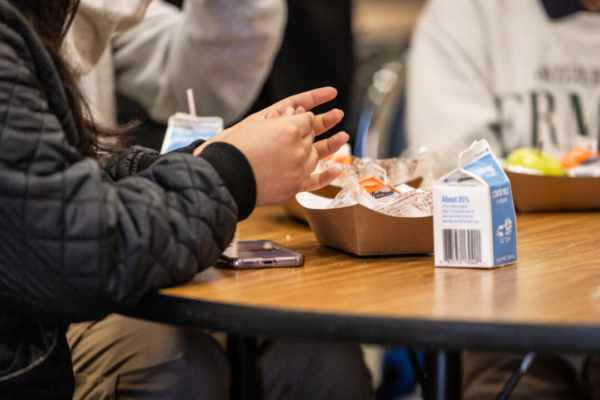
This week on Wednesday (August 19), California Governor Gavin Newsom announced in a press release the implementation of the “Universal Transitional Kindergarten” program starting from the new school year. The program aims to provide free preschool education to every 4-year-old child and offer two free meals to every K-12 public school student.
Newsom stated that California has provided 35 billion free school meals, invested 47 billion dollars in children’s mental health, increased special education funding from kindergarten to high school by 43%, served 2 million students nutritious meals, and equipped over 800 high-demand schools with reading instructors and literacy experts.
Furthermore, the “Universal Transitional Kindergarten” (UTK) program is estimated to save nearly $14,000 per family annually. Since Newsom took office as governor in 2019, California has allocated $12.5 billion to implement UTK, enabling children to start learning at an earlier age and helping parents save on early childhood education costs.
In 2010, California passed the SB1381 bill, which mandated that only children who turn 5 before September 1 can enroll in kindergarten, effective from the fall of 2012. Previously, the cutoff date was December 2 for children turning 5, resulting in 4-year-olds born between September 2 and December 2 not being able to start kindergarten in the fall.
Starting from 2021, California legislators initiated the UTK program with the goal of allowing all 4-year-old children to attend kindergarten. According to the California Budget and Policy Center, expenditures have reached approximately $30 billion since the comprehensive expansion of the program in the first year (2025-26). This includes a $19 billion increase in student attendance numbers and an $11 billion reduction in the student-to-teacher ratio (mandating that schools maintain a 1:10 teacher-student ratio).
Moreover, in the academic years 2021-22 and 2022-23, the government allocated around $12 billion as one-time funding to support both the California State Preschool Program (CSPP) and kindergarten education.
To alleviate the burden of early childhood education costs, legislators raised the minimum guarantee in bill 98 for the academic years 2022-23 and 2025-26, requiring a higher proportion of education funds to be allocated from the state general fund.
In the first academic year of 2022-23, 116,786 eligible children were enrolled, while in 2025-26, the number of eligible 4-year-olds reaching kindergarten rose to 213,313. However, the proportion of children actually registering for kindergarten has been decreasing: from 62% in 2021-22 to 52% in 2025-26.
Child attendance rates are crucial indicators for government funding. UTK funds are distributed to school districts through the Local Control Funding Formula (LCFF), using the Average Daily Attendance (ADA) to calculate the funds allocated to schools. The base allocation per day of attendance for the 2025-26 fiscal year is $10,256. Additionally, the formula provides additional funding based on the enrollment of foster system students, English learners, students from low-income families, or homeless students, resulting in approximately an extra $5,545 based on attendance rates.
In the 2025-26 year, legislators also increased funding for English learners, providing a one-time allocation of $10 million to the State Department of Education, along with $7.5 million for multilingual learners.
Newsom also announced support for working families, expanded learning opportunities, comprehensive development, after-school education, mental health, and nutrition programs and allocations. The Governor stated that California students are making continuous progress, with improvements in academic performance, particularly notable advancements among Black and Latinx students, as well as enhanced academic outcomes for students from low-income families.