
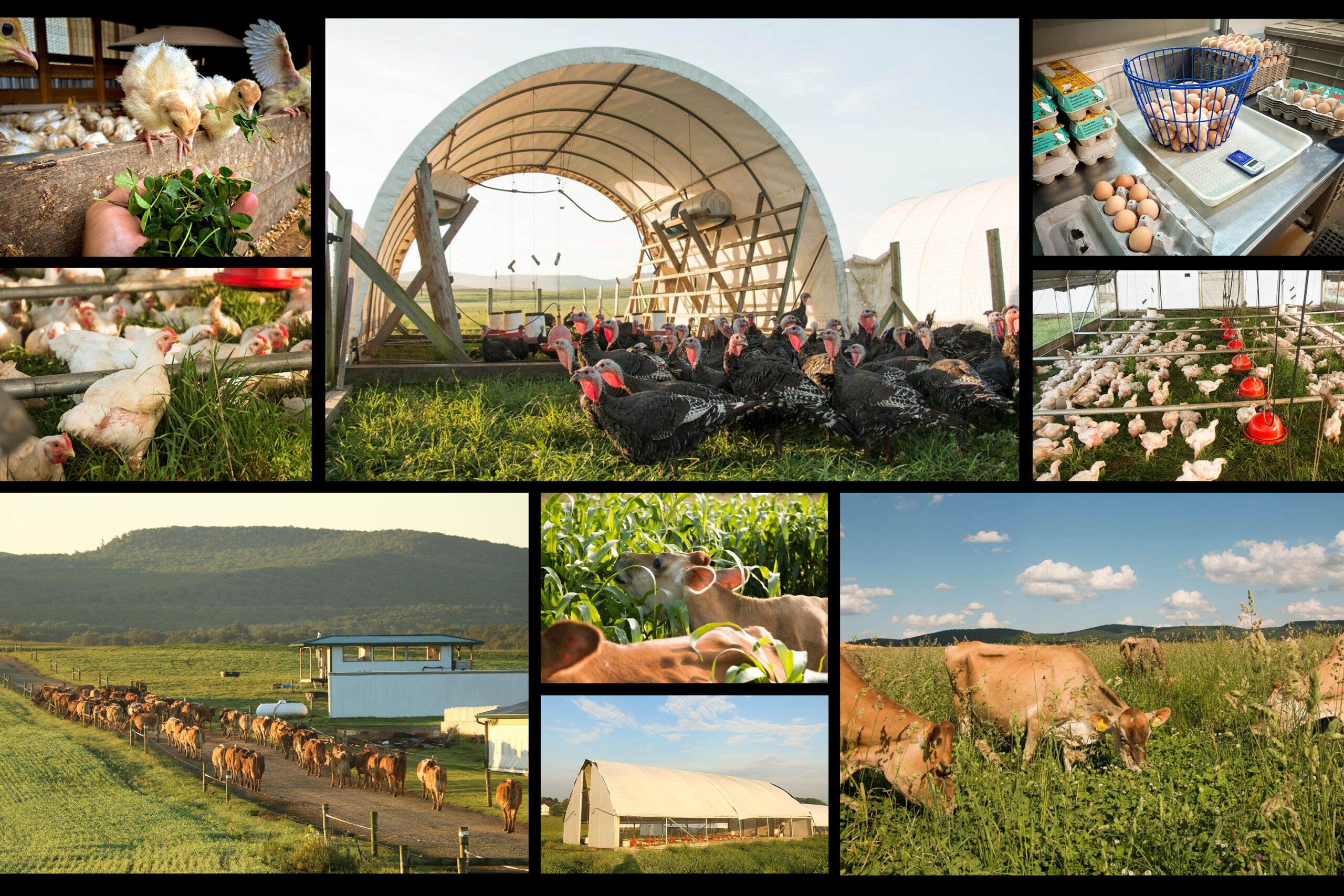
Joel Salatin hopes to free Americans from excessive regulation through food trading in neighborhoods. Operating a multi-faceted farm called Polyface Farm in the Shenandoah Valley of Virginia, Salatin is advocating a concept known as the “Food Emancipation Proclamation.”
Under his envisioned federal declaration, consenting adults would be able to directly buy and sell homemade and farm-produced food within their communities without relying on costly commercial infrastructure and burdensome governmental regulations.
Salatin’s mission reflects a trend among homesteaders and independent farmers who are dedicated to building local food networks – where food is grown and raised without the use of chemicals, allowing consumers to have a transparent understanding of the entire food production process.
At its core, the food sovereignty movement and local food networks focus on neighborly assistance and food exchanges to bypass many people’s lack of trust in the existing systems.
Salatin told The Epoch Times that the American food system is at a historical turning point, citing an aging farming community with the average age of American farmers currently around 60 years old.
He predicts that within the next 15 years, about half of America’s agricultural assets will change hands, calling it an unprecedented peaceful power transition in modern history.
In 2025, Americans allocated 56.3% of food spending to purchasing food consumed outside the home, including at restaurants, fast-food chains, and through delivery services. According to data from the U.S. Department of Agriculture (USDA), out of the total $2.51 trillion spent on food nationwide, out-of-home food spending hit a record $1.41 trillion.
Meanwhile, after deducting production costs, farmers now receive only about 5.8 cents from every dollar sold at retail. In the mid-20th century, this figure reached as high as 40 cents.
The concept of “food emancipation” is simple: allowing small-scale producers to legally and freely sell their products directly to consumers who want to buy them.
Salatin pointed out that the real barrier preventing young people from entering agriculture is not just acquiring land but also the inability to make profits through small-scale, high-value food production under existing rules.
Using a simple calculation, he explained the gap. For instance, on one or two acres of land, a farmer can raise 1,200 free-range chickens. If sold as whole chickens or cut-up meat for an average price of $30 per chicken, they could earn a total revenue of $36,000.
He elaborated that if the farmer could process these chickens into homemade chicken pot pies – devoid of artificial colors, seed oils, and industrial additives – and sell them as high-quality convenience food, the average value per chicken might jump to around $200. This way, on the same plot of land, the same batch of chickens could generate an income of $240,000.
However, once farmers shift from raw material processing to producing pre-made foods, the regulatory barriers sharply increase – from using a home kitchen with existing equipment to what Salatin described as “having to meet a $500,000 investment requirement to sell a chicken pot pie.”
Edwin Shank, owner of The Family Cow in Chambersburg, Pennsylvania, revealed to The Epoch Times that following a university recommendation to prioritize quantity, he expanded his dairy herd from 40 to 300 cows, almost losing his family’s four-generation farm in the process.
Despite being able to fill a semi-truck with milk every two days, Shank’s family was on the brink of bankruptcy.
Milk payments were made monthly – the exact amount at the discretion of the processor. The bank manager warned him that if the situation did not improve within three to four months, he would lose his farm.
During that time, a family photo they took looked idyllic – flowers, six children, a tidy yard. But behind the smiles, they were “losing the farm.”
“The reality was inside the fence, the hope was outside the fence,” he quoted an average dairy farmer saying, who described, “It’s not easy being a farmer today.”
The Shank family’s response was to step outside the fence. They transitioned the farm into a certified organic operation and, armed with borrowed funds and minimal capital, began selling raw milk directly to consumers from the farm following Pennsylvania’s regulations. Unable to afford modern facilities, they purchased used refrigerated semi-trailers for a few thousand dollars each, bolted them together, and assembled a makeshift cold storage.