
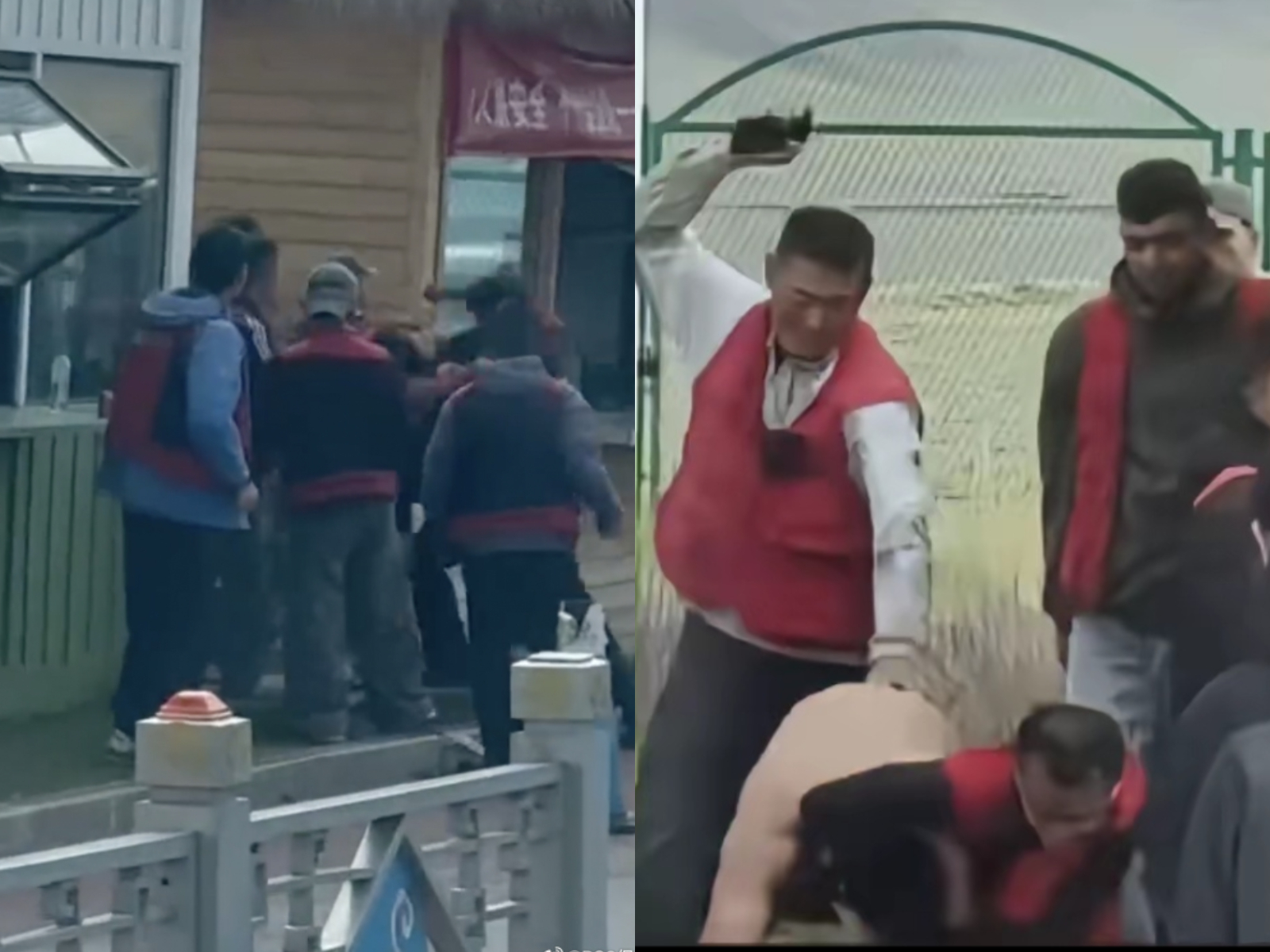
On the afternoon of July 23, a violent incident occurred in the Sailimu Lake Scenic Area in Xinjiang, where a tour bus driver was surrounded and beaten by several staff members, resulting in injuries all over his body. After the incident was exposed online, the scenic area immediately reported it, leading to the dismissal of the 7 involved staff members and they have been taken into custody.
According to the driver involved, who posted a video on social media, the dispute occurred when he was buying tickets for passengers and had an argument with the staff. “I couldn’t get the tickets, they said it would only take two minutes over the phone, so I waited at the counter for two minutes, but they refused and asked me to queue again.” Later, they insulted him and his family, escalating the conflict. The video shows multiple staff members in uniform from the scenic area surrounding and attacking a man.
As reported in a video by Dahe Daily, the tour bus driver mentioned that his clothes were torn and he suffered injuries all over his body.
The video quickly spread on the internet, sparking anger among netizens. Many criticized, saying, “What kind of place is this? Why are there so many thugs?” “Seems like the underworld is getting involved.” “Who dares to go there now, what if they get beaten too?”
On the morning of July 24, the Management Committee of Sailimu Lake Scenic Area in Xinjiang announced on their WeChat public account that around 5 p.m. on July 23, at the entrance of the scenic area, a staff member was in a physical altercation with a tour bus driver during ticket verification, which escalated into a fight involving 7 people.
Following the incident, the 7 staff members involved have been dismissed and taken into custody that same evening.
Public records show that Sailimu Lake is the highest-altitude and largest high-mountain cold-water lake in Xinjiang, formerly known as the “Pristine Sea.” Located at the end of the warm and moist Atlantic airflow, it is often referred to as the “last tear of the Atlantic Ocean.”