
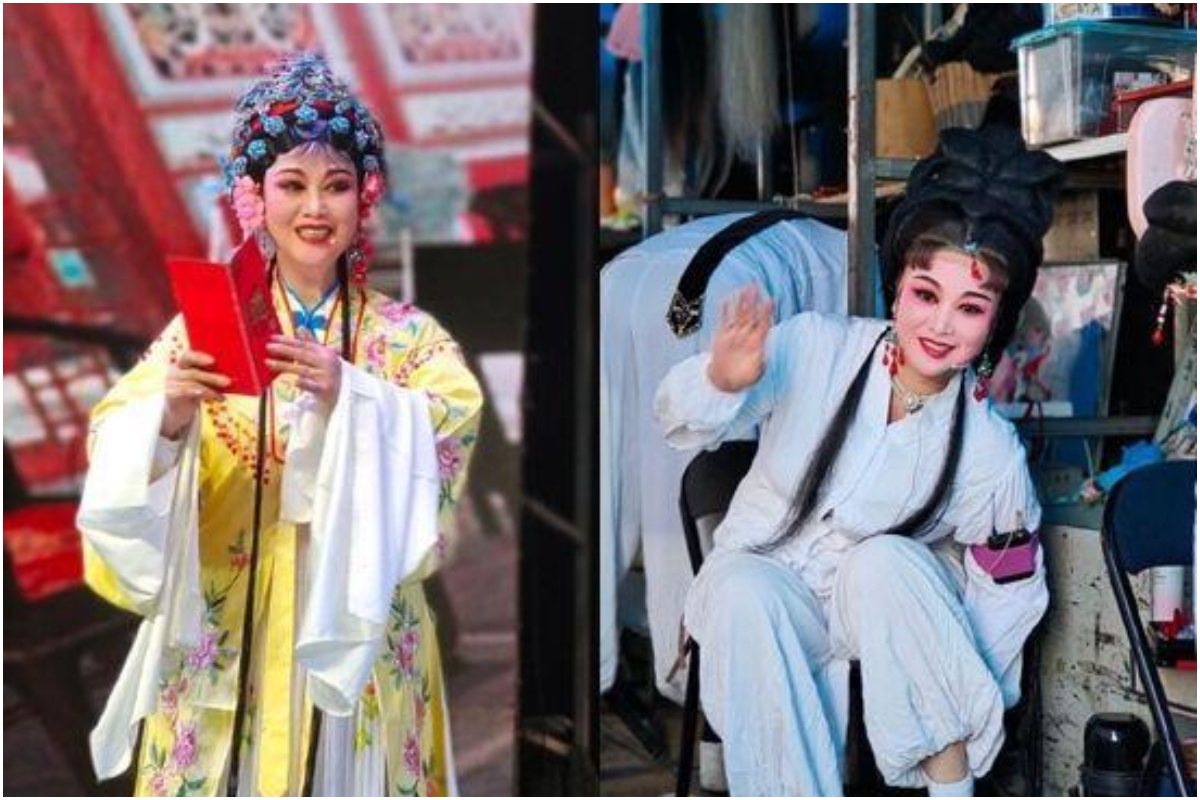
59-year-old mainland Chinese Yue opera actress Qian Shuiming tragically lost her life recently during a rural performance tour when she accidentally fell into the river while washing her costumes late at night. Her body was discovered by villagers on the morning of the 12th.
According to reports from Chinese media, on the night of October 11th, the troupe concluded their nighttime performance in Xiaojiazhuang, Wujiang, Suzhou, Jiangsu. In order not to delay the next day’s stage performance, Qian Shuiming, after removing her makeup, went alone to the nearby riverbank to wash her costumes, hoping to dry them overnight.
The following morning, local villagers passing by the river noticed her body, with an unfinished costume nearby. After on-site investigation by local police, it was determined that due to the slippery conditions of the river bank at night and exhaustion from consecutive performances, her death was ruled as accidental drowning, with suspicions of foul play ruled out.
Qian Shuiming, aged 59, from Nanxun, Huzhou, Zhejiang, stepped onto the Yue opera stage at the age of 16, specializing in playing “huadan” roles. She had been touring rural areas with a private Yue opera troupe for years, enjoying a good reputation within the local opera community and among fans.
The tragedy of Qian Shuiming not only signifies personal misfortune but also sheds light on the challenging realities and industry hardships faced by grassroots private opera actors in China, particularly in the Jiangsu, Zhejiang, and Shanghai regions.
While national and provincial state-owned major theater troupes enjoy financial allocations and glamorous stages, thousands of grassroots private troupe actors face the harsh realities of “high intensity, low security, harsh environments, and lack of opportunities”.
Grassroots private opera troupes in mainland China are often referred to as “itinerant village troupes,” whose core survival relies on traveling to perform at rural temple fairs, ceremonies, or corporate celebrations. For most of the year, these troupes are on the move, with actors cramped in makeshift tents or on concrete floors, even sleeping on bare stages backstage.
The root cause of Qian Shuiming’s tragedy lies in the lack of modern living facilities for mobile grassroots stages. Facing heavy, delicate silk costumes that easily absorb sweat, actors, in their exhausted state after performances, are left to wash them by the river at night to ensure they are ready for the next day’s show. Poor visibility at night, extreme fatigue, and outdoor conditions make the riverside a hidden high-risk area.
Furthermore, the income of ordinary private opera actors is extremely low and unstable, with interruptions in performances due to agricultural seasons or bad weather resulting in immediate income loss. As one industry insider stated, “Once the makeup is removed, they are just ordinary rural aunties and uncles.”
Renowned actor He Saifei publicly criticized the current state of the industry, stating that “it is difficult for grassroots opera actors to make a living.” Unlike state-owned theater troupes enjoying cultural subsidies, private troupes operate purely on market principles, with the vast majority of grassroots actors lacking formal employment status and basic social security coverage. Many cannot even access essential benefits like medical insurance, leaving them vulnerable to occupational hazards such as skin lesions from prolonged makeup use, hair loss and headaches from wearing heavy headgear, and severe throat inflammation and rheumatism from performing on cold outdoor stages without heating.
According to insiders, most active Yue opera actors performing on rural stages in Jiangsu and Zhejiang are like Qian Shuiming, older performers in their 50s who came from the golden era of the 1980s. As they age, grassroots private opera faces a slow decline marked by diminishing creativity, loss of audience, and contraction of repertoire, posing a threat to its survival.