
On Friday, August 28th, the British Broadcasting Corporation (BBC) reported that it is now harder to interview Tibetans than residents of Pyongyang. It is difficult to know the true situation of the disaster-affected people.
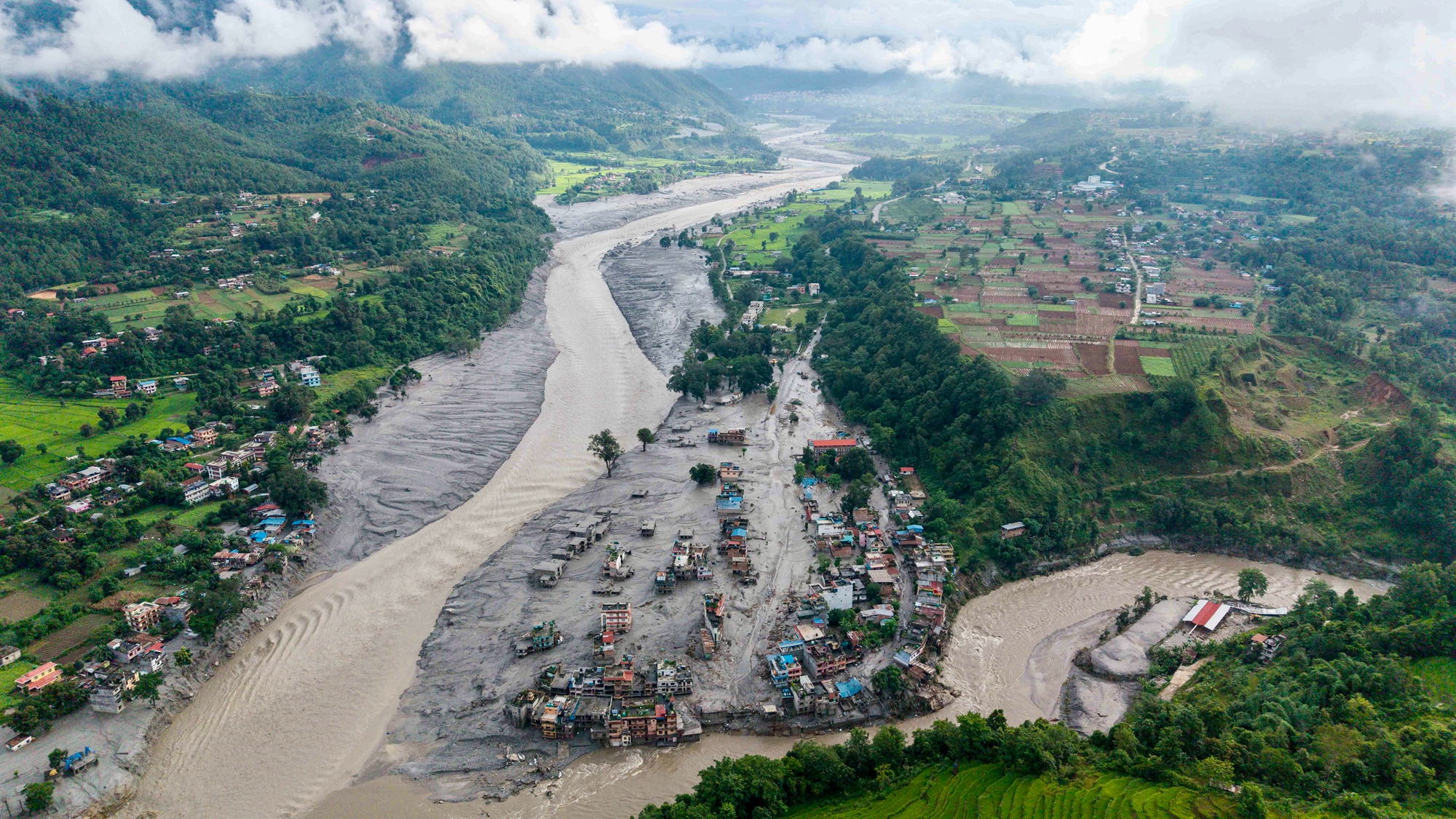
On Wednesday, the morning of the 26th, a large-scale mountain valley landslide and flash flood occurred near the border between Tibet, China, and Nepal, causing a significant number of casualties. Due to the remote location of the disaster in a plateau valley, rescue operations are challenging, and many individuals are currently missing.
The shocking footage and videos captured by surveillance cameras quickly circulated on social media platforms worldwide and appeared on television screens around the globe, except in China. To date, no Chinese domestic television station has aired footage of the landslide in Tibet and Nepal.
So far, the Chinese state-run media has only broadcast a still image. In the strictly censored domestic Chinese network, these videos and related discussions are swiftly deleted.
While major media outlets worldwide focused on the disaster in the Himalayan valley, the Chinese state television broadcasted Xi Jinping’s book release during its most significant news program on Wednesday.
According to the BBC, compared to content on China and international networks over the past few days, the Chinese firewall is conducting even more rigorous censorship than ever before.
For years, the Chinese government has been repressing Tibetan protest activities, sometimes resorting to violence, severely violating the human rights of Tibetans.
The name “Tibet” itself is on the sensitive list of the Chinese government, and after the flood disaster, Beijing became even more alert.
Publicly, Beijing updates the numbers of missing and deceased individuals daily, reports on the latest progress in rescue operations, and even openly discusses the potential danger of another possible blockage overflow. However, apart from this, there are hardly any details. There are no descriptions from survivors in Tibet, and there are almost no user-uploaded videos showing the fatal moments or consequences.
BBC reporter Laura Bicker wrote: “As a journalist who has reported on North Korea, I find it easier to contact interviewees in Pyongyang than those in the Tibetan capital, Lhasa.” Without permission from the Chinese government, foreign journalists and officials are not allowed to visit Tibet.
Bicker pointed out that this does not mean Beijing is indifferent to the disaster but rather stems from fear.
Chinese Premier Li Keqiang has swiftly rushed to the disaster area to inspect the post-disaster cleanup work. For the second-ranked leader of China to conduct on-site inspections so promptly after a major disaster is rare.
The BBC reported that the Chinese government is concerned that such a disaster could intensify public dissatisfaction, whether towards government measures or the lack of preventive capabilities. They may also fear the impact of such tragedies, which could become a rallying point for the community, especially in a community where faith has long played a core role.
According to Tibetan human rights activists, Tibetans could face detention or arrest if they agree to be interviewed by foreign journalists or post any content online considered contrary to the official Chinese narrative.