
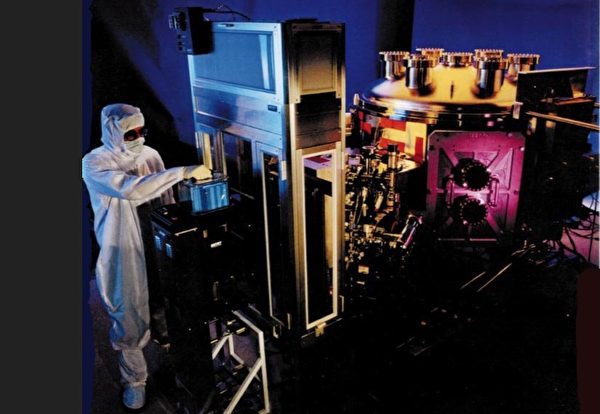
According to reports from the media, the U.S. government is set to tighten the restrictions on semiconductor chip exports to China. Washington is preparing to push for a complete ban on ASML, a Dutch company, from selling almost all chip manufacturing equipment to China, including older DUV equipment. Maintenance services for equipment already delivered may also be at risk of being cut off.
The U.S. Congress is currently debating the “Match Act,” legislation that aims to transform previous non-binding recommendations for allies into enforceable measures. This move is intended to compel allies to align with the U.S. on sensitive technology export policies.
Once this legislation is passed, even the non-advanced model of deep ultraviolet lithography machines (DUV) that ASML is currently permitted to export will also be banned. This could even lead to a halt in maintenance services for equipment delivered to China. If the Netherlands refuses to comply, the U.S. could impose sanctions on them.
The U.S. aims to restrict China’s access to advanced chips in order to curb the progress of China’s military technology.
ASML is the only company globally capable of producing the lithography machines required for manufacturing the most advanced chips, which once again places it at the center of geopolitical maneuvering.
Previously, under U.S. pressure, the Dutch government already limited ASML’s sales of the most advanced extreme ultraviolet lithography machines (EUV) to Beijing, as well as the more advanced versions of deep ultraviolet lithography machines (DUV).
It is worth noting there is a controversial loophole in the legislation: while ASML’s DUV lithography machines face a sales ban, U.S. companies are still permitted to sell the most advanced chip etching equipment to Chinese customers.
Media reports have revealed that China has already discovered and utilized advanced etching technology in conjunction with deep ultraviolet lithography machines to produce high-end chips that typically require extreme ultraviolet lithography machines.
The U.S. government had already restricted the export of such etching equipment in 2024, but at that time, a comprehensive export ban was not implemented.
Dutch government officials are currently lobbying actively in Washington to block the passage of the “Match Act,” but the chances of success seem slim.
With both the Republican and Democratic parties supporting the proposal, the legislation is moving towards inclusion in the U.S. defense budget, which nearly always receives approval from Congress.
Furthermore, ASML’s own production heavily relies on U.S. suppliers. Previously, the U.S. successfully pressured the Dutch government to further tighten export restrictions to Beijing by leveraging ASML’s supply chain, which is one of the reasons why The Hague has less leverage in this current confrontation.