
Peruvian Port Development Project in Corio Attracts International Attention
The development project in Corio Port in southern Peru has caught the interest of enterprises from various countries. Rohel Sánchez, the governor of the Arequipa region, announced on Monday (October 12) that companies from the United States, China, India, South Korea, and other countries have shown interest in investing. The total investment for the project is estimated at around 8.445 billion US dollars, which is set to enhance Peru’s port transportation capacity. This project comes at a time when China is expanding its presence in Peru’s port and mining sectors.
According to the Peruvian news agency Andina, Sánchez attended the event “Corio Port City: A New Development Platform for the South” where he presented the project plan. He also announced that the Arequipa regional government has signed a cooperation agreement with ProInversión, Peru’s private investment promotion agency, to jointly promote the project to investors both domestically and internationally.
Sánchez revealed that the regional government has completed the planning for the Corio Port City, with approximately 34,600 hectares of land already registered. He stated, “Currently, companies from the United States, China, South Korea, India, Turkey, the Netherlands, and other countries have shown interest and have been in contact with us.”
The planned port core area covers 1,127 hectares and is expected to be developed using a public-private partnership (PPP) model. It will include the construction of an industrial and research development zone, as well as a logistics facility zone.
The Arequipa regional government estimates that the entire project will create over 50,000 direct job opportunities and 150,000 indirect employment opportunities. Through technical training, innovation, and knowledge exchange, the project aims to drive local economic development. Additionally, the project will support the planning of transportation infrastructure such as roads, railways, and airports.
Sánchez did not disclose the specific names of companies interested in investing or proposal details. The overall project plan was approved by Peru’s National Port Authority in September 2026.
The Corio Port project plans to construct a multi-purpose dock mainly for handling clean bulk cargo transportation, as well as general goods and containers. The total investment will be carried out in three stages, with an approximate investment of 652 million US dollars in the first stage, and 109 million US dollars and 83 million US dollars in the second and third stages respectively, totaling around 8.445 billion US dollars.
As per the plan, the water depth of Corio Port will exceed that of Chancay Port in northern Peru, aiming to accommodate larger vessels and enhance the port’s capacity to handle large cargo ships.
Luis del Carpio, the director of ProInversion, also mentioned the possibility of using Corio Port to transport Peru’s copper resources to Asia.
Peru is a significant copper producer globally, and the improvement of port transportation capacity will help expand mineral exports, providing more transportation options for trade between Peru and Asian markets.
As Corio Port attracts attention from international investors, the United States is also seeking to balance China’s influence in Latin America. With Peru’s mineral resources and its Pacific-facing location, local ports have become crucial hubs for international trade and regional economic competition.
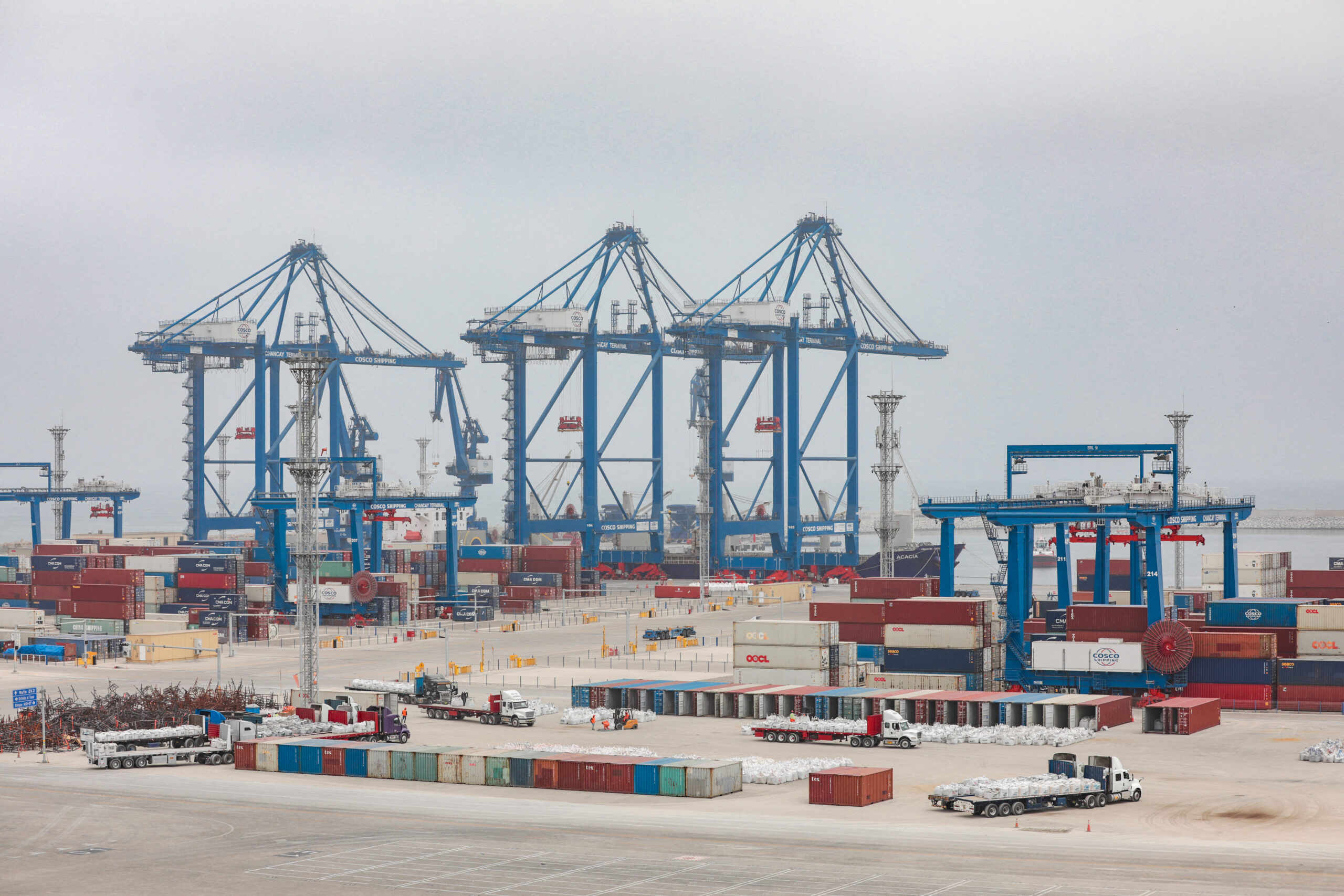
China is one of Peru’s major markets for mineral exports and a significant source of infrastructure investment. The Chancay Port, which began operating at the end of 2024, involves COSCO Shipping Ports, a subsidiary of China’s COSCO Shipping Group, providing docking facilities for large vessels, opening up new trade routes between South America and Asia.
Chinese companies have invested in other port projects in Peru as well. In September this year, the Peruvian government announced that Jinzhao Group from China plans to build the San Juan de Marcona Port in the Ica region by 2027, with an investment of approximately 405 million US dollars and a 30-year operating concession.
Once completed, the port is expected to become the third-largest port in Peru, primarily for transporting bulk goods, iron ore, copper, and other resources.
Chinese investments in Peru’s ports and mining sectors are not only driven by commercial interests but also have broader geopolitical implications. These Chinese companies often have ties to the Chinese government, and their large-scale overseas port and mining investments are closely related to China’s national strategic goals. Institutions like the Center for Strategic and International Studies (CSIS) have analyzed that China’s deepening economic ties with Latin American countries through infrastructure, trade, and resource investments could further expand its economic influence in the region and increase the dependent countries’ reliance on the Chinese market and capital.
With the Corio Port project seeking international investments, the construction of southern Peru’s ports is not only vital for local economic development but also becomes part of the competition for trade and mineral transportation opportunities in South America among various countries.