
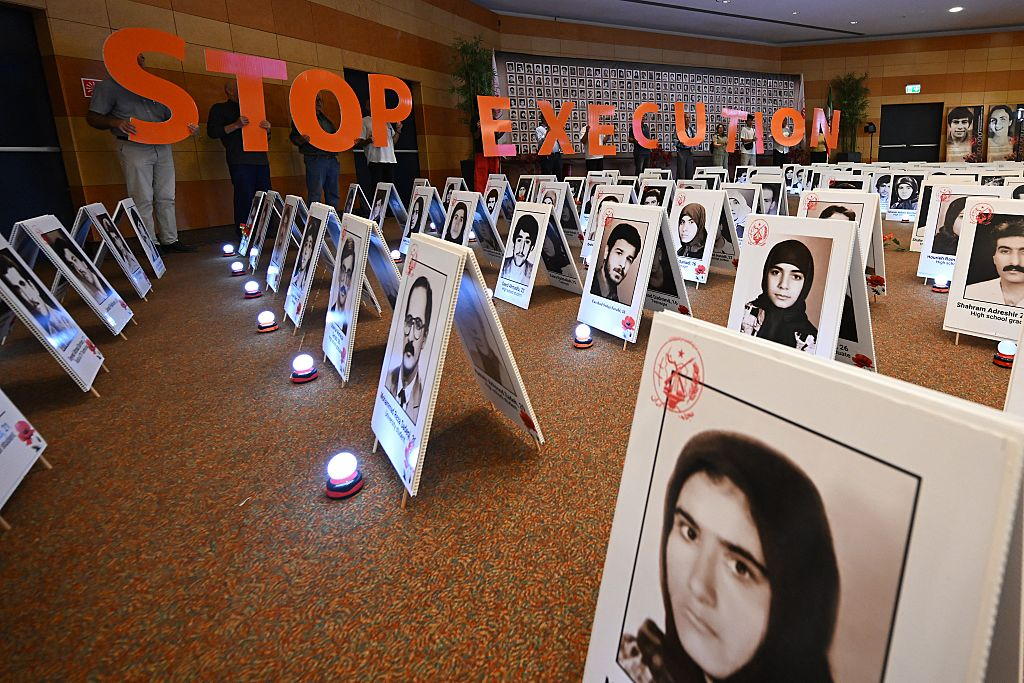
On Monday (August 3), the Tehran regime executed two men, claiming they had sent sensitive military and security coordinates to Israel during the “12-day War” in June 2025 and the current Iran-Israel conflict. The report from Mizan, a news agency under Iran’s judiciary, mentioned that the Supreme Court of Iran upheld the death sentences of Omid Behzad and Pouria Safvat. These two individuals were reportedly arrested by the Islamic Revolutionary Guard Corps’ intelligence department, but specific details regarding the time, location, and manner of their detention were not provided.
The official media report alleged that General Behzad passed military coordinates to an administrator of a Telegram channel associated with the Israeli intelligence agency Mossad. The media also cited Behzad’s “confession” as the basis for the sentence. However, human rights organizations have long pointed out that political prisoners in Iran are often tried in secret courts lacking due process, and some “confessions” are believed to have been obtained under torture or threat, leading to skepticism from the public towards the official “confessions”.
Human Rights Activists News Agency (HRANA) previously informed the Associated Press that two men executed earlier on similar charges were said to have been sentenced in secret without due process, with related “confessions” often obtained under torture and threat.
Moreover, the official media described Safvat as “a soldier of (Israeli Prime Minister) Netanyahu” and accused him of providing information about the air defense system to Mossad and Iran International. However, the report did not provide verifiable evidence.
Iran International is a Persian-language news agency based in London, long accused by Iranian authorities of being associated with foreign powers. In response, Tehran authorities claimed that Iran International is linked to Israeli intelligence agencies.
This death penalty case continues Iran’s trend in recent years of arresting and executing some citizens on the grounds of “national security.” Several protesters have been arrested, with authorities sentencing or executing some individuals on charges such as espionage. Human rights organizations and activists assert that Iran continues to escalate domestic repression post-conflict. They believe this wave of high-pressure actions may aim to deter people from initiating protests again due to economic and political crises.