
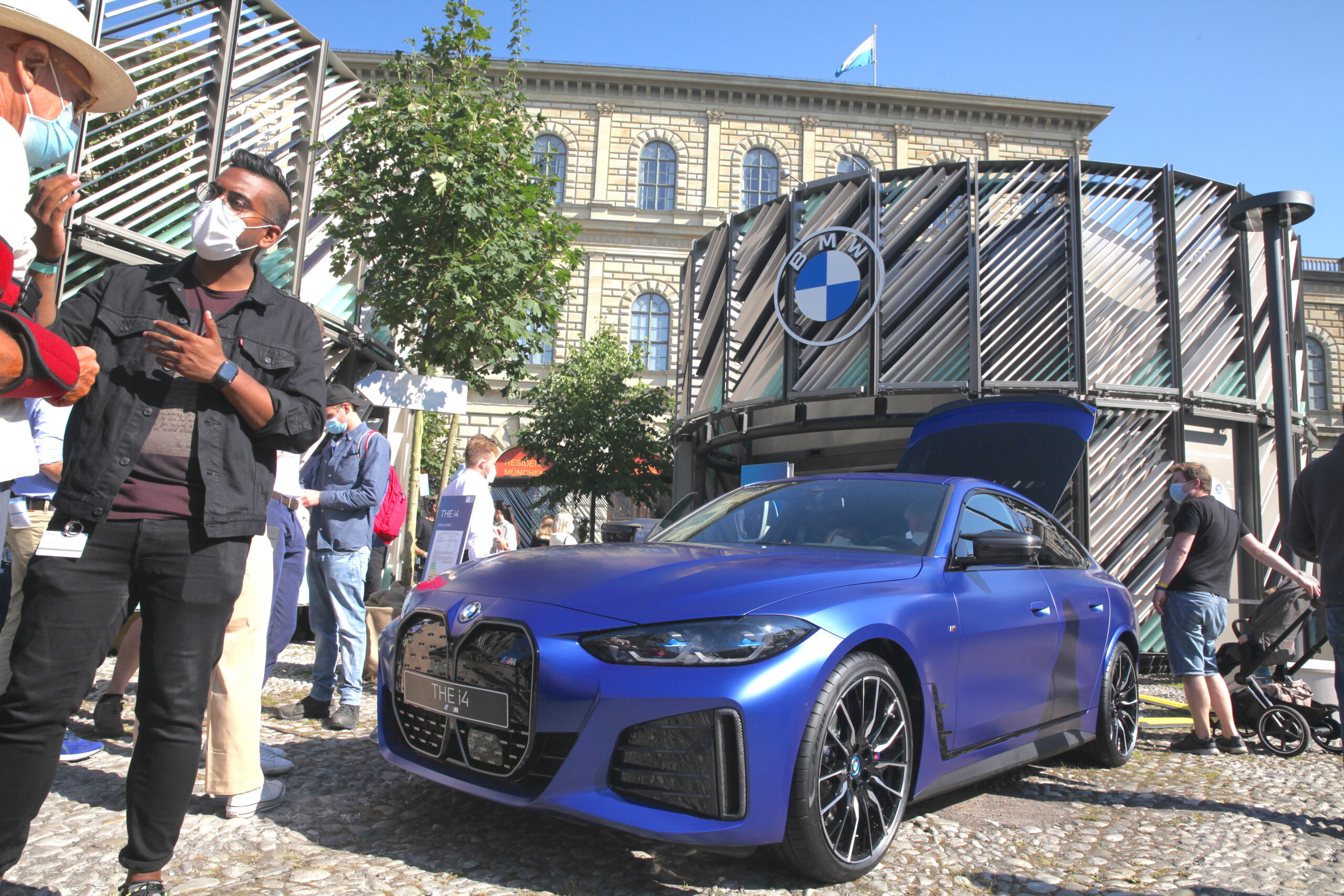
Due to a drastic decline in sales in the largest single market, China, and the impact of U.S. tariffs and Middle Eastern tensions, German luxury car manufacturer BMW AG has reached an agreement with the union to globally cut around 8,000 jobs by the end of 2027, equivalent to 5% of its total workforce.
This round of layoffs is the latest restructuring plan in the troubled automotive industry in Germany. BMW will launch a “Voluntary Severance Program” from October 2026 to the end of 2027, coupled with natural attrition of employees to achieve its target.
According to sources quoted by major media outlets such as The Wall Street Journal and Bloomberg, the layoffs will mainly target white-collar employees in Germany, including those in research and development, planning, corporate functions, and management, accounting for about one-fifth of BMW’s white-collar workforce in Germany; frontline production workers at factories are not included in this round of layoffs.
As part of a broader downsizing plan, BMW plans to streamline and consolidate its team structures at various management levels.
By the end of 2025, BMW employed approximately 84,000 to 87,000 people in Germany (accounting for over half of its global workforce), with a total global workforce of around 154,000.
BMW saw a sharp 30% year-on-year decline in sales in China in the second quarter (dragging overall sales down by about 5% in the second quarter). Fierce competition from local electric vehicle companies led by BYD Co., coupled with the China real estate crisis, severely impacted local demand for luxury cars.
High operating costs for car manufacturers were influenced by the U.S. raising tariffs, the Iran conflict leading to global energy cost increases, and a decline in consumer confidence.
BMW’s new CEO, Milan Nedeljković, stated at an internal staff meeting, “What we are facing is a fundamental change in the industry rules. These challenges, whether it’s the rise of protectionism or deep-seated market shifts, will not disappear.”
Following six weeks of negotiations, Nedeljković reached an agreement with the Works Council representatives. Horst Ott, an official of the Bavarian branch of the IG Metall metalworkers’ union and a member of the BMW supervisory board, confirmed that the collective bargaining agreement for the carmaker remains in effect.
BMW expects the restructuring measures to incur one-time expenses in the second half of 2026 but anticipates that the voluntary severance plan will significantly boost profitability by 2028.
Long viewed as a resilient representative in the German automotive industry, BMW is now also facing crisis. Other industry peers are facing substantial pressure to downsize.
Volkswagen AG CEO Oliver Blume is seeking to cut 50,000 to 100,000 white-collar employees and considering the closure of four German plants.
Porsche AG has reached an agreement with the union to cut 5,000 jobs by 2035 (in addition to the 3,900 agreed upon last year, the reduction rate exceeds 20%).
Audi/Mercedes-Benz is also affected by the shrinking Chinese market and profitability in electric cars, and is implementing cost-cutting plans.
According to Bloomberg, Deka Investment’s sustainable and corporate governance director Ingo Speich and Stefan Bratzel, director of the Center of Automotive Management (CAM) in Germany, both point out that domestic Chinese brands are rapidly eroding the market share of German car manufacturers. For BMW and its peers, becoming leaner, more efficient, and more agile is an imminent choice.