
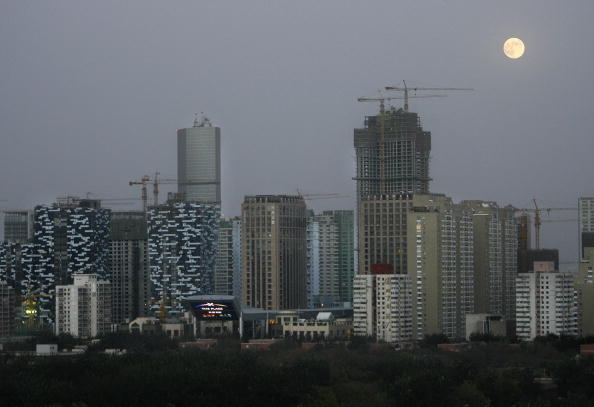
The Chinese real estate market has been in a long-term slump, affecting numerous upstream and downstream enterprises, dragging down the economy and leading to a high unemployment rate, with severe insufficient domestic demand. On August 7th, multiple departments in Beijing jointly issued new policies to significantly reduce the threshold for buying houses and expand the scope of using public housing funds in an attempt to stimulate the property market.
Analysis suggests that Beijing has not fundamentally solved the root of the problem on the demand side, and this “squeezing toothpaste” style of policy is contrary to everyone’s expectations. In addition, public feedback is not optimistic.
On the evening of August 7th, the Beijing Municipal Commission of Housing and Urban-Rural Development, the Beijing Municipal Planning and Natural Resources Commission, and the Beijing Housing Provident Fund Management Center jointly issued the “Notice on Further Optimizing and Adjusting the City’s Real Estate Policies,” which will be implemented from August 8th onwards.
For non-Beijing residents purchasing commercial properties in the entire city, the requirements for social security or individual income tax payment have been unified to “1 year” (previously required 2 years), while the number of units for purchasing commercial properties remains unchanged. That is, non-Beijing families with a social security or individual income tax payment of one year can purchase one unit of commercial housing within the Fifth Ring Road; multi-child families can purchase an additional unit; outside the Fifth Ring Road, there is no limit on the number of units that can be purchased.
For parents who gift the city’s commercial housing under the family name to adult children, there will no longer be a qualification verification for purchasing houses, and residents can directly apply for housing transfer registration with relevant materials.
Furthermore, adjustments have been made to the maximum loan amount available through the housing provident fund.
If one person in the purchasing household is a contributor to the housing provident fund, the maximum loan amount for the first set of housing purchased with the housing provident fund is 1.2 million yuan, and for the second set, it is 1 million yuan. If both spouses are contributors, the maximum loan amount for the first set is 2.4 million yuan, and for the second set, it is 2 million yuan.
Additionally, for families in Beijing with no housing or only one set of housing, they can use the housing provident fund for subsequent purchases; those who have paid off the housing provident fund loan can reapply; and new support for renovation by withdrawing funds from the housing provident fund is included.
In response to this, Chinese issues expert Li Tingqian told Dajiyuan, “At the end of last year, Beijing just reduced the requirement for non-Beijing residents to pay social security/individual income tax from 3 years to 2 years, and today urgently issued new policies to reduce the requirement from 2 years to 1 year. The number of units for purchase within the Fifth Ring Road remains limited to one commercial housing unit, and there is no restriction outside the Fifth Ring Road.”
He analyzed that in the past 20 years, housing prices in Beijing have been on the rise. Now, the situation has completely reversed, a real estate crisis has erupted, and the myth that Beijing’s houses only rise and never fall has been shattered, with prices generally falling by 3 to 4 percent and transaction volume continuing to shrink.
At the same time, the outflow of external population is evident, especially the serious outflow of young people. From 2015 to 2024, the number of young people residing in Beijing decreased from 4.618 million to 2.489 million, a cumulative decrease of 2.129 million, with the proportion dropping from 21.3% to 11.4% annually. On average, Beijing has been losing 210,000 young people per year over the past decade, with 550,000 fewer in 2020 alone. Wherever the outflow of population increases, housing prices are bound to trend downward.
Li Tingqian pointed out, “The policy in Beijing to further lift the purchase restrictions does not fundamentally address the root of the problem on the demand side, allowing houses to return to their rightful attributes, changing everyone’s income expectations, and restoring houses as a means of wealth appreciation. The current ‘squeezing toothpaste’ style of policy is contrary to everyone’s expectations.”
Moreover, public feedback on the new property policies in Beijing is not very positive. On Weibo, many netizens expressed their views.
“The policy has indeed been slightly relaxed, but the majority still cannot afford it, right?” “It seems like this policy is not very effective. Those who can’t sell before still can’t sell, and those who don’t want to buy are still reluctant to do so.”
“House agent’s golden saying, not very useful. What we lack now is not the house tickets, but money!”
Weibo influencer and public figure, “Liu Ye Adan,” said, “My first reaction to seeing this is that it hasn’t reached the bottom yet because when the bottom is reached, generally there is no need to introduce favorable policies; the opposite case would indicate that the market has not stabilized yet.”
Self-proclaimed Chinese new media ferryman, writer, and Weibo influencer “Yu Haiqing” expressed, “Looking at the issue of housing, each stage should be viewed with the perspective of that particular stage. If these policies were introduced a few years ago, it would have been different. However, the current situation is vastly different from back then. The key is that people currently have no money on hand, and there are many unpredictable factors about the future, leading to some anxiety. People feel that holding onto their money in their hands would be better, postponing buying as much as possible. Therefore, the best approach in this situation is to take a decisive step, of course, this also has certain drawbacks, as sometimes even after taking a decisive step, the expected results may not be achieved, but it is better than squeezing toothpaste little by little. There is still a part of the population in the market that has money on hand, they can buy or they can also choose not to buy, and for this group of people, they need some stimulation.”