
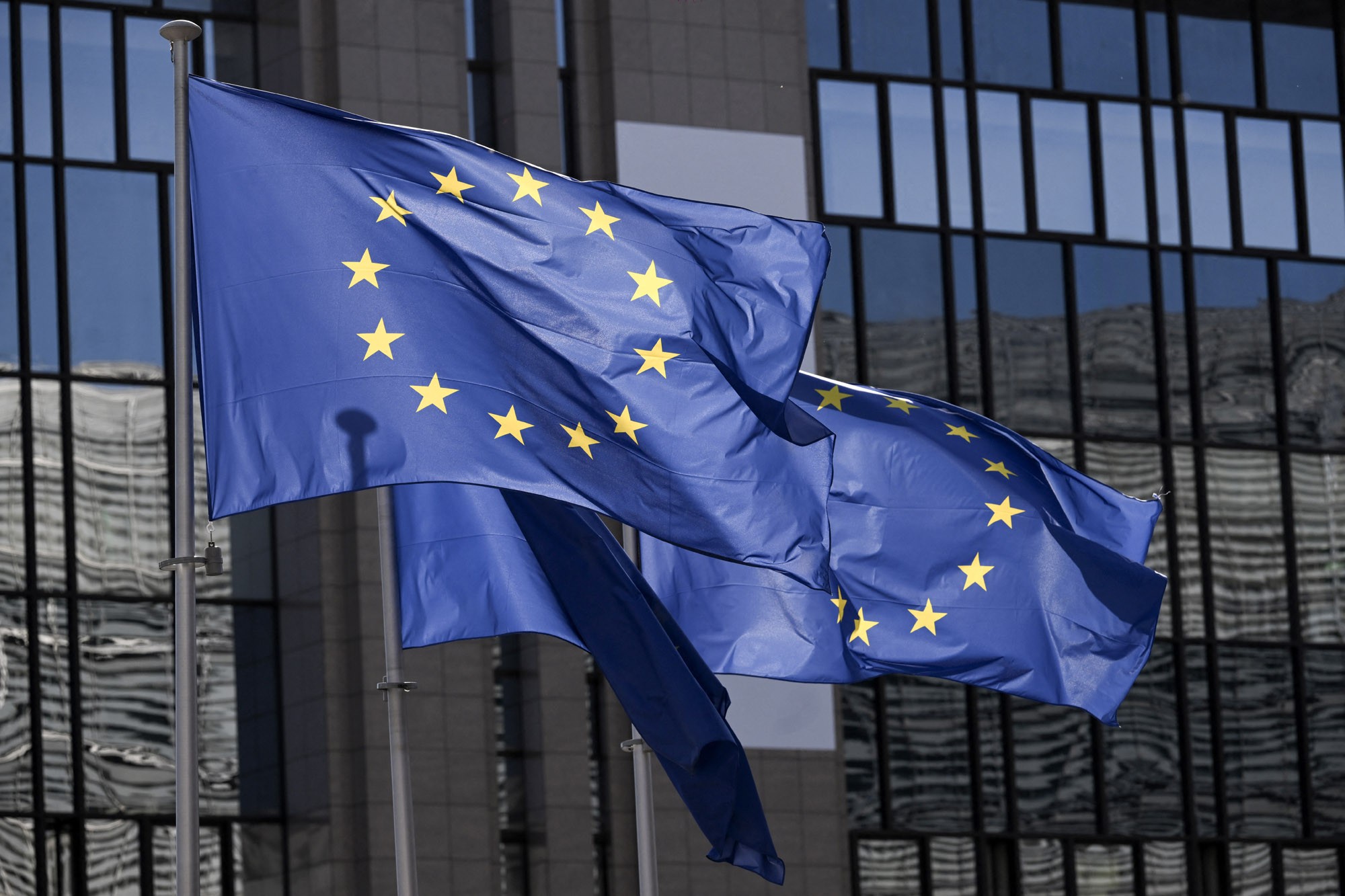
Facing the ongoing expansion of the trade deficit with China, the European Union is preparing to use more trade and economic policy tools and is making efforts to reduce its reliance on key mineral resources from China. Many experts have pointed out that the core dilemma facing the EU is not a lack of tools, but rather diverging interests among member states, deeply interconnected existing industrial chains, and the significant financial and time investments required to construct alternative supply chains. Experts have further analyzed potential countermeasures the EU could take against China’s control of the rare earth supply chain.
EU Commission President von der Leyen stated in her annual State of the Union address to the European Parliament on September 16 that the EU’s daily trade deficit with China reached an average of 1 billion euros last year, pushing the imbalance to a “breaking point,” with Europe facing a “second China shock” due to deindustrialization.
“Some say the second China shock is on its way. But actually, it’s already here. This shock is visible in communities and factories across the EU, leading to deindustrialization in the heart of the European industry. This is unsustainable,” she said.
Von der Leyen stated, “We will use all available tools to rebalance our relationship.”
Previously, the EU set a deadline for October, demanding substantive results from negotiations with China. The EU’s Trade Commissioner responsible for the negotiations, Maroš Šefčovič, noted that negotiations between the EU and China in sensitive areas such as automobiles, medical devices, and agricultural products have reached an unprecedented level of intensity.
If the negotiations do not yield concrete results, the EU may further resort to using trade defense tools.
The Financial Times previously reported that the EU is demanding voluntary restrictions on exports of hybrid vehicles by China, aiming to limit the Chinese share of hybrid vehicle sales in the EU market to around 15%; the EU had already imposed up to a 45% anti-subsidy tariff on Chinese electric vehicles.
At the same time, the EU Commission is preparing to revise public procurement rules, prioritizing European companies and restricting third-country companies with closed public procurement markets.
Sun Guoxiang, a professor at the Department of International Affairs and Business at Nanhua University in Taiwan, told Epoch Times that von der Leyen’s mention of “all tools” may include expanding anti-dumping and anti-subsidy investigations into Chinese goods, raising tariffs or establishing import quotas, as well as utilizing the EU’s foreign subsidy regulation to review Chinese companies’ investments and acquisitions in Europe.
Furthermore, the EU could potentially use international procurement tools to limit the participation of companies from “unequal countries” in public tenders and further strengthen supply chain reviews in areas such as electric vehicles, steel, solar energy, medical equipment, and key mineral resources.
He analyzed that while these measures can protect specific industries and force companies to diversify their supply chains, they may not significantly reduce the daily trade deficit of about 1 billion euros.
The trade imbalance between the EU and China is not just a matter of importing too many Chinese goods but also involves the EU’s own industrial structure. He believes that the deficit stems from the EU’s inadequate competitiveness in the manufacturing industry, high energy costs, and its reliance on intermediate products and rare earth minerals from China.
Sun stated, “A political combination may be more effective.” He explained that on one hand, the EU could use market access as a negotiation tool, trading for concessions from China such as subsidy cancellations and open government procurement; on the other hand, the EU could cooperate with Canada, Japan, and other major economies to establish common subsidy, rules of origin, and re-exportation rules while accelerating local investment and supply chain diversification in Europe.
Zheng Qinmo, Associate Professor at the Department of Diplomacy and International Relations at Tamkang University in Taiwan, stated that the EU’s real challenge lies not in having a diversity of tools but in whether member states can form a common policy and truly implement it.
He expressed that the EU has previously proposed using various tools multiple times, but “the more balanced it tries to be, the larger the deficit becomes.”
Using the example of the European automobile industry, Zheng stated that German car companies have long invested in China, so when Germany faces trade issues such as Chinese electric vehicles, it must also consider the interests of its companies in China.
“Therefore, the bigger issue for the EU is how to unite,” he said.
Extending from trade tools to industrial policies, he believes that the EU still needs to address its own industrial competitiveness and cost issues.
Zheng stated that low-cost production by Chinese companies, government subsidies, and economies of scale give China a competitive advantage in global markets. If other countries continue to rely on low-priced imports in the long term, their industrial capabilities may be squeezed.
He suggested that the current issue facing European and American countries is not about immediately detaching from China but about gradually achieving “de-risking” to establish more diversified supply chains.
Beyond the trade imbalance, reducing reliance on critical mineral resources is a crucial aspect of the EU’s policy adjustment this time.
Von der Leyen announced that the EU would establish a new European critical raw materials company to assist all 27 member states in acquiring and stockpiling necessary critical raw materials.
Von der Leyen emphasized that the EU urgently needs to procure and establish strategic reserves of critical raw materials, planning to establish the new European company for critical raw materials. She mentioned that the EU is highly dependent on China for many critical raw materials, with the reliance on some rare earth materials reaching up to 90%.
US economist Davy J. Wong told Epoch Times that China’s advantage lies not just in mineral reserves but in its complete industrial chain covering “ore acquisition, smelting, separation, purification, material processing, all the way to magnetic materials, batteries, and component manufacturing.”
“Locating the mines does not equate to establishing the supply chain.”
Therefore, Wong believes that in the short to medium term, the EU can increase supply sources, establish strategic reserves, and sign long-term contracts to reduce the risk of supply interruptions; in the medium term, it will need to invest in refining, separation, purification, and material processing capabilities in other countries.
“This can only reduce reliance, not completely replace China.”
He recommended that Europe should include the US, Canada, Australia, Latin America, Africa, Japan, and South Korea in supply chain layouts to form a diversified supply system.
On September 16, von der Leyen proposed to push Canada as the EU’s first “associate member” to deepen cooperation between them in economics, trade, security, critical raw materials, and other areas.
At present, the EU treaties do not specify the status of an “associate member,” and the specifics of its form and operation are yet to be determined.
Von der Leyen stated that the EU and Canada have broad shared interests on numerous issues and proposed further deepening cooperation in economics, trade, and security for both parties.
Sun Guoxiang believes that the most critical aspect of EU-Canada cooperation is whether they can effectively implement long-term agreements on critical mineral procurement, joint investment in refining facilities, defense industry integration, technical standards, and government procurement.
He stated that Canada possesses resources such as uranium, nickel, cobalt, lithium, graphite, and rare earths, which can help the EU diversify its upstream resources.
Zheng Qinmo pointed out that there is complementary space between the EU and Canada in minerals, energy, and certain industries, but neither can independently solve all problems.
He suggested that if the EU, Canada, and the US could strengthen coordination on high technology, raw materials, and basic industries, they might further reduce reliance on Chinese supply chains.
Wong emphasized that while the EU reduces its reliance on mineral resources, it should also identify China’s dependence on European technology. “Since the CCP [Chinese Communist Party] can use critical minerals to restrict Europe, Europe should first figure out which products, equipment, and technologies China still needs to obtain from Europe and are difficult to replace in the short term.”
He listed advanced technologies such as the Netherlands’ ASML’s high-end lithography equipment, Germany’s Carl Zeiss AG, TRUMPF, and HEIDENHAIN, as well as Europe’s strengths in industrial automation, mining equipment, precision machine tools, special materials, medical instruments, and some high-end pharmaceuticals.
“These are the real bargaining chips Europe can use.”
He believes that if China restricts the export of critical minerals from Europe, the EU can grant or restrict exports of relevant high-end equipment, core components, industrial software, technology licenses, maintenance and upgrade services within a legal, transparent, and predictable system.
At the same time, Wong stresses that the EU’s “strategic autonomy” does not mean it must produce everything domestically.
“Europe should focus on protecting critical industrial chains rather than protecting every uncompetitive company. Protecting everything will only transfer costs to European consumers.”
Wong believes that international trade is not about being self-reliant in all areas but about avoiding a situation where only one side depends on the other without reciprocation.