
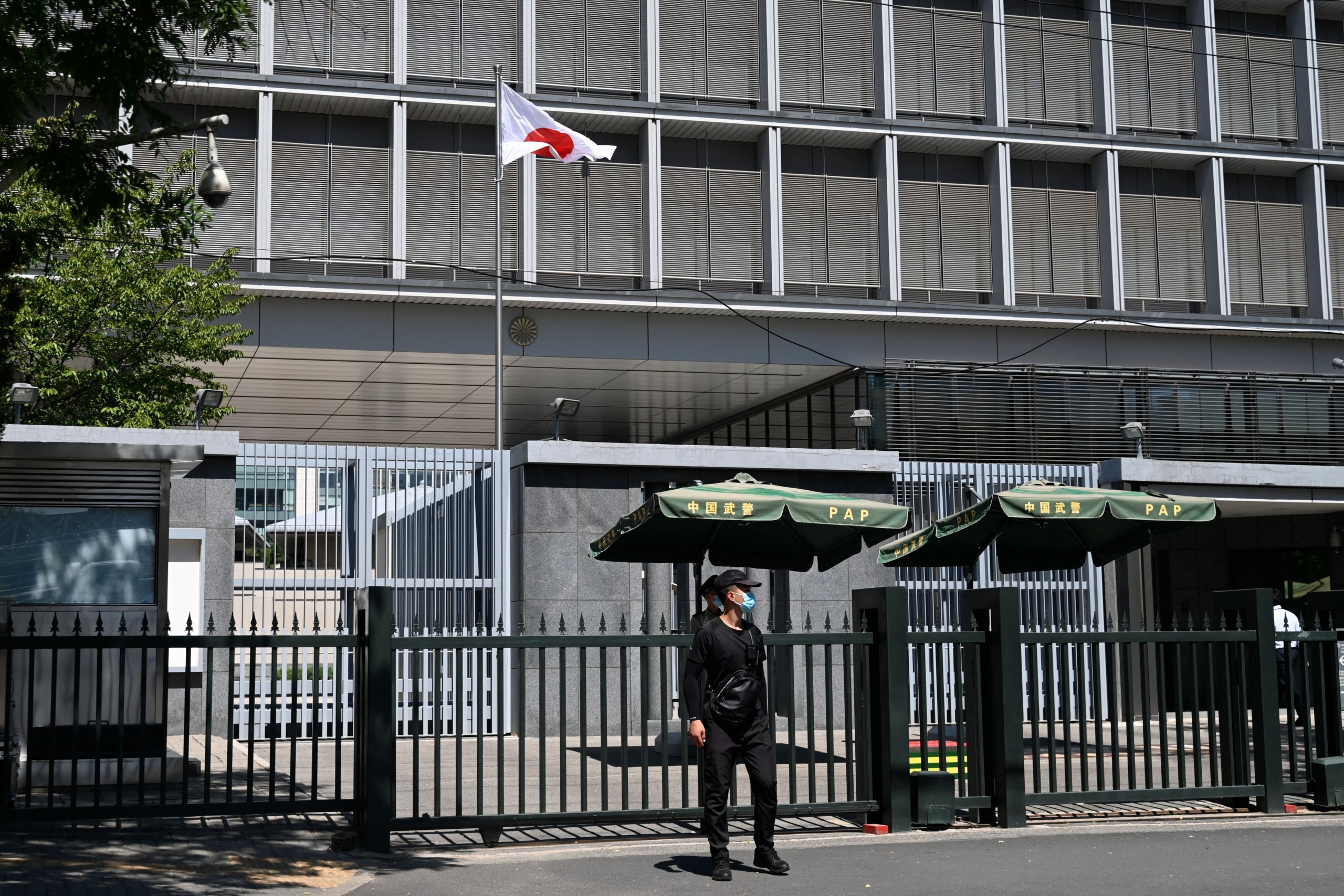
Recent sharp decline in the number of Chinese tourists visiting Japan. As the 95th anniversary of the “September 18 Incident” approaches, the Chinese Communist Party has been loudly promoting anti-Japanese sentiment. The Japanese Embassy in China has issued security alerts to Japanese residents in China, while official Chinese media and government criticism of Japan continues to escalate.
In response to these events, Japanese think tanks believe that the Chinese Communist Party’s long-term and comprehensive efforts against Japan are creating a situation where Japan-China relations are shifting from the past “separation of politics and economics” towards a “balance of politics and economics” model. Japan needs to strengthen its alliance with the United States, enhance cooperation with like-minded countries, improve supply chain resilience, and enhance its ability to respond to economic threats, necessitating a comprehensive restructuring of its strategy towards China.
According to a report in the Japanese media “Sankei Shimbun” on September 19th, Chinese Politburo member Li Hongzhong attended a commemorative event in Shenyang and condemned Japanese aggressors for creating a world-shocking incident ahead of the 95th anniversary of the “September 18 Incident” (known as the Mukden Incident in Japan).
The report highlights China’s increasing pressure on Japan based on comments made by Japanese Prime Minister Soanao Takaichi in parliament regarding Taiwan, linking it to historical issues and condemning Japan’s actions.
On September 18th, the Chinese Communist Party’s official newspaper “People’s Daily” published a commentary accusing Takaichi of sliding towards “new militarism” with her defense measures and warned that “without removing the root cause, Japan has no future.”
On the same day, the Chinese Foreign Ministry spokesperson stated at a press conference that they would not allow a resurgence of Japanese militarism.
On August 15th, the Chinese Foreign Ministry issued a statement regarding Prime Minister Takaichi’s offering at the Yasukuni Shrine and some Cabinet members’ visits, accusing those actions of “paving the way for accelerated remilitarization.”
Previously, data released by the Japan National Tourism Organization on September 16th showed a significant 59% decrease in Chinese tourists visiting Japan in August, totaling 418,000 people. From January to August, about 2.905 million Chinese tourists visited Japan, a 56.7% decrease compared to the same period last year. Although the Japan National Tourism Organization did not explicitly state the reasons for the decrease in Chinese visitors, it was mentioned in Chinese columns that the Chinese government discouraged people from traveling to Japan and reduced China-Japan flights.
On September 15th, China’s “Regulations on Entry and Exit Administration” officially took effect, strengthening risk prevention measures for Chinese citizens traveling abroad. According to the second article of the regulations, Chinese citizens intending to travel to countries or regions with the highest level of risk or severe threats to personal safety should be advised against going if necessary.
Quoting a source from China, New Tang Dynasty TV reported that Japan and the United States have been identified by Chinese authorities as countries to be discouraged from visiting this year. According to “World News Network,” before the new regulations were officially implemented, some Chinese citizens were unable to leave the country due to reasons such as passport confiscation or being placed on a blacklist.
The report also cited a case where a Chinese man of Japanese descent who had been living in Japan for 13 years was restricted from leaving China after returning for a family visit, being informed that he could not exit until 2036. According to his account, he had been running a business in Japan for over 20 years, with assets worth approximately 80 million Chinese yuan and over 40 employees. His inability to return to Japan has impacted his business negatively.
Furthermore, on August 28th, the Japanese Embassy in China issued a statement warning Japanese nationals in China of potential higher anti-Japanese sentiment around the so-called “Victory over Japan Day,” on September 3rd, advising them to be vigilant for suspicious individuals and situations when going out, avoid going out alone as much as possible, especially when accompanied by children, and take sufficient protective measures.
To avoid mishaps, the statement advised Japanese citizens in China to be cautious, particularly on dates related to Japanese-China historical conflicts, based on past similar incidents.
In May 2026, the Institute of Oriental Geopolitical Studies (IOG) published a study titled “From ‘Political and Economic Separation’ to ‘Political and Economic Balance’,” stating that the previous model of “political and economic separation” in Japan-China relations is no longer sustainable.
Previously, Japan’s approach to China was based on a basic logic of keeping politics separate from economics, even in the face of frictions over historical issues, territorial disputes, or Taiwan. However, this “political and economic separation” is now undergoing changes as economics itself becomes part of national security. Japan-China relations are transitioning from “economics beyond politics” to “economics itself as a strategic and security issue.”
The report pointed out that the principle of separating politics and economics may have worked in the past for Japan-China relations, but as politics and economics become increasingly intertwined, both the Japanese government and businesses need to seek a new balance that balances economic interests without sacrificing political gains.
In March 2026, the Nippon Pacific Institute (NPI) released a report titled “Policy Toward China in 2026 and Short-Term and Long-Term Design,” stating that the Japan-China issue is not just about political friction but includes structural changes linked to global trends.
The report categorizes the problems between Japan and China into “short-term” and “long-term” issues. Short-term concerns involve diplomatic friction, such as restoring mutual strategic benefits, increasing dialogue, and seeking market cooperation with third countries. However, long-term problems include defense capabilities, grey zone activities, economic coercion, supply chain security, dual-use military technology, Taiwan Strait security, and strategic perception differences between the two nations.
NPI advocates for a balanced approach to China by strengthening defense and economic security while maintaining communication channels.
In a study published by Professor Makoto Kawashima of the University of Tokyo in May 2026 at the Toda Peace Institute, titled “Parallel Worlds in Diplomatic Deadlock: Current State and Issues in Japan-China Relations,” it was observed that Japan-China relations are at their worst state since the normalizing of diplomatic ties in 1972.
The current situation between 2025 and 2026, as Professor Kawashima noted, is different from the 2012 diplomatic crisis sparked by the nationalization of the Senkaku Islands, which was a territorial issue. The present tension is a result of factors such as the Taiwan Strait situation, security guarantees, economic security, and the interaction of Japan-China relations within the context of US-China competition.