
According to the latest report from the non-profit immigration organization Mobile Pathways, immigration courts in the United States are increasingly holding collective Master Calendar Hearings, also known as “super master hearings”, which means that courts are significantly compressing the preparation time for political asylum seekers and scheduling hearings intensively.
The collective Master Calendar Hearings involve a judge simultaneously arranging brief procedural registrations for dozens to hundreds of asylum seekers.
The report, released on Monday (August 3), analyzed immigration court data published by the Department of Justice’s Executive Office for Immigration Review (EOIR). It pointed out that in June, immigration courts scheduled a total of 1,339 super master hearings. This is more than twice the total number of hearings in May (627), with an average of over 100 participants per hearing. This indicates a significant increase in both the frequency and scale of holding super master hearings.
Some immigration courts began to see a sharp increase in the number of super master hearings around mid-2026. The organization provides real-time immigration legal information.
Normally, asylum seekers in political asylum cases are usually given at least two court appearances – one or more procedural hearings and an Individual Hearing (IH).
Immigration lawyers stated that many applicants are still attending “regular-sized” hearings where judges question each person individually. However, if an applicant is about to attend a Master Calendar Hearing, without knowing in advance if it is a large-scale collective hearing, preparation should be made for both types of hearings.
Sometimes, certain courts notify and schedule large hearings within a very short period or move existing hearings to earlier dates.
The following are some key trends summarized in the report on the adjudication of asylum applications in immigration courts.
According to the latest data, the average notification time for regular-sized hearings has decreased from around 150 days in early 2026 to less than 50 days by mid-year. The average notification time for super master hearings is only 36 days, while for regular-sized hearings it is 64 days.
This means that the preparation time for some parties has been reduced from around 6 months to just over a month, potentially causing stress for applicants.
Due to some courts not sending necessary hearing notifications containing new hearing dates and times, or delays in delivering relevant notifications to recipients, immigration lawyers recommend that applicants regularly check the EOIR’s immigration court system. For example: checking once a week regularly, as missing a hearing can be promptly dealt with.
According to the data, in June’s regular-sized hearings, only 23% of parties had a lawyer present; in super master hearings, the proportion of parties with a lawyer decreased to 17.8%, with 82.2% opting to represent themselves. In comparison, the presence of lawyers with parties in regular-sized hearings was 26.3%.
In the past, in regular-sized hearings, parties without legal representation usually received more notification time than those with lawyers (averaging 71 days vs. 53 days). However, in super master hearings, both groups of parties received 36 days of notification, meaning that parties representing themselves have no additional preparation time.
If a party misses a hearing, there could be two outcomes: either the judge issues an absentee removal order or the asylum application is deemed automatically abandoned. Therefore, missing a hearing could result in the termination of a case without reaching an Individual Hearing.
If a party misses a hearing due to not receiving the notification, they can file a motion to reopen the case, with no additional fees charged by immigration authorities.
In super master hearings, 67.9% of decided cases ended in absentee judgments (compared to 44.8% in regular-sized hearings), with a higher asylum application abandonment rate of 76.4% (compared to 61.3% in regular-sized hearings).
By June 2026, approximately 50% of pending asylum cases were terminated through absentee judgments, with applicants never appearing in court.
In the first half of the year, the outcomes of 63,000 cases were absentee removal orders combined with asylum application abandonment, surpassing the total for any previous full year.
Of those who attended super master hearings, 69% did not receive an opportunity to attend Individual Hearings, while the situation was slightly better for regular-sized hearings, with around 46%.
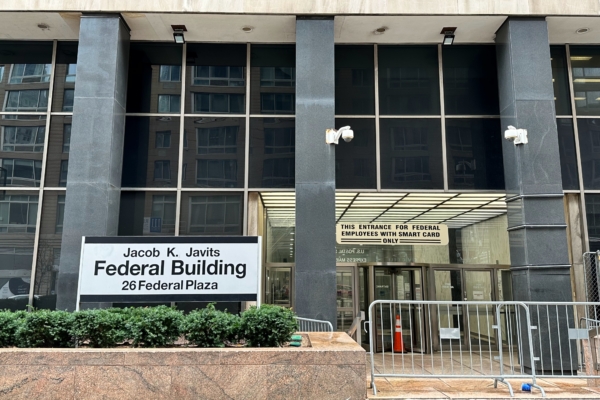
The data shows that the trend of holding super master hearings in immigration courts across the country is not evenly distributed but accelerating overall. New York currently has a asylum application abandonment rate more than six times its historical average; the absentee rate in Harlingen, Texas has also doubled.
In July, New York led in the scale of super master hearings, tied with Atlanta, with the largest average hearing sizes. The absentee rates in cities like Charlotte and Boston began to increase in August.