
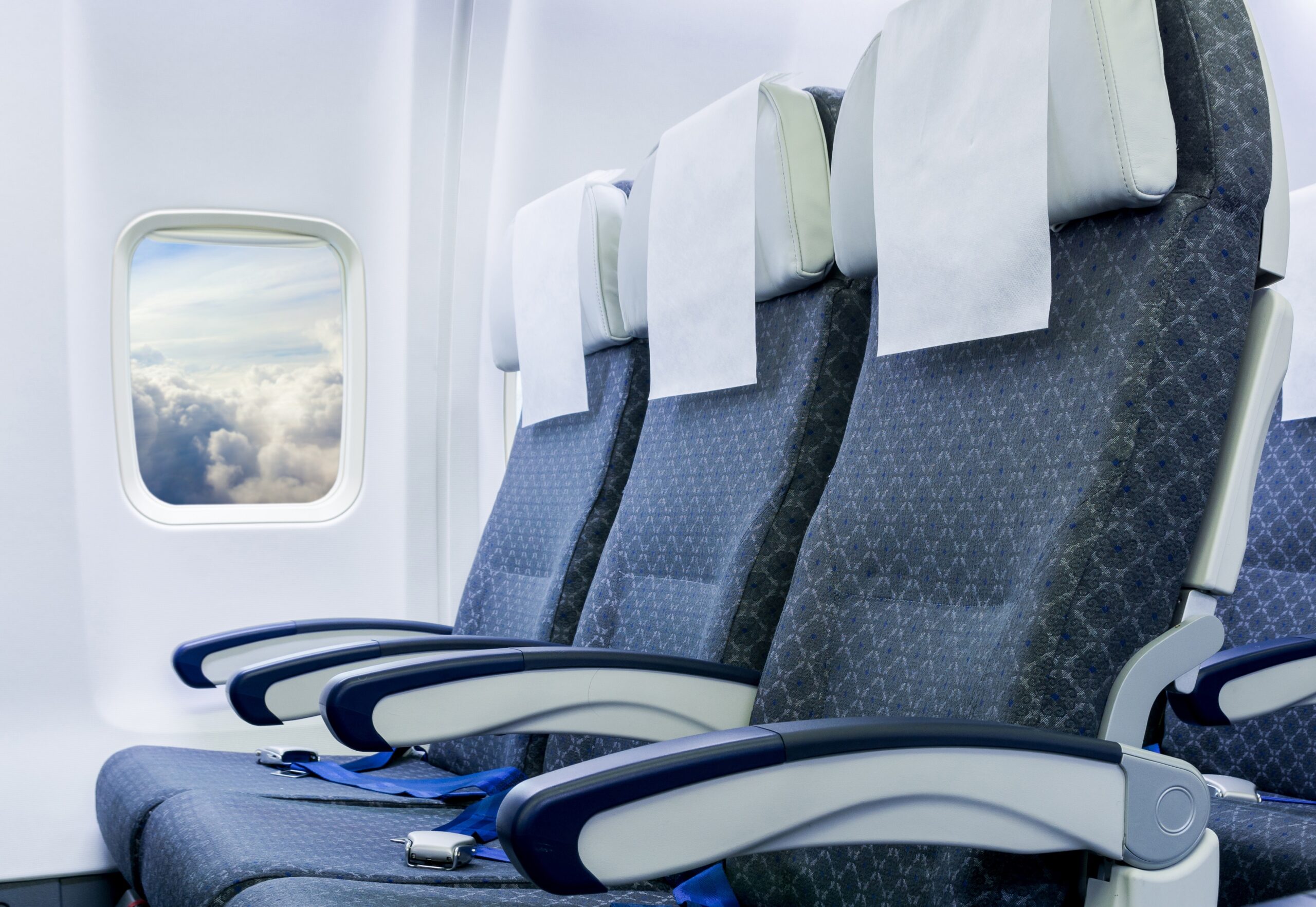
Despite the fact that seats on airplanes are often not able to be selected, passengers still have preferences when given the opportunity. Experienced flight attendants say that the choice of seat by passengers can reveal a lot about their inner world.
American writer Charlotte Hilton Andersen wrote in Reader’s Digest about how the seats chosen by passengers can reveal secrets about them. She consulted with two flight attendant friends to see their exceptional observations of passengers over the years.
She explained that the seats passengers choose in the cabin can unexpectedly reflect their personalities, their way of dealing with stress, and even their marital dynamics.
While passengers may not always have the luxury of choosing their seats, such as on full flights or when booking hastily, they often find themselves seated wherever there is an empty spot, rather than their preferred location.
But when passengers do have the choice, patterns quickly emerge, as flight attendants are well-versed in observing the thousands of strangers who make these selections day in and day out.
Sydney A., a flight attendant who has worked for more than 20 years at four major U.S. airlines, mentioned that certain behaviors of passengers are quite consistent, so much so that she can often quickly guess where they will sit just by a brief glance at boarding passengers.
Flight attendant Loretta H. from JetBlue Airlines mentioned that passengers who opt to pay extra for upgraded seating tend to spend more during the flight. They are more willing to spend money, as she notices them making purchases when she pushes the cart down the aisle. Passengers seated in the rear rows typically do not make purchases. Therefore, seat selection is not only a matter of psychology but also holds practical significance.
The following are observations made by these flight attendants regarding passengers who choose various seats:
Choosing an Aisle Seat:
Passengers who prefer aisle seats often prioritize efficiency and mobility over comfort. These passengers, as noted by Sydney A., often include business travelers who prefer not to be disturbed while working. Being seated in an aisle seat allows for convenient laptop usage and easy access to move around when needed. Additionally, these seats allow for quick disembarkation, enabling passengers to rush to meetings or connecting flights.
Opting for an aisle seat may signify that you do not want to inconvenience others or that you have a strong desire for control. Sydney A. categorizes herself in this group, stating, “I like to be able to get up when needed without bothering the person next to me.”
Choosing a Window Seat:
If you lean towards selecting a window seat, you likely enjoy napping during the flight, have an interest in aviation, or both. Sydney A. mentioned that individuals who enjoy sleeping during flights tend to gravitate towards window seats. This preference is due to the ability to lean against the cabin wall and not worry about being crossed over by neighboring passengers while in slumber.
For individuals experiencing anxiety due to health concerns, a window seat offers a great choice as it allows them to distance themselves from the aisle bustling with activities. This explains why passengers with germaphobia or flight anxiety often opt for a window seat.
Choosing a Middle Seat:
No one particularly enjoys sitting in the middle seat; it is usually the result of having no other choice rather than a reflection of personality. However, the selection of who ends up in the middle seat can often reflect certain situations among surrounding passengers.
Sydney A. noticed a heartwarming phenomenon among couples, where the gentleman, out of consideration, would typically offer the aisle or window seat to the lady and take the middle seat himself. However, the practices of some elderly couples are less agreeable. They would reserve adjacent aisle and window seats, leaving a completely unfamiliar passenger sandwiched in the middle, causing extreme discomfort. Ideally, no one occupies the middle seat, providing extra space for such couples.
It is worth noting that according to etiquette experts, if you are seated in the middle seat, you are entitled to use both armrests. (Further reading: Who Can Use the Middle Armrest on a Row of Three Seats on a Plane?)
Choosing Seats Near Emergency Exit or with Extra Legroom:
Choosing these seats is often based on considerations of body size and budget rather than personality traits. Sydney A. stated that taller passengers are usually the most concerned about their seating position and are often willing to spend extra money for it.
Loretta H. agrees, stating that the impact of height far surpasses deep-seated psychological needs. She has seen many tall passengers, and of course, those with a bit of extra budget, willing to pay for seats with extra legroom offered by the airline.
She further explained that selecting a seat near the emergency exit also involves weighing pros and cons because federal regulations require passengers seated in these positions to provide physical and psychological assistance in case of emergency.
Seat Behind the Bulkhead or with Additional Legroom:
Families with young children and passengers keen on exiting the plane first often prefer seats behind the bulkhead as they typically offer slightly more space in front. However, the tray tables in these seats are usually built into the armrest, meaning you cannot lift the armrest to create more space for movement.
Front vs. Back of the Cabin:
If you tend to choose seats at the front of the cabin, you might be the type of person who likes to plan things and wishes to disembark early. Sydney A. added that you may also have flight anxiety, hence preferring to be closer to the pilot and flight attendants.
On the contrary, passengers who choose seats in the back of the cabin usually have a more relaxed mindset throughout the flight or are traveling with children, preferring to be closer to the galley and lavatories.
In addition to passengers’ chosen seats, flight attendants also observe other behaviors during the flight. For instance, placing bare feet on seats, tray tables, or armrests between seats is considered unsanitary behavior, indicating a lack of concern for other passengers’ comfort and a potential lack of social awareness. Sydney A. mentioned that thankfully, she has seen less of this behavior in recent years.
She also noted the various reactions when people inadvertently sit in the wrong seats. While sitting in the incorrect seat is often due to oversight, there have been incidents where individuals assigned the middle seat occupied the window seat, ignored the rightful seat owner with headphones on, and hoped the person would not confront them out of fear of causing a dispute.
Sydney A. advises that in such situations, passengers should not hesitate to seek assistance from flight attendants. It is better to speak up than to stew in anger throughout the entire flight.