
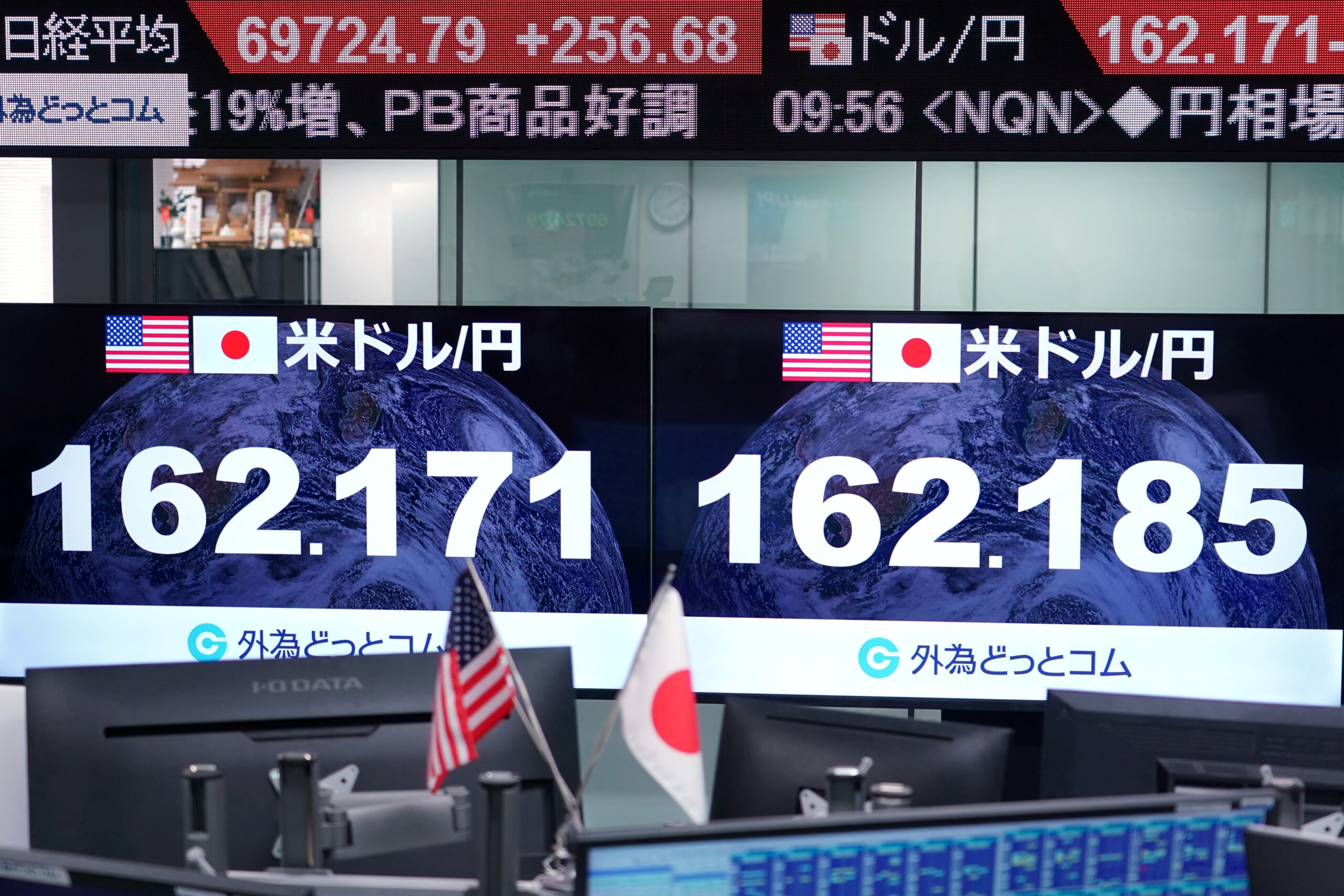
The latest news indicates that Japanese Finance Minister Satsuki Katayama is expected to announce on Monday, August 3, that Japan and the United States have taken joint intervention measures to curb the continued weakening of the Japanese yen. As of now, the relevant information has not been officially confirmed by Japanese and American authorities.
According to reports quoting two Japanese government officials by Reuters, Minister Katayama will emphasize in the statement that both Japan and the United States believe that the excessive depreciation of the yen is detrimental to financial market stability, and therefore have decided to take joint action to support the yen. One official indicated that the related market operations are “still ongoing.”
Market data shows that the Japanese yen to US dollar exchange rate recently dropped to its lowest level in nearly 40 years. As of now, the Japanese Ministry of Finance has not responded to media requests for comments, and the US Treasury Department has not made any statements regarding this.
Reuters previously reported, citing market sources, that the Japanese government may have intervened in the market last Thursday during the New York trading session by buying yen and selling dollars. Data released by the Bank of Japan indicated that approximately $58.97 billion was potentially used to support the yen exchange rate on that day.
Subsequently, the Bank of Japan announced on Friday that it would maintain its current monetary policy unchanged but hinted at a higher possibility of further interest rate hikes in the near future. In recent years, the more hawkish stance of the Federal Reserve has led to a widening interest rate differential between the US and Japan, seen as one of the main reasons driving the strength of the US dollar and continued pressure on the Japanese yen.
Following a press conference by Bank of Japan Governor Kazuo Ueda, the yen exchange rate quickly rebounded, leading to speculation in the market that the Japanese government may intervene in the currency market again.
On the same day, Atsushi Mimura, the Vice Minister for International Affairs at the Japanese Ministry of Finance, stated that there would be close coordination between exchange rate policy and monetary policy in the future.
Sources also revealed that the US Treasury Department had notified several banks last Friday that it might intervene in the yen market in the future, urging relevant financial institutions to prepare for subsequent actions.
Additionally, US Treasury Secretary Scott Bessent recently publicly stated that the yen “appears to be severely undervalued.” A photo published by Reuters shows that in the memorandum he carried at a cabinet meeting, it mentioned “Buy Japanese Yen ($5-10 billion)” among other contents, further fueling speculation in the market about US involvement in intervention.
On the other hand, the Japanese Ministry of Finance recently posted in English on the social platform X, affirming that Japan has multiple tools to meet market liquidity demands, including using the Federal Reserve’s repurchase facilities to obtain temporary US dollar liquidity without directly selling US government bonds.
Minoru Kiuchi, Japan’s Minister in charge of Economic Revitalization, stated on August 2 that the government would enhance communication with the market to maintain market confidence in Japan’s fiscal sustainability.
Economist Nobuyasu Atago, a former Bank of Japan official, told Reuters that both the US and Japan are facing risks of rekindling inflation, and if central banks do not respond adequately, it could impact financial stability. Hence, there is a practical need for both sides to strengthen policy coordination and market cooperation.
If the relevant information is officially confirmed, it will be the first time since the G7 countries jointly intervened in the currency markets in response to the East Japan earthquake in 2011 that Japan and the US are jointly supporting the yen. This could also become one of the most closely watched policy coordination actions in the global foreign exchange markets in recent years.