
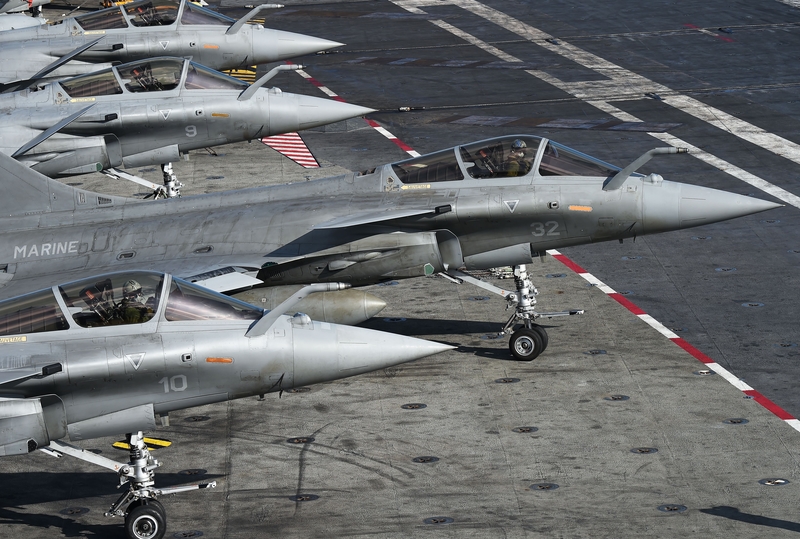
A former French Navy pilot who received training from the United States Navy while flying the Rafale fighter jet is under investigation by French authorities for allegedly collecting classified information and providing it to the Chinese Communist Party.
Pierre-Henri Chuet, who had experience flying the Super Étendard and Rafale M carrier-based fighter jets on the Charles de Gaulle aircraft carrier, is facing scrutiny after being questioned by France’s domestic intelligence agency, the General Directorate for Internal Security (DGSI). He has been placed under judicial supervision following a preliminary inquiry and formal investigation.
Chuet, a dual citizen of France and Canada, who also trained as a military officer with the U.S. Navy after his naval service, is known as a prominent writer, international keynote speaker, and YouTube content creator. He has accumulated combat experience and expertise in flying the Rafale M fighter jet, including over 200 carrier landings.
The incident involving Chuet reflects a pattern seen in several cases where Western pilots have been warned or investigated for sharing tactics, operational procedures, and skills with People’s Liberation Army Air Force (PLAAF) pilots. This training sometimes takes place in China or in a third country.
The unique experience of carrier-based operations on active CATOBAR carriers, apart from the U.S. Navy, makes former French Navy pilots a sought-after group for the PLA Navy, which currently operates three aircraft carriers and is building a fourth one. The third carrier, the Fujian, uses CATOBAR technology, thus raising interest in individuals with experience on carriers like the Charles de Gaulle.
France’s only nuclear-powered carrier, the Charles de Gaulle, has been in service since 2001, carrying Rafale M fighter jets for missions, and remains active. The importance of these carriers in naval operations is underscored by the fact that, besides the U.S. and France, no other navy currently operates operational CATOBAR carriers.
Chuet’s case is not isolated; previously, several Western pilots have been involved in similar incidents of sharing knowledge with the PLAAF, aiming to improve their limited operational experience. These collaborations are typically facilitated through intermediaries in third countries to conceal direct ties with the Chinese military.
In a 2025 report, the French investigative media outlet Le Canard Enchaîné detailed a case where a former military personnel was suspected of having ties with foreign entities. The individual had traveled to China without following required military regulations and had connections with a South African airline.
The operational model of the South African intermediary agency pivotal to the French case mirrors patterns seen in other cases within NATO countries. Investigations have also revealed similar activities involving former military personnel from the UK and Spain with ties to Chinese military pilots.
Overall, the cases highlight the strategic importance of experienced military personnel and the growing concerns surrounding the exchange of military knowledge between Western forces and foreign entities. This phenomenon underscores the need for robust oversight and control measures to safeguard national security interests in an increasingly interconnected world.