
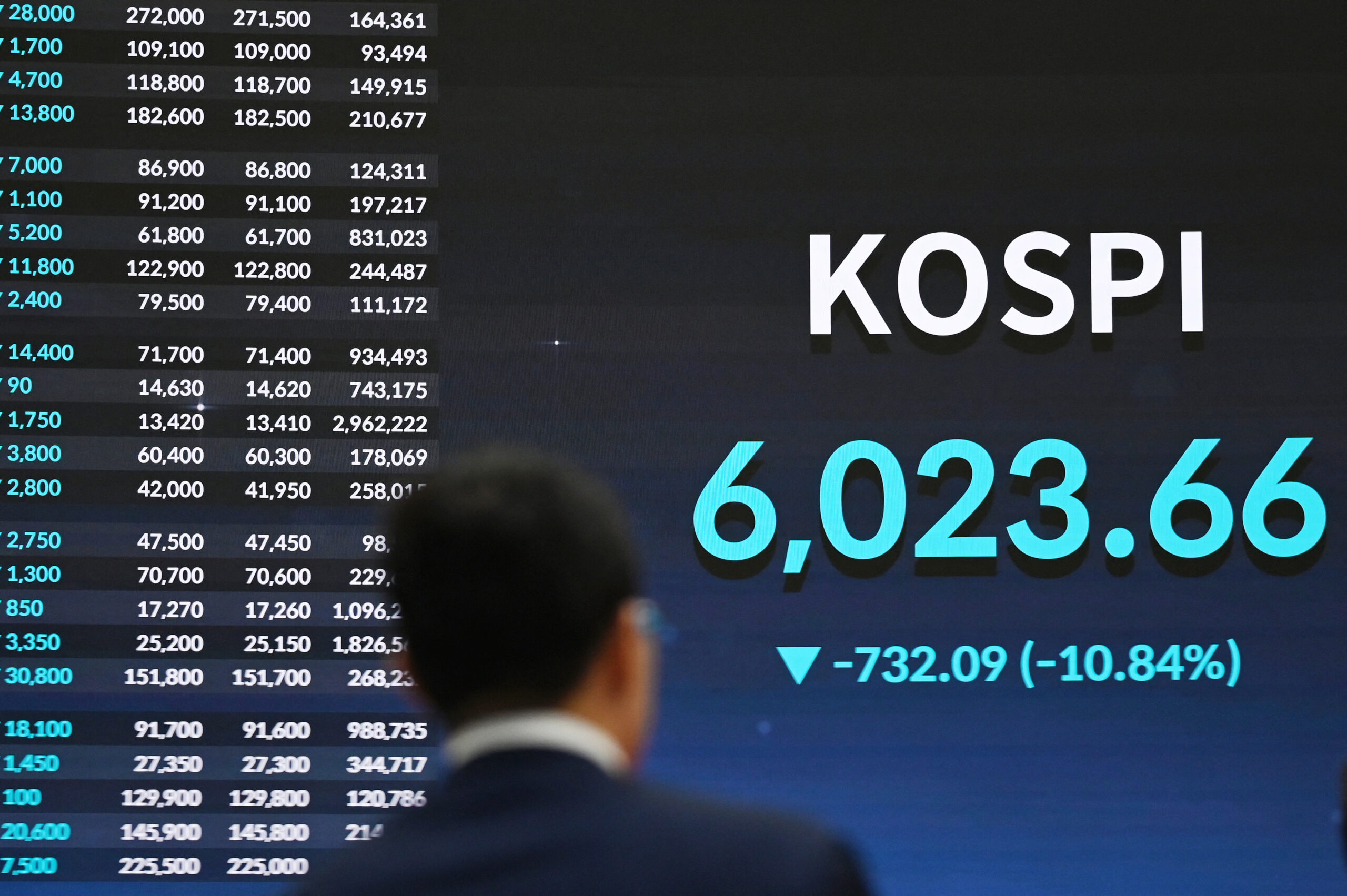
Benefiting from the continued strong demand for artificial intelligence (AI) memory, South Korea’s leading memory manufacturer, SK hynix, announced its second-quarter financial results on Wednesday, June 29th, with record-high revenue, operating profit, and net profit. Despite the impressive performance, the results fell below market expectations, leading to a significant drop in Seoul’s stock market prices and weakening of chip stocks in Asia.
According to official data from SK hynix, revenue for the second quarter reached 79.3187 trillion Korean won (approximately $550 billion USD), a significant increase of 257% from the same period last year. Operating profit was 60.5426 trillion Korean won (about $420 billion USD), a yearly increase of 557%, with an operating profit margin of 76%; while net profit reached 93.9226 trillion Korean won (around $650 billion USD), representing a 1,242% year-on-year increase. Compared to the previous quarter, revenue and operating profit grew by 51% and 61% respectively. All three core indicators reached record levels, and the first-half revenue for the year surpassed 100 trillion Korean won for the first time.
However, the financial report fell short of investors’ expectations. According to market consensus from LSEG SmartEstimates, it was estimated that the second-quarter revenue would be around 84 trillion Korean won ($580 billion USD) and operating profit approximately 64 trillion Korean won (about $440 billion USD).
The discrepancy in actual numbers, combined with concerns about the sustainability of AI infrastructure spending, triggered selling pressure. SK hynix’s stock price plummeted by 9.6% in the Seoul market on the same day (at one point dropping by 15%); as the company, along with Samsung Electronics, holds significant weight in the Korean benchmark KOSPI index, their stock prices’ decline contributed to a roughly 6% decrease in the index on the day.
The weakened sentiment spread across Asia, with Japan’s memory manufacturer Kioxia falling by about 13%, and chip foundry leader TSMC dropping by 3% to 4%. SK hynix’s American depositary receipt (ADR) listed on NASDAQ also fell by approximately 9% on the previous day (July 28th).
Despite a significant decline in market value since reaching a historical high in June (some estimates suggest a more than 50% evaporation), SK hynix’s stock has still gained an impressive cumulative increase of approximately 138% year-to-date, benefiting from the AI boom earlier this year.
Analysts believe that the earnings falling short of expectations largely reflect product shipment delays and conservative pricing in long-term supply agreements (LTA), rather than weakening demand. Daiwa Capital Market told Bloomberg TV on Wednesday that the fundamental AI-driven supercycle hasn’t changed, and investors, following the price correction, are anticipating a clearer shareholder return policy.
SK hynix’s Corporate Center President, Song Hyun-jong, mentioned during the financial conference call that the demand for AI memory remains strong, with major customers continuously seeking increased supplies. The company is actively pursuing more long-term supply agreements to manage price fluctuations and ensure stable supply.
These agreements typically last about five years and include financial security measures such as guarantees. Negotiations for approximately 10 such agreements have been completed, with discussions ongoing with other major players. Major customers include Nvidia and other large American tech companies, with a recent partnership expanding through a multi-year agreement worth over $50 billion.
Josh Gilbert, the chief analyst for eToro Asia Pacific, pointed out that the company’s gross margin is approximately 83%, demonstrating that pricing power still exists, stating, “This situation does not occur in a weak demand market but in a market where customers compete for supply.”
To meet the expanding investment in AI infrastructure and growing demand, SK hynix stated that it will prioritize investments in growth areas while maintaining a robust financial structure. The company expects its capital expenditure for the year to reach the upper range of 40 trillion Korean won (around $280 billion USD).
The financial report indicates that prices for Dynamic Random-Access Memory (DRAM) and NAND memory have increased quarter-on-quarter. By expanding sales of high-value-added products such as High Bandwidth Memory (HBM), AI server dedicated DRAM, and enterprise-grade Solid State Drives (eSSD), SK hynix maintains its top-notch profitability.
Technologically, leveraging the advantages of the fourth-generation High Bandwidth Memory (HBM4) in energy efficiency and cost competitiveness, SK hynix has begun mass production and shipment in the second quarter and plans to scale up production in the latter half of the year. The upgraded version HBM4E utilizes the most optimal process technology in terms of technical maturity and production stability, with samples already delivered in the first half of the year.
On the NAND front, the transition to advanced processes is accelerating, with 321-layer products currently accounting for the largest share of total production output, aiming to reach 50% of domestic capacity by the end of the year. The company plans to maximize output from existing manufacturing centers in Icheon and Cheongju, while enhancing NAND production and advanced packaging capabilities in Pyeongtaek.
Overall, SK hynix’s second-quarter financial report once again affirms the robust momentum of the AI memory supercycle, but also highlights the market’s sensitivity to overvaluation and the sustainability of future spending. Management remains optimistic about medium to long-term demand and aims to solidify its leading position through long-term agreements and capacity expansion amid market volatility.