
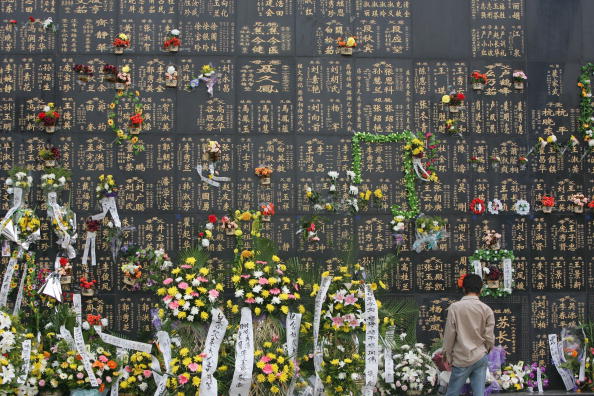
On July 28, 2026, at 4:27 p.m., a strong earthquake with a magnitude of 7.1 struck Kumamoto Prefecture in Kyushu, Japan, with a depth of about 10 kilometers. Interestingly, this day marks the 50th anniversary of the devastating 7.8 magnitude earthquake that hit Tangshan City in Hebei Province, China in 1976.
Half a century has passed since the massive earthquake in China, which resulted in a significant loss of life and property, with two major controversies surrounding it that remain unsettled.
In the early morning of July 28, 1976, Tangshan City, an industrial hub in Hebei Province, was violently shaken for 23 seconds, leveling over 90% of the man-made structures on the surface. The earthquake not only devastated Tangshan City but also affected an area of over 210,000 square kilometers, with tremors felt in over 2 million square kilometers, exceeding one-fifth of China’s territory, impacting 14 provinces, municipalities, and autonomous regions to varying degrees.
The epicenter of the earthquake was directly beneath the city, with a shallow depth of only 12 kilometers, categorizing it as a vertical seismic event within the urban area. Approximately 97% of the city’s industrial and civilian buildings were destroyed.
According to official Chinese government figures, the Tangshan earthquake resulted in approximately 242,000 fatalities, over 160,000 serious injuries, and complete family wipeouts for 7,200 households. However, unofficial estimates suggest the death toll could be as high as 600,000 or even 750,000, as claimed by Zhang Yumin, a former physician at Henan Medical University and retired cancer researcher at Yale University.
Similarly, in the aftermath of the 2008 Wenchuan earthquake that occurred 32 years later, there were disputes over the number of casualties. While the official figures released on September 25, 2008, reported 69,227 deaths and 17,923 missing persons four months after the earthquake, the number of fatalities from the Wenchuan earthquake remained unchanged over the years, with the missing persons not being included in the final death toll.
The Tangshan earthquake caught people off guard in their sleep, yet there were earlier predictions about the impending disaster.
In 1972, Zhou Rongxin, then a deputy leader of the Chinese Academy of Sciences’ Core Leadership Group, oversaw the China Earthquake Administration under the Academy. Various seismic events, including a 6.8 magnitude earthquake in Xingtai, Hebei Province in March 1966, and a 7.4 magnitude earthquake in Bohai in July 1969, raised concerns. Geng Qingguo of the Beijing seismic team issued a mid-term forecast in May 1974, predicting the likelihood of a magnitude 7 earthquake within a couple of years in Liaonan, which was forwarded to the Chinese Academy of Sciences and brought to the attention of Zhou Rongxin.
In June 1974, Zhou Rongxin submitted a report to the State Council of China on expert opinions for preparing against sudden attacks of earthquakes above magnitude 6, further briefing Vice Premier Li Xiannian on the matter.
Despite the warning signs and forecasts, political turmoil within the Chinese Communist Party led to the dismissal of seismic monitoring efforts, hindering necessary preparations. The Tangshan area was specifically identified as a high-risk zone for a major earthquake in the 1976 Earthquake Trend Report submitted by the Geological Department’s seismology team to the China Earthquake Administration in December 1975.
Leading up to the Tangshan earthquake, various short-term predictions were ignored or suppressed, leading to a lack of effective disaster response measures. The earthquake struck on July 28, 1976, causing widespread destruction and loss of life in the region.
The disastrous consequences of the Tangshan earthquake underscore the importance of prioritizing public safety and preparedness in the face of natural disasters. Efforts made by local officials, such as those in Qinglong County, to heed seismic warnings and swiftly implement preventive measures serve as a testament to the value of proactive disaster management.
Amid the tragedies caused by natural disasters like the Tangshan earthquake, criticism has been directed at the Chinese Communist Party for its prioritization of political interests over the well-being of its citizens. The recurring pattern of disasters and the suppression of information highlight the need for individuals to prioritize self-preservation, traditional values, and distancing from the communist regime as fundamental measures of self-rescue and resilience in the face of calamities.