
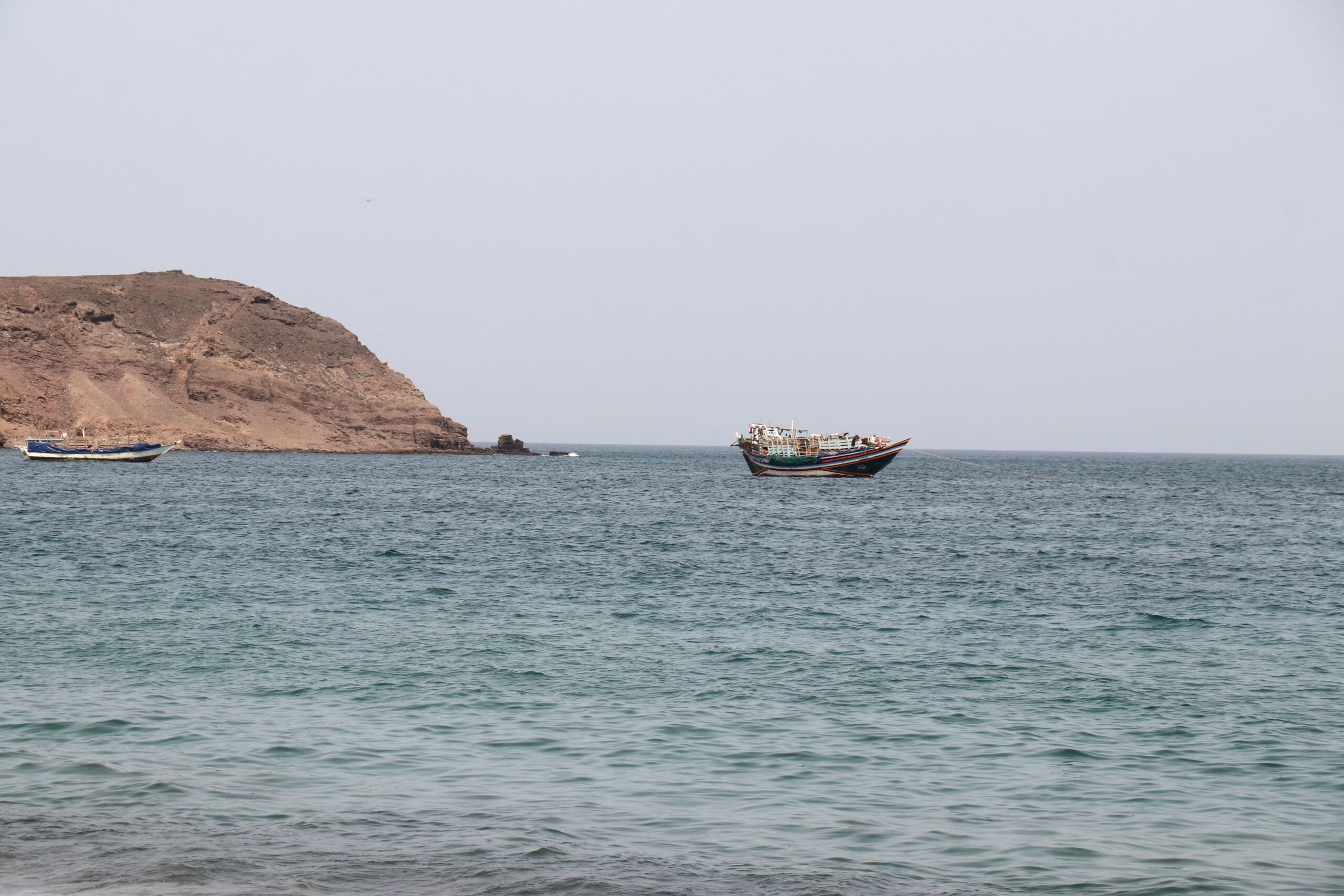
After the recent attacks on Saudi Arabian oil facilities along the Red Sea by the Houthi armed forces in Yemen, the shipping traffic in the Red Sea has further slowed down. According to the latest data, on July 26 (Sunday), only 11 commercial ships passed through the Bab el-Mandeb strait, marking the lowest level in recent months.
Data from the shipping analysis company Kpler, cited by Reuters, revealed that out of the 11 ships that passed through the Bab el-Mandeb strait that day, 7 were oil tankers, with 3 heading into the Red Sea. Two Very Large Crude Carriers (VLCC) were en route to load crude oil at the Saudi port of Yanbu, while another tanker was affiliated with Russia.
Additionally, 4 vessels departed from the Red Sea on that day, including the VLCC “New Explorer” flying the Hong Kong flag, carrying about 2 million barrels of Saudi and UAE crude oil destined for Ningbo, Zhejiang Province, China. Another tanker carrying around 1 million barrels of Russian crude oil was heading to China, and one carrying about 750,000 barrels of Saudi crude oil was bound for Pakistan.
The “New Explorer” was the third recent VLCC to leave the Red Sea through the Bab el-Mandeb strait headed for China with Saudi and UAE crude oil. The vessel is managed by the Chinese state-owned enterprise China COSCO Shipping Group’s subsidiary, China COSCO Shipping (Hong Kong) Holdings Co., Ltd. (AMCL), which has not yet responded to media inquiries.
Yahya Saree, a spokesperson for the Houthi armed forces in Yemen, announced that they attacked the Saudi Arabian national oil company Saudi Aramco’s facilities in Jizan and Yanbu on the 26th.
Since last week, the Iran-backed Houthi forces have been continuously targeting commercial ships in the Red Sea and along the Yemeni coast, expanding their attacks to energy facilities along the Saudi Arabian Red Sea coast in an attempt to disrupt Saudi oil exports, escalating the security risks in Red Sea shipping.
Meanwhile, despite the temporary halt of military hostilities between the U.S. and Iran, ship traffic through the Strait of Hormuz remains low. Kpler’s data reveals that fewer than 10 cargo ships passed through the strait over the weekend.
On Sunday (26th), 7 commercial ships transited the Strait of Hormuz, including 3 oil tankers linked to Iran, which have since left the strait. On Saturday (25th), only 3 vessels passed through the strait, all of which had their Automatic Identification System (AIS) signals turned off. These included a VLCC bound for Qatar carrying crude oil, a tanker transporting Liquid Petroleum Gas (LPG) to Ruwais Port in the UAE, and a tanker transporting oil from Qatar to Japan.
On Friday (24th), a total of 7 vessels passed through the Strait of Hormuz, most of them exiting the Persian Gulf, including two VLCCs carrying crude oil from Iraq and the UAE, as well as a fuel oil tanker.
The Strait of Hormuz and the Bab el-Mandeb strait respectively connect the Persian Gulf and the Red Sea, serving as crucial energy transport channels globally. Should both passages remain affected for an extended period, it could further drive up global crude oil transport costs and raise uncertainties in international energy supply.