
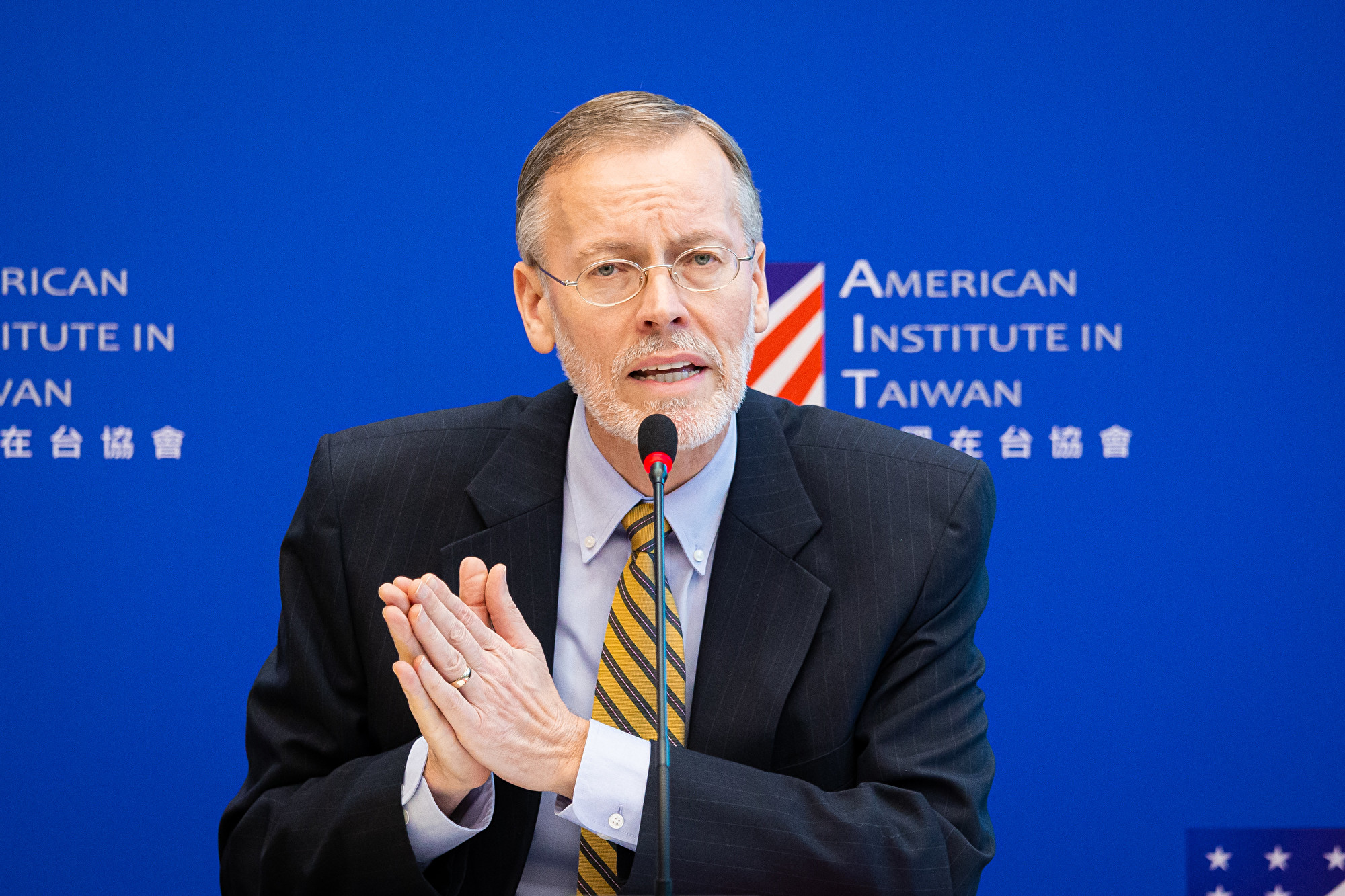
Former Director of the American Institute in Taiwan (AIT) Brent Christensen wrote on Thursday that despite recent doubts about the direction of the United States’ Taiwan policy, the relationship between the US and Taiwan is currently at its strongest moment in the past 47 years.
Christensen, a former US Ambassador to Taiwan, noted that the relationship between the two countries has evolved from unofficial exchanges and arms sales in the past to a comprehensive partnership covering security, trade, technology, global governance, education, and civil society.
In an article published on the website of the Brookings Institution, Christensen stated that the depth and breadth of cooperation across various fields indicate that the US-Taiwan relationship is stronger now than at any time since the US established diplomatic relations with Beijing in 1979.
Despite recent polls showing a decline in Taiwanese confidence in the US defense commitment and concerns over American political rhetoric and policy signals, Christensen emphasized that these worries only reflect part of the current situation. Bipartisan support in Washington for Taiwan remains strong, and the American public continues to hold a positive attitude towards Taiwan.
Christensen pointed out that evaluations of the US-Taiwan relationship often underestimate fundamental changes that have occurred. The Taiwan Relations Act continues to serve as a legal basis for the relationship, requiring the US to provide Taiwan with the defense materials and services necessary to maintain adequate self-defense capabilities.
Moreover, recent US support for Taiwan has surpassed traditional periodic arms sales. Collaborations between the US and Taiwan in defense, trade, technology, and regional security have reached unprecedented levels, including areas such as asymmetric warfare, reserve force reform, logistics, command and control, civil defense, and indigenous defense production.
Taiwan has announced plans to increase defense spending to 5% of its Gross Domestic Product (GDP) by 2030. These developments signify a significant evolution of the US-Taiwan security relationship, which has transformed into a broader and more institutionalized partnership.
The rapid advancement of artificial intelligence (AI) has significantly increased the demand for Taiwan’s semiconductor and other advanced technologies. Taiwan has climbed from being the US’s eighth-largest trading partner a few years ago to the fourth largest.
Investment from Taiwan in the US continues to rise. Christensen cited Taiwan Semiconductor Manufacturing Company’s commitment to invest $26.5 billion in semiconductor manufacturing facilities in Arizona.
Both countries have established a more robust economic cooperation framework, including the “US-Taiwan Economic Prosperity Partnership Dialogues” initiated in 2020, the “US-Taiwan 21st Century Trade Facilitation Agreement” launched in 2022, and the recently concluded “Reciprocal Trade Agreement.”
Collaboration between the two nations in supply chain resilience, critical technologies, and investment screening continues to expand, strengthening the economic ties between the US and Taiwan and increasing their strategic importance.
US-Taiwan cooperation has expanded from bilateral issues to global matters. The Global Cooperation and Training Framework (GCTF), jointly established by the US and Taiwan in 2015, has since been joined by Japan, Australia, Canada, and the UK.
GCTF seminars cover topics such as public health, pandemic response, disaster relief, digital governance, cybersecurity, energy security, humanitarian aid, and supply chain resilience, with participation from officials and experts from over 100 countries.
Christensen highlighted that Taiwan is not just a recipient of international support but an active contributor to solving global challenges, transforming the relationship from a focus on Taiwan’s security to promoting the common interests of the Indo-Pacific region and the world.
One of the key sources of resilience in the US-Taiwan relationship is their extensive people-to-people contacts. Tens of thousands of Taiwanese students have studied at universities in the US. Simultaneously, there is a growing number of American students choosing to learn Mandarin or engage in academic exchanges in Taiwan.
Taiwan currently hosts one of the largest bilateral Fulbright academic exchange programs globally, with over 100 American English teaching assistants serving in schools across Taiwan each year.
From January to April 2026, travel from Taiwan to the US increased by approximately 18%. Taiwan remains a top source of foreign students studying in the US per capita. Research institutions from both sides have also engaged in joint studies on public health and emerging technologies.
In conclusion, Christensen stated that the US-Taiwan relationship today is a “whole-of-society relationship” built not only on shared strategic interests but also on common democratic values and numerous personal connections.
These enduring bonds provide a depth and resilience to the relationship that short-term shifts in public opinion cannot reflect. Christensen emphasized that rather than weakening, the US-Taiwan relationship remains one of America’s strongest and most comprehensive partnerships in the Indo-Pacific region.