
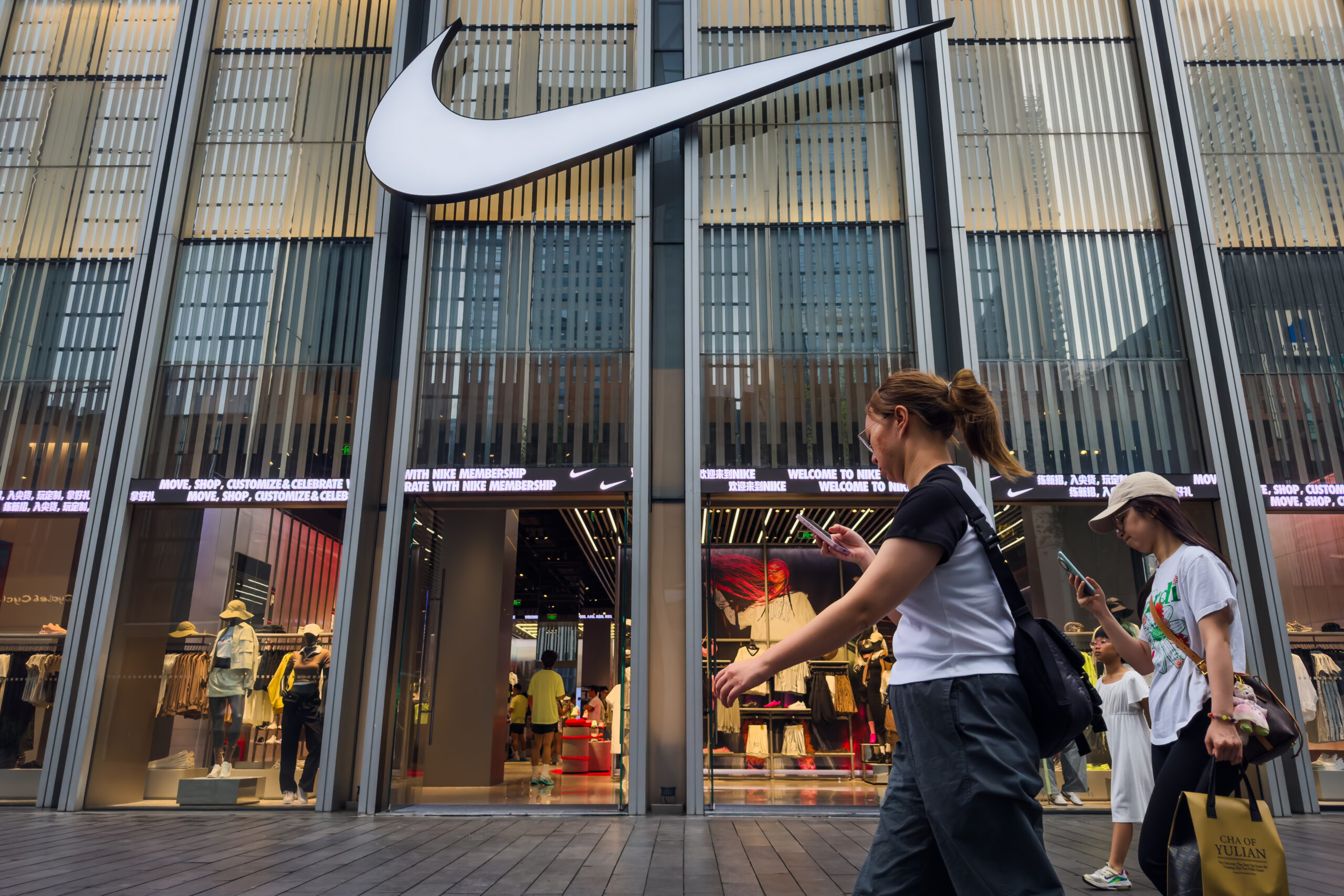
Nike announced plans to phase out thousands of online distributors in China starting in January next year in order to streamline the increasingly chaotic digital market and drive growth in the region.
China has long been one of Nike’s most important overseas markets, with the Greater China region once contributing over 15% of the company’s revenue.
According to a report by CNBC, starting next year, Nike’s online sales channels will primarily focus on the brand’s official website, official app, and flagship stores operated by Nike on major Chinese e-commerce and social media platforms such as Tmall, JD.com, and Douyin.
Currently, consumers can also purchase Nike products through thousands of online stores in addition to the mentioned channels. These stores are operated by Nike’s local partnered stores and secondary distributors in China. While the vast online sales network allows consumers convenient access to Nike products, it has also led to issues such as inconsistent brand image and price confusion, hindering the company’s efforts to reverse the decline in sales in China.
According to the company’s financial report, revenue in the Greater China region was around $7.55 billion in the 2024 fiscal year, which decreased to approximately $6.59 billion in the 2025 fiscal year, a decrease of about 12% year-on-year. In the 2026 fiscal year, the region’s business has yet to recover and has faced declining pressures for consecutive quarters.
Global Market Broadcast reported that Nike’s newly appointed Vice President and General Manager for Greater China, Cathy Sparks, stated in a letter that these new official flagship stores will become Nike’s unified and higher-standard core locations within major platform ecosystems, featuring clearer product displays, enhanced brand storytelling, and consistent consumer shopping experiences.
Concerns in the market suggest that this move may lead to a significant drop in revenue in China; over the past five years, Nike’s business scale in the region has already shrunk significantly.
Late last month, mainland media first disclosed Nike’s plan to remove online distributors. Laurent Vasiliescu, a stock analyst at BNP Paribas in Paris, issued a research report on this matter. He wrote that this action reminds people of Nike’s failed decision to end cooperation with wholesalers in North America in the past, resulting in Nike losing its dominant market position and experiencing significant declines in revenue and profitability.
Vasiliescu wrote last month, “This strategy created shelves for competitors, ultimately leading to Nike’s own downfall. We believe that if Nike adopts the same approach in China, history may repeat itself.”
He also mentioned that BNP Paribas in Paris maintains a “underperform” rating for Nike. “We believe that Nike is not facing a distributor issue, but a product issue, which exists in other markets as well.”
This channel adjustment is also expected to impact Nike’s physical cooperating merchants in China. These physical partners have been expanding their online business in recent years to seek their own development.
In recent years, with the rise of domestic sports brands in China, coupled with slowing consumer demand, Nike faces greater competition in the Chinese market. The Nike Greater China business has experienced consecutive quarters of decline. Compared to the peak before the pandemic, sales in the region have significantly contracted in recent years.