
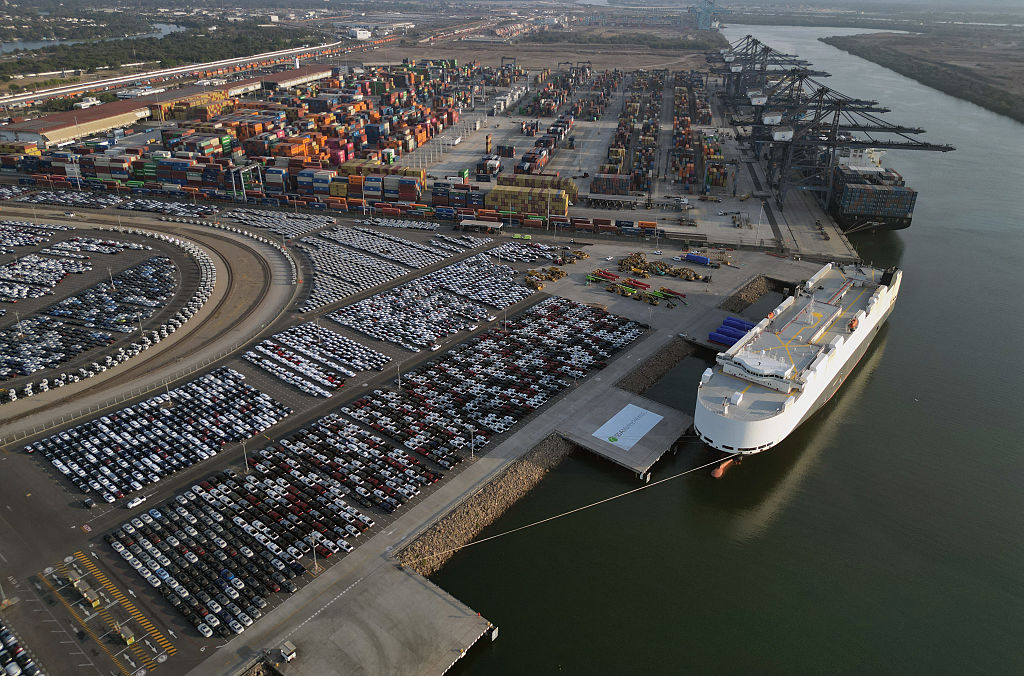
A sales report shows that in the first half of this year, Chinese car sales in Mexico saw a nearly 30% year-on-year growth. However, some Mexican officials have pointed out that this sales data could be misleading, reflecting a significant accumulation of inventory before the increase in tariffs, rather than recent import trends. In reality, imports of Chinese-brand vehicles in the country have decreased by 43% compared to the previous period.
According to a report from the Mexican Association of Automobile Distributors, Chinese brands accounted for 17% of new car sales in Mexico in the first half of this year, up from 14% a year ago. Sales volume increased from 107,712 vehicles in the first half of 2025 to 137,525 vehicles in the first half of 2026, representing a growth of approximately 27.7%.
The rapid expansion of Chinese brands in Mexico had already begun to reshape the country’s automotive market, triggering concerns among U.S. officials. They fear that Mexico could become a ‘backdoor’ for Chinese cars to enter the U.S. market, with Chinese automakers using manufacturing plants in Mexico or leveraging the rules of origin in the USMCA agreement to access the American market.
Under continued pressure from the United States, the Mexican government implemented a tariff increase of up to 50% on imported cars from countries that have not signed free trade agreements, particularly targeting Asian countries including China, from January 2026.
Mexican Deputy Minister of Foreign Trade Luis Rosendo Gutierrez was quoted by Reuters as saying that the sales data of Chinese cars in Mexico in the first half of this year is misleading due to Chinese manufacturers rushing to deliver shipments before the tariff increase, resulting in a significant inventory level in Mexico at the beginning of the year.
Gutierrez emphasized that the real impact of the tariffs is evident, with the import volume of Chinese-brand vehicles in the first five months of this year decreasing by 43% compared to the same period last year.
He highlighted that the high tariff measures have effectively curbed automobile imports from Asia.
Nevertheless, the influx of Chinese-brand cars into the Mexican market has created significant competitive pressure on the local automotive market. Chinese cars have seen their market share increase from less than 1% in 2020 to 7% in 2022, and have already reached 17% in the first half of this year.
Guillermo Rosales, Executive Director of the Mexican Association of Automobile Distributors, believes that the market is approaching saturation and Chinese companies are likely to continue absorbing the high tariff costs in order to capture market share.
U.S. and Mexican officials are expected to begin the third round of joint reviews of the USMCA agreement in Mexico City on Tuesday, July 21. The issues concerning Chinese cars and investments will remain a key focus of this USMCA revision.