
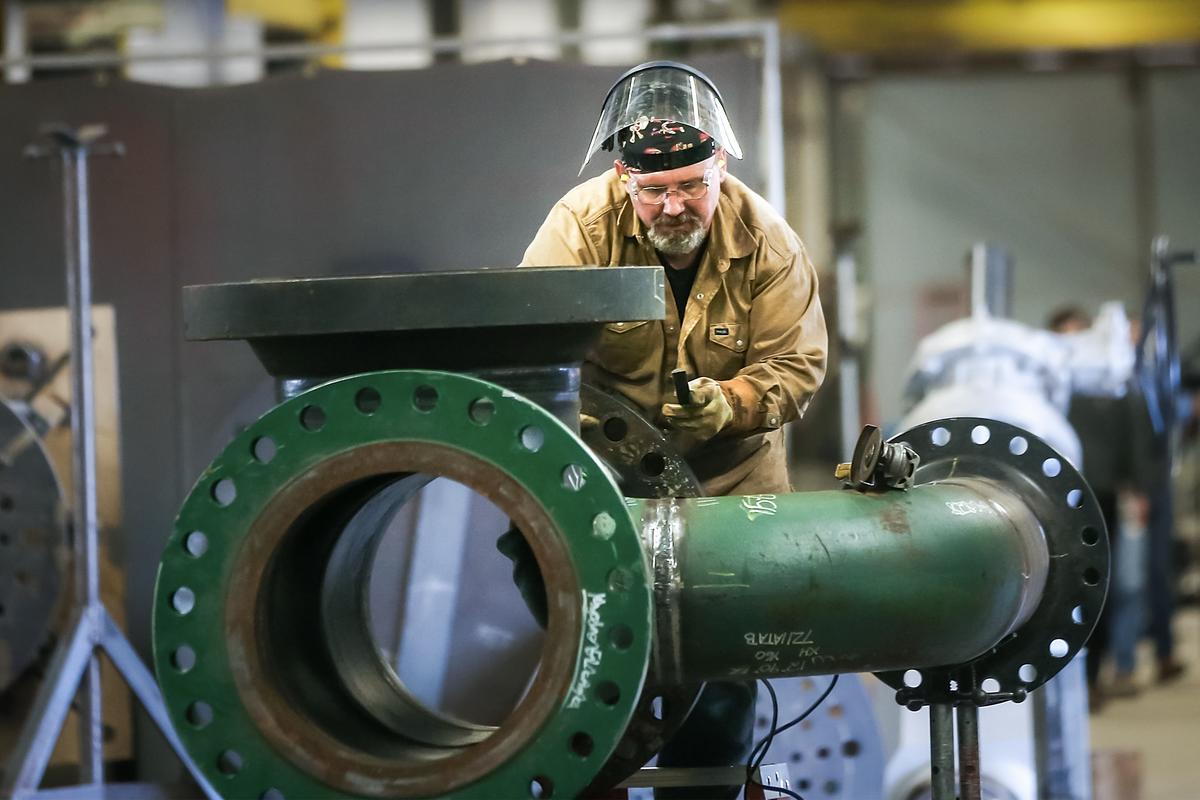
The Appalachian Mountains in the eastern United States harbor the country’s largest natural gas-producing region, but many pipelines transporting this vital resource are operating near full capacity.
At the same time, electricity demand is growing at the fastest pace in years. According to data from the International Energy Agency (IEA) based in Paris, data centers accounted for 50% of the growth in electricity demand in 2025.
Global Energy Monitor (GEM), based in San Francisco, reported that in the northern part of Virginia’s famous “Data Center Alley”, energy giant Williams Companies is expanding its Transco natural gas pipeline system. Developers are proposing to build a natural gas power plant near the data centers to bypass traditional electrical grid connections.
Expanding the support network for increased natural gas production involves more than just installing and replacing pipelines. These systems require stations capable of maintaining pressure, transporting natural gas hundreds of miles, passing through processing facilities, storage facilities, and metering stations. Additionally, connections to power plants, factories, export docks, and local distribution networks are necessary.
Industry experts state that the natural gas infrastructure network must be continuously modernized to improve reliability and reduce supply bottlenecks. The rise of data centers with high energy consumption presents new challenges to America’s aging natural gas pipeline infrastructure.
“We need to build more (natural gas) infrastructure, possibly 25% more than what we currently have,” Henry Froats, owner of Hydrotech Testing Services based in Ohio, revealed to the Epoch Times.
“Fossil fuel aging areas will be replaced and upgraded, but the real need is to expand total capacity to meet the demand for power generation and data center growth in the next 25 years.”
Ian McPhillips, Energy Director and Principal at BL Companies in Connecticut, stated that not only is overall energy consumption increasing, but most of the growth is driven by electricity generation, making the situation complex.
“To meet power demands, power plants are being constructed across the country. If these plants are using natural gas originally intended to be transported to the populous Northeast, significant transformations are needed to provide gas to generators when stable gas supply is used for space heating during cold weather,” he explained.
According to data from the U.S. Energy Information Administration (EIA), natural gas-fired generation accounts for 39% of total U.S. electricity production.
Tristan Abbey, director of the EIA, stated in a press release in January, “Natural gas supply is critical as we predict that by 2027, U.S. liquefied natural gas exports will expand, and electricity demand will rise, largely driven by the increased demand from large computing facilities including data centers.”
In May of this year, the EIA reported that project developers plan to add 44.9 billion cubic feet per day of natural gas pipeline transport capacity expected to be operational in 2026 and 2027. Most of these expansion projects are located in Texas, with 70% of the new transport capacity already under construction.
Timing is crucial. The EIA noted that following years of relatively stable electricity demand, utility companies are gearing up for continued growth driven by the expansion of data centers, domestic generation, and growth in the natural gas and liquefied natural gas export industries.
According to the EIA report, U.S. natural gas exports are forecasted to increase by 30% by 2027. Meanwhile, five liquefied natural gas export development projects are gradually increasing production, expected to continue through the end of next year.
With U.S. electricity consumption reaching historic highs, power generation is also on the rise. This figure increased from 41,950 billion kilowatt-hours in 2025 to 42,710 billion kilowatt-hours in 2026, expected to reach 43,970 billion kilowatt-hours by 2027.
An analysis by the Interstate Natural Gas Association of America Foundation (INGAA), based in Washington, estimated that by 2052, the U.S. will need to add approximately 34,000 miles of natural gas pipelines and increase transportation capacity by 39%.
Despite the continuous increase in natural gas demand, expanding infrastructure to meet this growth faces various challenges.
Existing natural gas infrastructure is aging, costs are rising, making both expansion and proactive maintenance difficult.
The Department of Transportation (DOT) in the U.S. stated that bare steel, cast iron, and wrought iron transmission pipelines are among the oldest energy-related pipelines still in operation in the country. Many of these pipelines have been in service for over 60 years.
Scott Schwandt, President and Infrastructure Systems expert at Texas-based pipeline manufacturer Gajeske, explained that many of the older metal pipeline systems “are becoming increasingly prone to leaks, posing serious threats and significant environmental damage.”
Schwandt believes it is crucial to identify and use more advanced high-density polyethylene (HDPE) materials to replace decades-old pipelines. This can reduce leaks at pipe joints and “substantially lower” daily maintenance levels.
Data from the market dynamic platform Taggd showed that the employment in the U.S. oil and natural gas extraction industry decreased by 7% from 152,000 to approximately 141,000 from 2022 to 2024. Additionally, with the growth in the energy industry, the aging of the existing workforce exceeds the pace of workforce replacement – currently, 50% of energy industry employees are aged 45 and above.
Goldman Sachs estimates that the power generation industry will require over 750,000 new employees by 2030. Meanwhile, according to a report from MADICORP in Massachusetts, the U.S. oil and natural gas industry “continues to face severe labor shortages.”
The rising maintenance, construction, and replacement costs of pipelines are making the situation even more complex.
Amishkumar Patel, Pipeline and Mechanical Engineering Resource Manager at Hargrove and Associates in Alabama, noted: “Costs are rising. The cost of laying new pipelines is increasing.”
Due to the rising costs of materials and labor, a chain reaction has resulted in maintenance of pipelines being reactive rather than proactive.
“With the increasing cost of labor… but with minimal increase in funds, people start focusing only on leak points instead of inspecting the entire service line. Today, if there is no leak, they don’t inspect,” Patel said.
Schwandt has observed a similar situation in his work, especially in inspecting existing gas pipelines.
“Aging natural gas pipeline routes are often rarely inspected until leaks are discovered through other means rather than by planned replacement to discover leaks,” Schwandt said.
Like Patel, he has also noticed the continuous rise in material and labor costs. He believes that this leads utility companies to postpone maintenance on most of the pipeline network until a “major failure” occurs, forcing them to take action.
Patel stated that some inspectors do not report potential issues with natural gas pipelines, only reporting on pipelines where leaks have already occurred. He believes that technological advancements and equipment improvements cannot offset the pressure brought by the ever-growing demand and higher costs.
Schwandt concluded, “This will ultimately lead to a vicious cycle because proactively replacing modern HDPE infrastructure can significantly reduce emergency maintenance costs, while it is these increasing costs that continue to fuel this passive-reactive cycle.”