
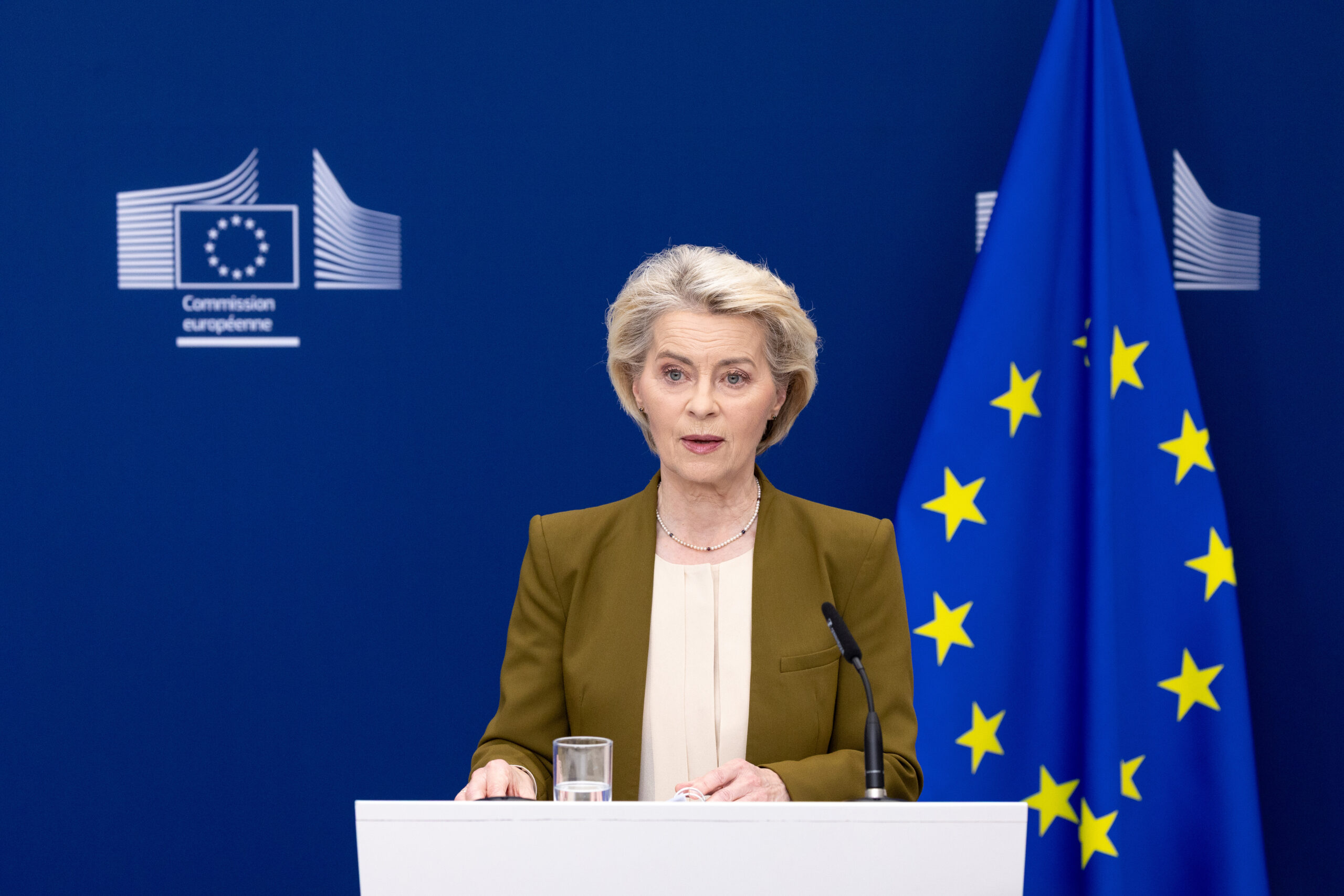
On July 13, Ursula von der Leyen, President of the European Commission, announced that the EU will promote the establishment of a minimum age limit for minors using social media. Individuals who do not meet the age requirements will generally not be allowed to use social media without parental supervision.
The “Special Panel on Child Safety Online” submitted a report to von der Leyen on Monday. The report stated that while implementing age restrictions on social media and other digital services has sparked some criticism, it may be a necessary preventive measure until platforms prove their safety or safer alternatives emerge.
The purpose of age restrictions is not to primarily shift the online safety responsibility of minors to parents, caregivers, or the children themselves. Social media and other digital service providers are still primarily responsible for the safety of the services they develop and provide.
Before technology companies can prove their services have adopted safe design principles, providers of social media and other digital services should limit the use of services by children under 13 within the EU.
In addition to the EU-wide restrictions, member states can establish stricter preventive age limits for adolescents over 13.
The panel also recommended that children under three avoid screen exposure, gradually introduce them to social media and other technology products, and continue adult supervision until age 13.
Upon receiving the report, von der Leyen issued a formal statement of appreciation, emphasizing the importance of protecting children online and setting new norms for the digital world.
She stressed that in Europe, it is believed that parents, not algorithmic algorithms, are responsible for raising children. Therefore, it is essential to have a clear starting age for children to join social media platforms.
Von der Leyen also mentioned that the EU will consider expanding age restrictions to other online services and begin evaluating which platforms may pose harm to minors.
The European Commission hopes to adopt permission granting that follows a staged and gradual approach based on different age groups to protect children. Von der Leyen emphasized that childhood cannot wait and once lost, can never be regained.
A survey released by the EU on Monday showed widespread concerns among Europeans about the various risks children face on social media. As social media becomes more pervasive, the public believes it is necessary to enhance child protection and take stronger measures against misinformation.
In the survey, 71% of participants identified cyberbullying and harassment as the most worrying problems. 70% expressed concern over children being exploited and sexually abused online, while 69% worried about children accessing violent, self-harming, or extremist content. Additionally, 69% feared children’s personal data being misused, 64% believed children might be recruited for illegal activities, and 60% were concerned about social platforms using addictive designs to attract children.
The majority of European respondents expressed a desire for the EU to strengthen child protection measures. Nearly two-thirds supported age restrictions on children using social media, with 36% in favor of a comprehensive ban on children using social media under a certain age.
Proposed legislation related to these issues is expected to be presented after the summer and will undergo the EU legislative process for review.