
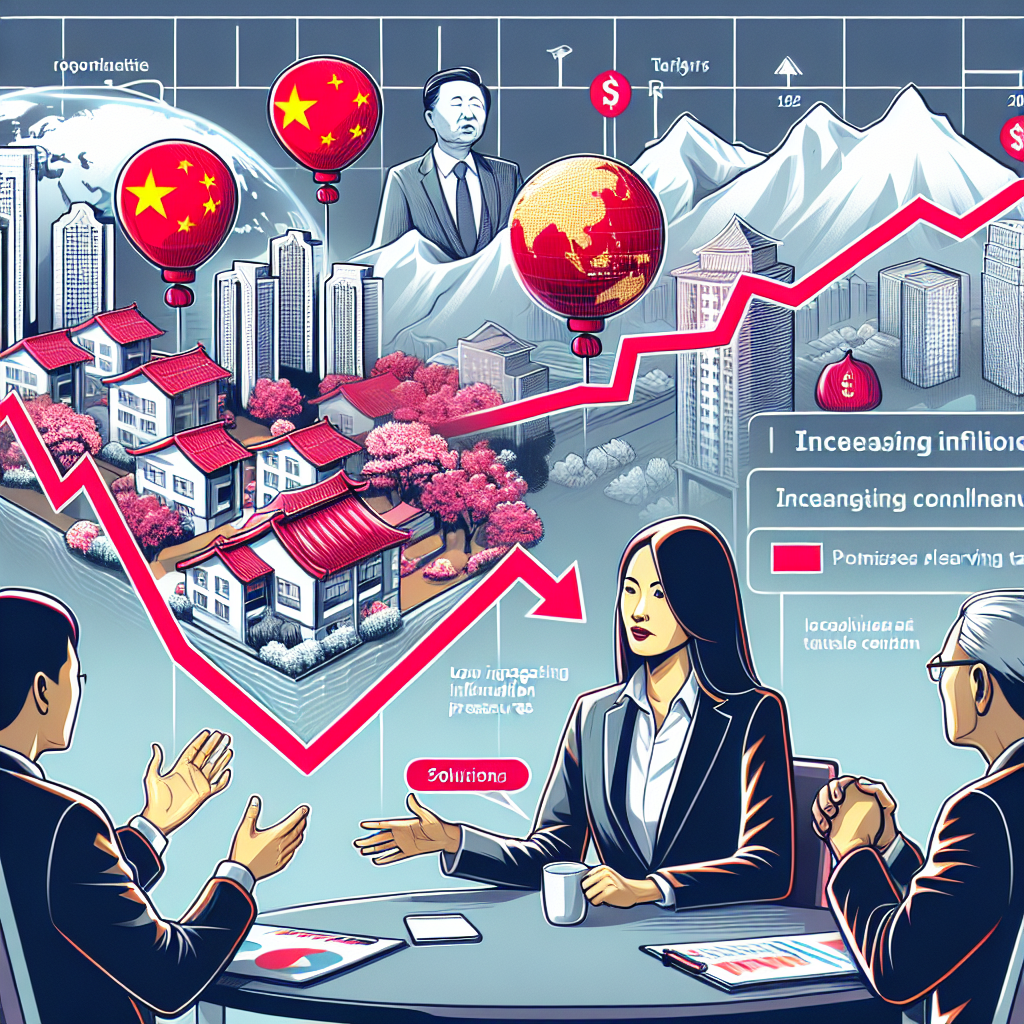
The continued crisis in the real estate industry, exacerbated by tightening inflationary pressures due to low consumer confidence, as well as President-elect Donald Trump’s tariff promises, pose three challenges for the Chinese economy in 2025.
Mary Gallagher, the Dean of the Keough School of Global Affairs at the University of Notre Dame, wrote in World Politics Review that the current issue facing the Chinese economy is weak growth.
“The necessary restrictions on investment-led expansion and the real estate sector have cut off traditional avenues of growth. Following the end of the stringent COVID (CCP Virus) zero-tolerance policy in Beijing, Chinese household consumption did not rebound as strongly as many expected,” she wrote.
Consumers are feeling the pressure, with declining real estate prices eroding household net worth and the impact of the pandemic leaving many feeling economically insecure.
Gallagher added that this uncertainty, coupled with deteriorating trade relations between Beijing and China’s major trading partners, is causing households to tighten their belts, expecting to face even more difficult times ahead.
To stimulate consumption, the Chinese Communist Party initiated a significant salary increase for civil servants nationwide in December last year, marking the first large-scale pay adjustment in years. However, many private sector employees are facing wage cuts. Additionally, a large number of young people are struggling to find jobs, leading to high unemployment rates.
On social media platform Weibo, some netizens expressed: “People are even less likely to spend money, no longer ordering takeout and buying discounted groceries every night.”
The sluggishness in the Chinese real estate market has persisted for several years. In 2020, highly leveraged real estate giants such as Evergrande were impacted by the government’s “three red lines” policy. These measures triggered a liquidity crisis among property developers, rendering them unable to complete projects, further weakening consumer confidence.
Despite the slowing pace of the decline in housing prices in December 2024 being at its lowest level in 17 months, the market remains fragile. The comprehensive stimulus plan announced in September failed to reverse the market’s pessimistic sentiment.
Approximately 70% of Chinese households’ wealth is tied to real estate, with most being in pre-sold properties. Many buyers are still waiting for unfinished apartments to be delivered.
President-elect Trump had previously stated during his campaign that he intended to impose tariffs of up to 60% on Chinese imports, citing market saturation and threats to American industry.
Since the conclusion of the U.S. election, Beijing has hinted multiple times that if a new round of trade war erupts with the U.S., China will retaliate, including measures such as cutting off critical mineral resources and penalizing American companies operating in China.
However, if China uses these tools too aggressively, it may backfire as such actions could only accelerate the decoupling of the U.S. and its allies from the Chinese economy.
The Wall Street Journal noted that as long as China’s economic model remains heavily reliant on selling goods to Western consumers, this decoupling trend will have adverse effects on China.
Analysts believe that any response by the Chinese government to the U.S. will draw attention from other countries. To avoid losses, these countries may take preemptive measures to reduce their reliance on Chinese manufacturing. In fact, many countries are already feeling uneasy about overdependence on Chinese supply chains and have begun taking corresponding actions.