
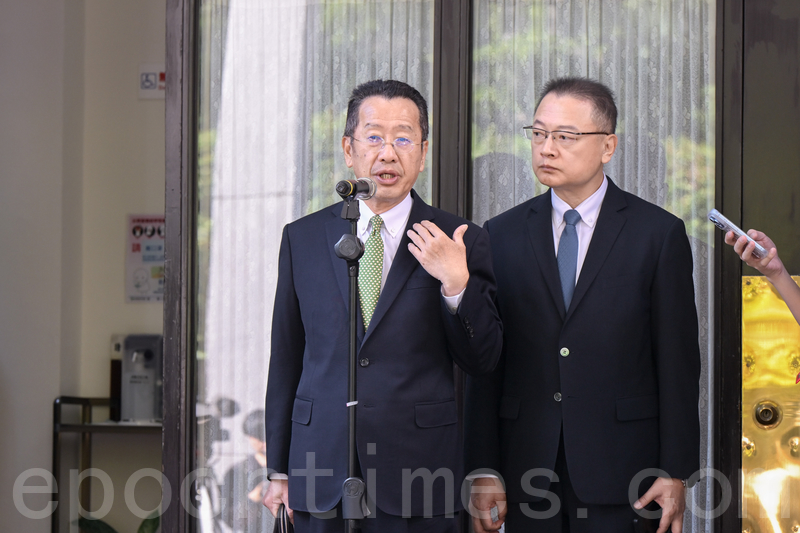
The Ministry of National Defense of the Republic of China has proposed a dedicated pilot system to retain senior flight officers in the ranks, such as Colonel Zhong. Minister of National Defense Gu Li-hsiung stated today (13th) that flight officers have a passion for flying and a sense of honor for their flying duties. Through the dedicated pilot system, flight officers can serve until the age of 58, with confidence that it can reduce the issue of mid-career transitions among experienced and mature flight officers.
The Ministry of National Defense of the Republic of China announced on the 12th that the “Regulations for the Use of Air Force Dedicated Flight Officers” has been completed and submitted for review by the Executive Yuan on September 4. This initiative aims to increase the number of positions and extend the length of service to retain qualified, experienced, and mature senior colonel and colonel flight officers with at least 14 years of service, allowing them to continue serving until the age of 58 based on their willingness, without being bound by the service limits of 26 years for colonels and 30 years for colonels.
Executive Yuan Chief Su Rong-tai led heads of various departments to the Legislative Yuan today to present the government’s policy report and be ready for questioning. Prior to the meeting, Gu Li-hsiung conducted a media interview. When asked about concerns regarding whether senior flight officers like Colonel Zhong can handle more demanding flight duties, Gu Li-hsiung emphasized that the Defense Ministry’s flight personnel undergo annual aviation physical examinations and regular aviation physiological and physical training, as well as training on G-force. Failure to pass these retrainings would disqualify them from frontline flight duties. The physical standards are stringent, which should not pose any issues.
Gu Li-hsiung further explained that the current challenge lies with colonel-rank officers, as the maximum service limit at age 48 presents income concerns. Failure to transition to civilian aviation or lack of promotion would lead them to retirement. The Ministry of National Defense has therefore targeted colonels at 48 and colonels at the maximum service limit of 30 years to extend their service until the age of 58 through the dedicated pilot system.
Facing competition from civilian aviation, Gu Li-hsiung believes that by maintaining the physical fitness of flight officers and allowing them to serve until the age of 58, they will gain an advantage in the competitive aviation industry. The passion for flying and the sense of honor in performing flight duties among flight officers, coupled with comparable aviation allowances to civilian aviation benefits, give confidence that the issue of mid-career transitions for senior flight officers at the colonel level can be alleviated.
In its special report to the Legislative Yuan on the 12th, the Ministry of National Defense mentioned the current situation of flight personnel retirement and replenishment mechanisms. The report highlighted that the Air Force’s flight manpower is currently maintained at a high level, with an establishment-to-actual ratio of 87.8%, adjusted to meet the requirements of new fighter jet missions. However, external factors have impacted the recruitment and retention of flight personnel, similar to challenges faced by military forces around the world. Retired flight personnel in the Air Force until 2026 have all completed at least the minimum statutory years of service and not reached the maximum service limits at various ranks, due to factors such as “mid-career choices for older officers” and “civil aviation fleet expansion recruitment.”
Regarding mid-career choices for older officers, the Ministry of National Defense explained that according to the “Military Officer Service Regulations of the Army, Navy, and Air Force”, the maximum service limit for colonels is 26 years (around 48 years old) and for colonels is 30 years (around 52 years old). Since there are no flight benefits after retirement, unlike civilian pilots who can practice until the age of 65, early transition to civilian aviation offers a career continuation advantage, leading some flight personnel to choose to switch careers after completing their basic obligation or serving for 20 years, making it challenging to retain experienced flight personnel in the military.
In terms of replenishing flight crew channels, the Ministry of National Defense mentioned that basic flight training for flight personnel is primarily conducted through military academy graduation courses and flight reserve officer courses, supplemented by various outreach channels such as campus promotion and media campaigns to attract young students to the aviation profession and enhance flight personnel. In response to the F-16 fighter jet mission, the Air Force has planned to increase F-16 flight personnel training since 2021.
The Ministry of National Defense emphasized its commitment to nurturing and retaining flight and specialized talent, continuously improving welfare systems, career development, and reviewing benefits in a timely manner to increase the willingness of officers and soldiers to serve and continuously replenish flight personnel. The recent recruitment rates of flight personnel in the Air Force have been satisfactory, with a recruitment rate of 96.2% in 2024, 112% in 2025, and 98.6% in 2026.
To address the challenges faced by flight personnel in service, the Ministry of National Defense has completed the “Regulations for the Use of Air Force Dedicated Flight Officers” and submitted it for Executive Yuan review on September 4, 2026, aiming to retain flight talent through prolonged service mechanisms and ensuring the combat effectiveness of the Air Force.