
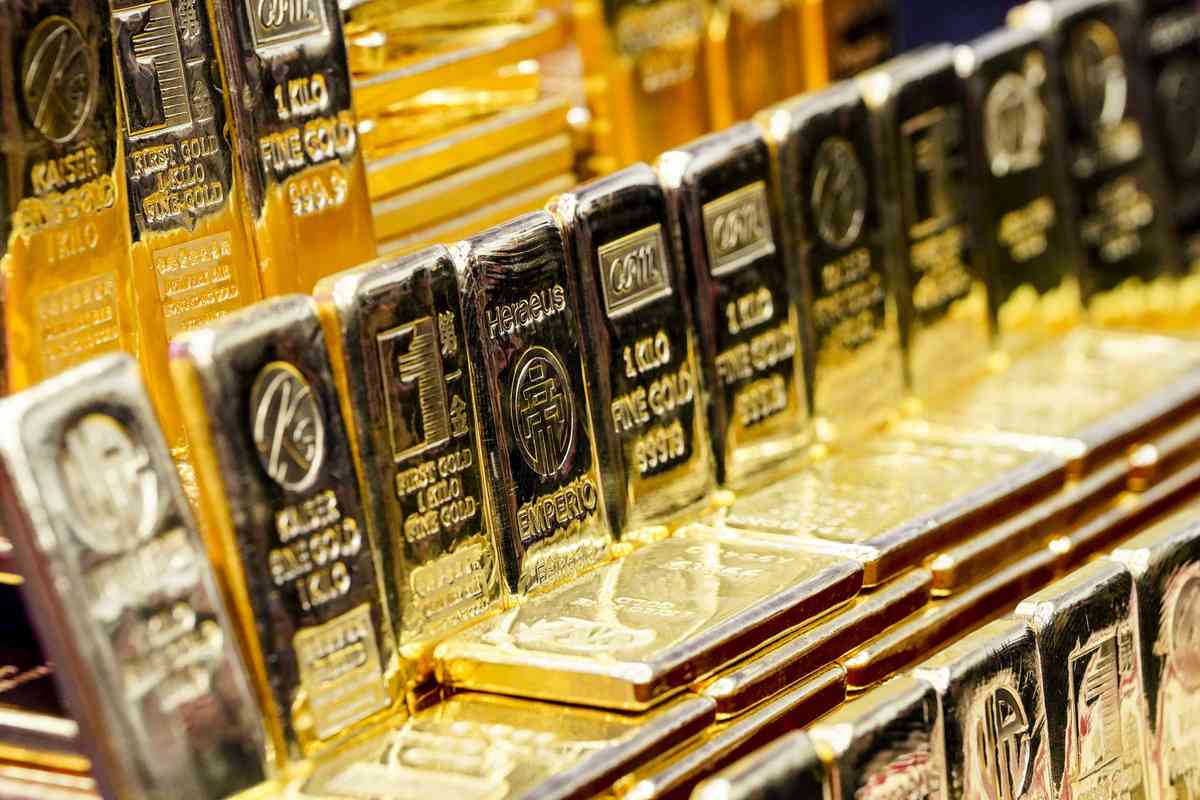
China’s central bank, the People’s Bank of China (PBOC), remains one of the most active official gold buyers in the world, having increased its gold holdings for 23 consecutive months, setting a record for the longest continuous buying streak in over a decade. The amount of gold imported by China has also reached unprecedented levels.
According to data from China’s State Administration of Foreign Exchange, the PBOC increased its gold holdings by around 23 tons in September, marking the largest monthly increase in nearly three years and continuing its longest continuous buying streak since at least 2015. Chinese customs data shows that in the first eight months of 2026, China’s gold imports reached a record-breaking $158.8 billion, with imports exceeding 1000 tons; surpassing the total 2025 imports of $96.5 billion and 886 tons.
Reported by CNBC, Aakash Doshi, the gold strategy director at State Street Investment Management, mentioned that domestic gold prices in the Chinese market have surged significantly, indicating that seasonal demand during the winter will be stronger.
China’s gold purchases come at a time when the gold price is falling. Gold prices hit a historical high of over $5,500 per ounce in January, but dropped by over 8% in September to around $4,176 per ounce. Doshi predicts that driven by strong demand, gold prices will rise to $4,750 to $5,500 per troy ounce by the end of the first quarter of 2027.
As for why China is aggressively adding to its gold reserves, CNBC analysis suggests that this sustained buying spree reflects Beijing’s efforts to reduce reliance on the US dollar, while also highlighting the lack of alternative safe investment channels for Chinese households.
Carsten Menke, an analyst at Julius Baer Group, stated that the main motivation behind China’s increased gold holdings is political, aiming to lower dependence on US Treasury bonds as reserve assets.
Following Russia’s invasion of Ukraine in 2022, Western countries froze the assets of the Russian central bank, highlighting that during periods of geopolitical tensions, a country’s reserve assets held abroad may face restrictions, while gold stored in national vaults remains unaffected. According to data from the US Treasury, as China continues to diversify its foreign exchange reserves, its holdings of US Treasuries dropped to $618 billion in July, the lowest level in 18 years.
Another reason for China’s increased gold imports is amid the uncertain economic environment, Chinese households and businesses are turning to gold as a hedge asset.
Chinese consumers are increasingly buying gold jewelry, bars, and coins. Domestic investors in China lack other investment options. The real estate market, once the main channel for Chinese family wealth accumulation, has been in a prolonged slump. For ordinary families, the role of gold is evolving, becoming a highly regarded form of wealth reserve.
With weak demand for loans, the yields on bank deposits and bonds have declined. The one-year government bond yield in China fell to around 1.2%, while the equivalent US Treasury yield is approximately 4.46%.
Ole Hansen, head of commodity strategy at Saxo Bank, noted that “the opportunity cost of holding gold in China is much lower compared to many Western markets.”
The World Gold Council states that the outstanding performance of gold during crisis periods, portfolio diversification, and hedging against inflation are among the main reasons central banks hold gold. Additionally, using gold as a hedge against geopolitical risks and as part of a policy for diversifying reserve assets are important factors driving central banks to increase their gold holdings.