
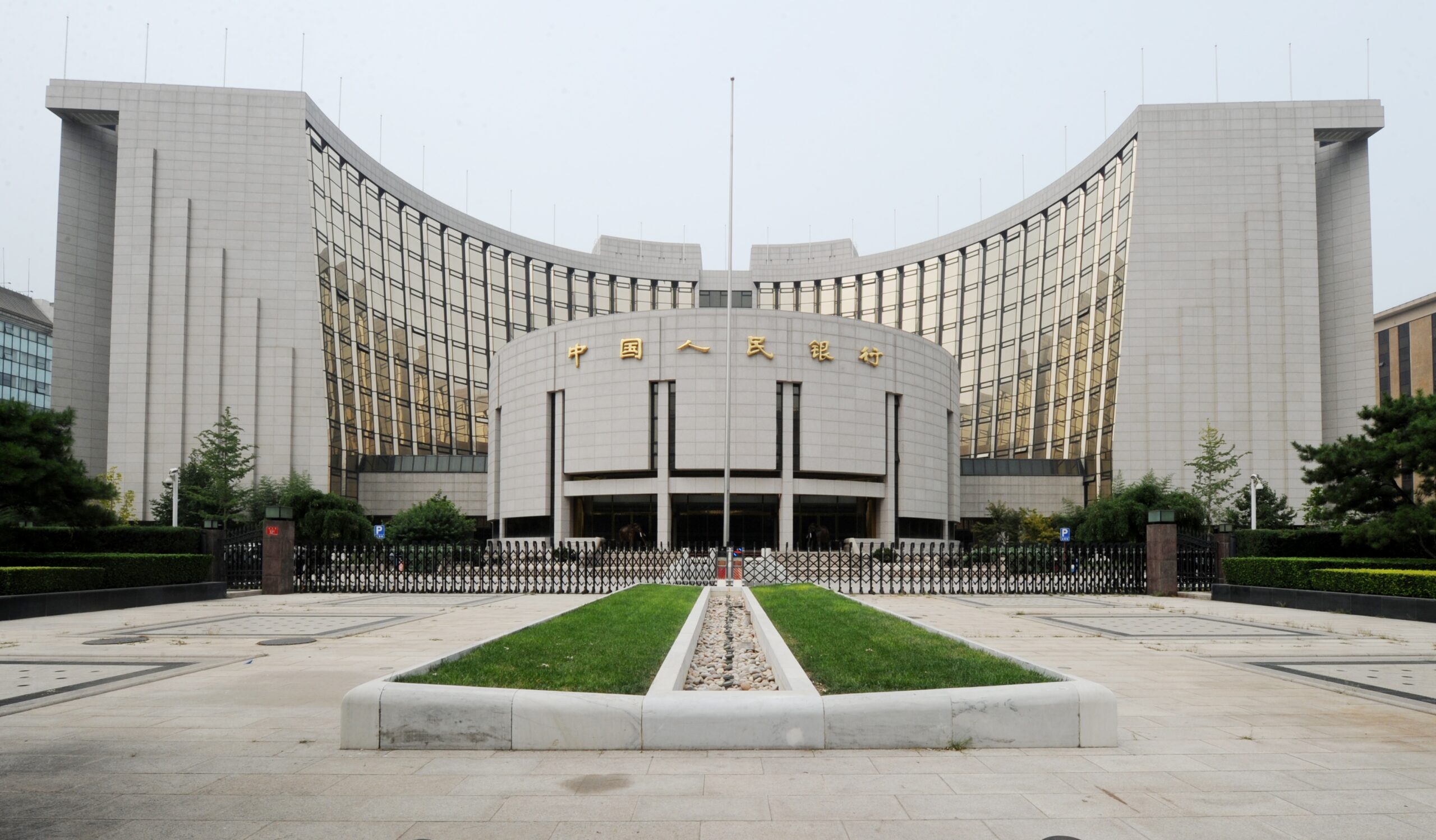
The People’s Bank of China has maintained the Loan Prime Rate (LPR) unchanged, further widening the interest rate spread between China and the United States. Analysts believe that the Chinese yuan exchange rate and capital flows are under pressure, and the Federal Reserve’s interest rate hike has become one of the factors constraining the monetary policy of the People’s Bank of China.
On September 20, the People’s Bank of China authorized the National Interbank Funding Center to announce that the Loan Prime Rate (LPR) was: 3.0% for the 1-year period and 3.5% for periods of over 5 years. The above LPR is valid until the next LPR announcement.
The Loan Prime Rate (LPR) is the benchmark lending rate calculated and published by the National Interbank Funding Center, authorized by the People’s Bank of China, for commercial banks to lend to their prime customers. It is divided into two categories: 1-year and over 5 years. The 1-year LPR is usually used as a reference benchmark for short-term and working capital loans for enterprises, while the LPR for periods over 5 years is the pricing benchmark for the vast majority of individual housing mortgage rates.
According to a report by China Fund News on September 20, Dong Ximiao, Chief Economist of Zhonglian Securities and Executive Director of the Shanghai Finance and Development Lab, analyzed that major central banks globally are shifting towards tightening monetary policies, and external environmental changes have had a certain impact on lower interest rate levels.
Dong Ximiao stated that the Federal Reserve’s 0.25% interest rate hike in September, raising the federal funds rate target range to 3.75%-4.00%, has further widened the interest rate spread between China and the United States. This puts pressure on the Chinese yuan exchange rate and capital flows, objectively reducing the space for China to lower interest rates and LPR in the short term.
Zhao Zenghui, Chief Analyst of Fixed Income at Changjiang Securities Research Institute, believes that interest rates are the price of funds and serve as an intuitive signal to observe the supply and demand balance of funds in the financial market. When the economy clearly weakens and the government needs low-cost funds to stabilize the real estate market and resolve local debt issues, the possibility of interest rate cuts will significantly increase.
Political observer Xia Yan believes that when the Federal Reserve raises interest rates and the People’s Bank of China maintains loose monetary policies, the widening China-US interest rate spread leads to higher returns on dollar-denominated assets compared to renminbi assets. This triggers strong capital outflow pressure and downward pressure on the renminbi exchange rate. In order to maintain exchange rate stability, the People’s Bank of China cannot significantly lower interest rates. However, the inability to further reduce LPR rates related to housing loans due to these considerations keeps costs high for homebuyers, directly suppressing the real estate market.
Xia Yan pointed out that large Chinese real estate developers have relied on issuing US dollar bonds in Hong Kong or overseas in the past. With high US benchmark interest rates, the interest costs for these developers issuing new bonds increase, or they may even be unable to obtain loans at all. This directly leads to the rupture of the overseas funding chain for real estate companies, exacerbating the risk of unfinished projects or debt defaults, severely undermining market confidence.
Public data shows a significant gap between the yield of Chinese 10-year government bonds and US government bonds of the same term. The yield on US 10-year government bonds has surpassed 5%, reaching a new high since June 2007. The yield on the 10-year Chinese government bonds issued by the Ministry of Finance is around 1.68%.
Xia Yan mentioned that the continuous widening of the US-China interest rate spread reduces the attractiveness of domestic assets in China to international and local investors, and increases capital outflow pressure. Selling off Chinese assets to purchase assets such as US government bonds for almost risk-free profits has become a common practice.
In recent years, funds have been steadily withdrawn from China for various reasons, including the increasingly strict control by the Chinese government, diminishing investment opportunities, deteriorating business environment, and economic downturn in China.