
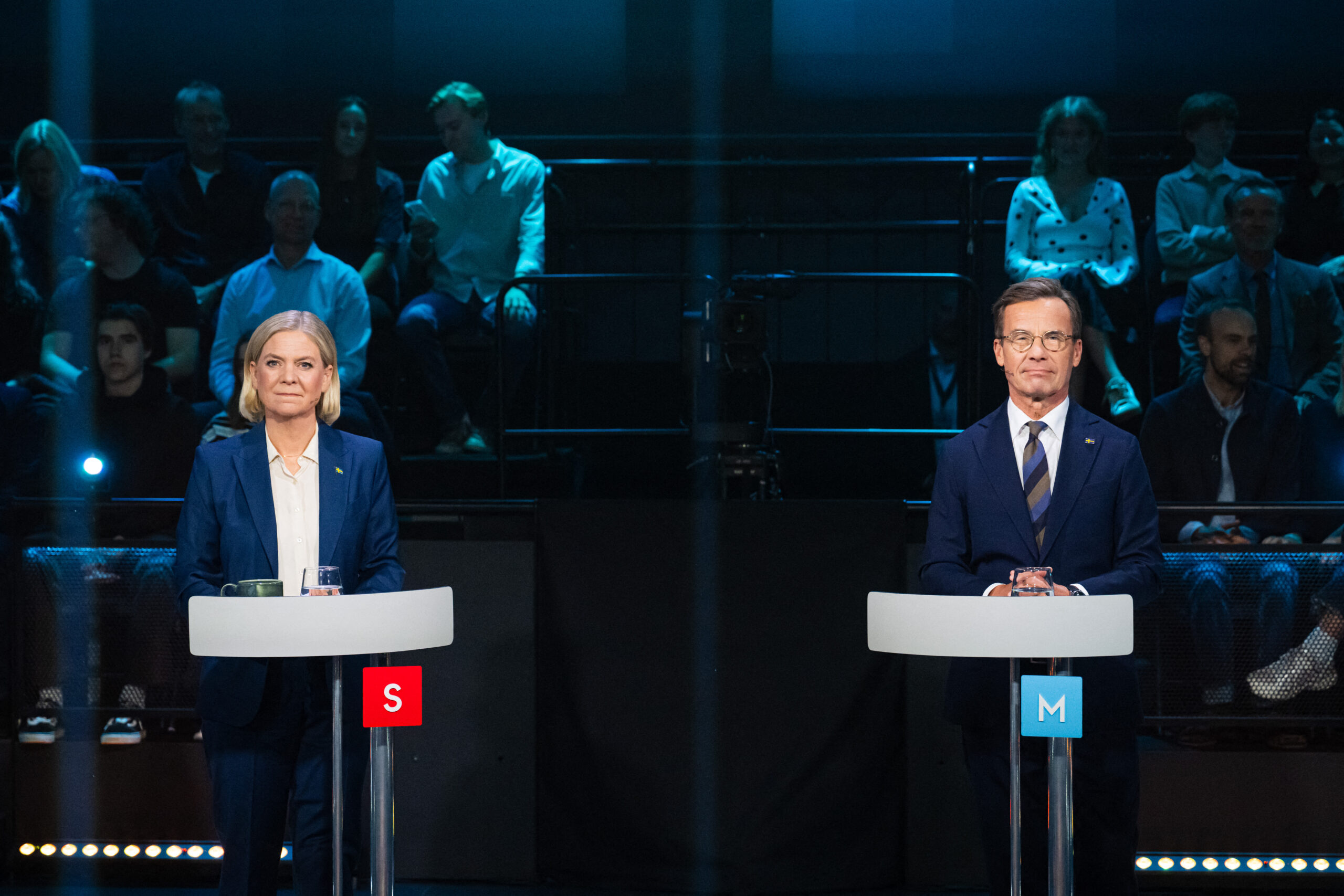
Sweden’s parliamentary election is coming to a close as the opposition led by former Prime Minister Magdalena Andersson is temporarily leading Prime Minister Ulf Kristersson’s right-wing coalition by 3 seats, crossing the majority threshold in the parliament.
However, as some early votes and overseas ballots are still being counted, the final result is yet to be determined.
This election is seen as a test of Sweden’s domestic policies over the past four years. Kristersson’s government tightened immigration policies, strengthened the fight against gang crime, and relied on the support of the Sweden Democrats, who are not part of the cabinet, to maintain a majority in the parliament.
The outcome of this election not only determines a possible change in government but also whether the current policy direction will continue and if the Sweden Democrats will formally enter the government for the first time.
According to the preliminary vote count by the Swedish Election Authority, in the 349-seat parliament, the opposition led by former Prime Minister and Social Democrats party leader Andersson is projected to win 176 seats, while the current Prime Minister and Moderate Party leader Kristersson’s right-wing coalition is at 173 seats, with a difference of only 3 seats.
“We must wait for the final election results,” Andersson told supporters after the election, “Currently, we are ahead… but we must wait for the final results.”
The results announced on election night were preliminary. On Wednesday, September 16, election officials will complete the count of early votes that did not arrive at polling stations in time, including late-arriving overseas ballots. Additionally, county administrative boards will officially count and verify the votes from Monday, September 14, onwards. The final results of the parliamentary election are expected to be confirmed by this weekend.
Due to the close election results and the Swedish government formation depending on parties gaining enough support in parliament, Kristersson has not yet acknowledged defeat.
He stated that even if the current results remain unchanged, he will explore the possibility of forming a viable government coalition to secure enough support for implementing fiscally responsible policies supported by voters.
Kristersson has been in power since 2022, leading a coalition government of three centrist-right parties and relying on the anti-immigration Sweden Democrats for support outside the government to maintain a parliamentary majority.
Over the past four years, the Swedish government has tightened immigration policies, including ending permanent residency for refugees, tightening some welfare rules, and increasing deportations of undocumented individuals. Supporters of the right-wing argue that these measures help reduce the number of immigrants and curb gang violence, while opponents believe that some measures may undermine civil liberties.
Before the election, Kristersson further stated that if the right-wing coalition regains the majority, he is willing to have the Sweden Democrats, with their far-right heritage, officially join the government. This made whether the party enters the cabinet for the first time a focal point of this election.
However, the Sweden Democrats’ vote share in this election has decreased by nearly 3 percentage points from 20.5% in 2022, dropping them from the second to the third position. Based on the current vote count, this would be the first time in over 20 years under party leader Jimmie Åkesson that the party has seen a decline in both parliamentary seats and vote share.
Even if Andersson’s camp ultimately retains the majority, forming a government may still be challenging. Reuters points out that there are internal divisions within the coalition on issues such as immigration policy, taxing billionaires, and building new nuclear reactors, with the Center Party advocating for free-market policies and the Left Party taking a different stance on several economic policies.
On the other hand, Sweden’s major political parties have broad consensus on significant foreign policy and security issues such as supporting Ukraine and joining NATO.
Reuters notes that this election is unlikely to change Sweden’s pro-Western and pro-Ukraine stance but may determine whether Kristersson’s government’s tightened immigration policies in recent years will continue.