
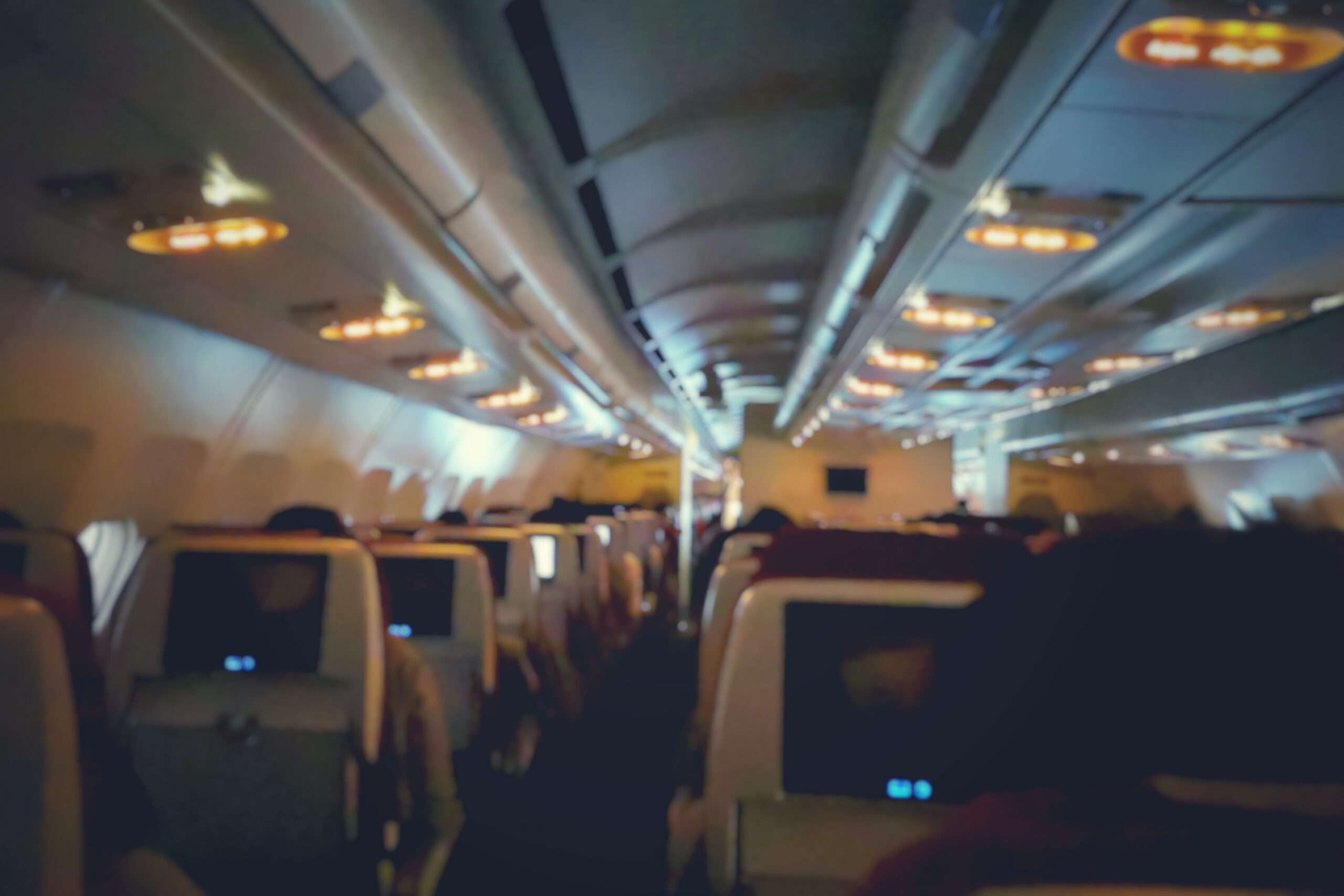
When you board a plane, you may notice that before takeoff or landing, the flight attendants ask passengers to open the window shades, and the cabin lights are dimmed. You might think dimming the cabin lights is for passengers to sleep better, but that’s not the case.
According to the aviation news website “Simple Flying,” on most flights before takeoff or landing, the cabin manager (responsible for managing flight attendants during the flight) will dim the cabin lights. During the day, the changes in lighting may not be very noticeable or necessary, depending on external lighting conditions. However, it is essential as a safety measure during nighttime, early morning, or dusk.
After the flight attendants complete safety checks inside the cabin and report to the cabin manager, the cabin manager dims the lights inside the cabin to ensure the aircraft is ready for takeoff or landing.
During safety checks, flight attendants instruct passengers to fasten their seat belts, straighten their seat backs, stow tray tables, and ensure there are no luggage or items in the aisle and on the floor to prevent tripping during emergencies. Additionally, window shades are required to be raised.
Opening the window shades is also for safety purposes. It allows both the crew and passengers to observe the outside conditions during these crucial phases of the flight. If closed, visibility for both crew and passengers would be obstructed.
Dimming the lights helps the crew and passengers adapt to the external lighting conditions, facilitating evacuation in case of emergencies. It takes about 5 to 10 minutes for the eyes to adjust from bright to dark environments. In a dimly lit cabin, eyes can adapt to the low visibility inside and external lighting, aiding in emergency evacuations.
Generally, takeoff and landing are the most dangerous phases during a flight and are more prone to accidents, so airlines take various measures to ensure safety during these stages.
A study conducted by Boeing based on commercial aircraft accidents in 2024 revealed that 21% of accidents occur during takeoff or initial climb, with 46% of fatal accidents happening during the final approach and landing.
Fortunately, aircraft accidents are extremely rare. The International Air Transport Association points out that the risk of fatalities due to aircraft accidents is very low. According to their estimates, a person would have to fly for 25,214 years daily before encountering a fatal accident with a 100% probability.
Even though dimming cabin lights during long nighttime flights helps passengers rest, during takeoff and landing phases, passengers should remain alert and aware of their surroundings.
Data from the Flight Safety Foundation shows that in case of cabin smoke due to accidents, passengers’ ability to find their way may decrease by up to 83%.
Dimming cabin lights can help eyes adjust to low-light environments, maintain orientation, and provide clearer visibility during emergency evacuations. Visibility of emergency exits and aisle signage is crucial in dim and smoky cabin conditions.
Research indicates that passengers rely on visual cues to locate exit points during evacuations, but vision is often the first sense affected by smoke. However, visibility underneath the smoke layer is usually not compromised. Therefore, aisle markings and low-level lighting facilities remain visible, designed to guide evacuations.
The Federal Aviation Administration in the United States and the European Union Aviation Safety Agency require bright aisle markings visible in darkness. These markings are often made of photoluminescent materials, glowing in the dark even without electricity.
For pilots, dimming cabin lights also have benefits. It allows them to have a clear view of the aircraft’s surroundings. Pilots illuminate their aircraft’s exterior lights during takeoff and landing, enabling other pilots to see their aircraft and lighting up the runway.