
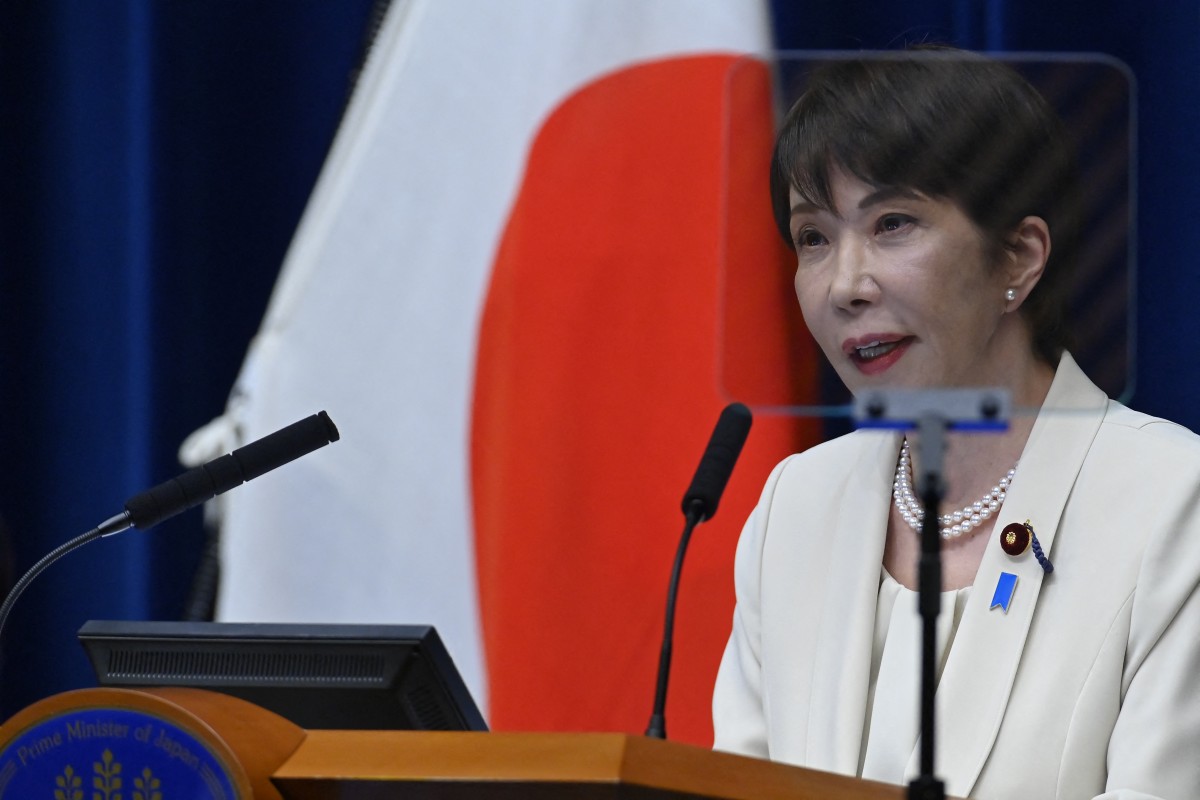
On Friday, August 14th, Japanese Prime Minister Sanae Takashii criticized Russian President Putin’s first visit to the disputed territory of the Kuril Islands (the four southernmost islands of the archipelago that Japan calls the “Northern Territories”), stating that the “Northern Territories” are “essentially Japanese territory”.
Takashii posted on the social platform X on Thursday, stating that the Japanese government “has repeatedly requested Russia to ensure the President does not visit the Northern Territories”, which refers to the “Northern Territories”.
She added that Putin’s visit is “absolutely unacceptable”.
The Kuril Islands are located between the southern tip of the Kamchatka Peninsula in Russia and the northeast corner of Hokkaido in Japan. This sparsely populated archipelago, with numerous volcanoes, separates the Okhotsk Sea from the Pacific Ocean, and the four southernmost islands of the archipelago were annexed by the Soviet Union during the closing days of World War II.
During the visit, Putin inspected Iturup Island, where Russia has a strategically significant military base. Before meeting with Valery Limarenko, the governor of the Sakhalin region, the Russian President toured a fish processing plant, a hospital, and a school.
Japanese Foreign Minister Toshimitsu Motegi also criticized the visit, posting on Facebook, “Japan strongly protests this visit.”
In the 1951 San Francisco Peace Treaty, Japan renounced all rights, titles, and claims to the “Kuril Islands” but did not recognize the Soviet sovereignty over the territory.
While a Joint Declaration in 1956 ended the state of war between the two countries, the dispute over these islands has prevented Tokyo and Moscow from signing a peace treaty to this day.
Analysts from the Washington-based think tank, the Institute for the Study of War, suggested that Putin’s visit was likely a response by the Kremlin to Japan’s latest Defense White Paper, aimed at undermining Sanae Takashii’s efforts to enhance Japan’s defense capabilities.
Earlier this month, Japan released the Defense White Paper, which triggered strong protests from Putin and his allies in North Korea. The Russian President criticized the white paper for listing Moscow as one of Tokyo’s main threats.
The paper stated: “Russia continues to conduct active military activities in the ‘Northern Territories’ – the territories belonging to Japan but under illegal occupation.”
This visit and the subsequent reactions highlight the ongoing tensions and unresolved territorial disputes between Japan and Russia regarding the Kuril Islands, underscoring the complexities of international relations in the region.