
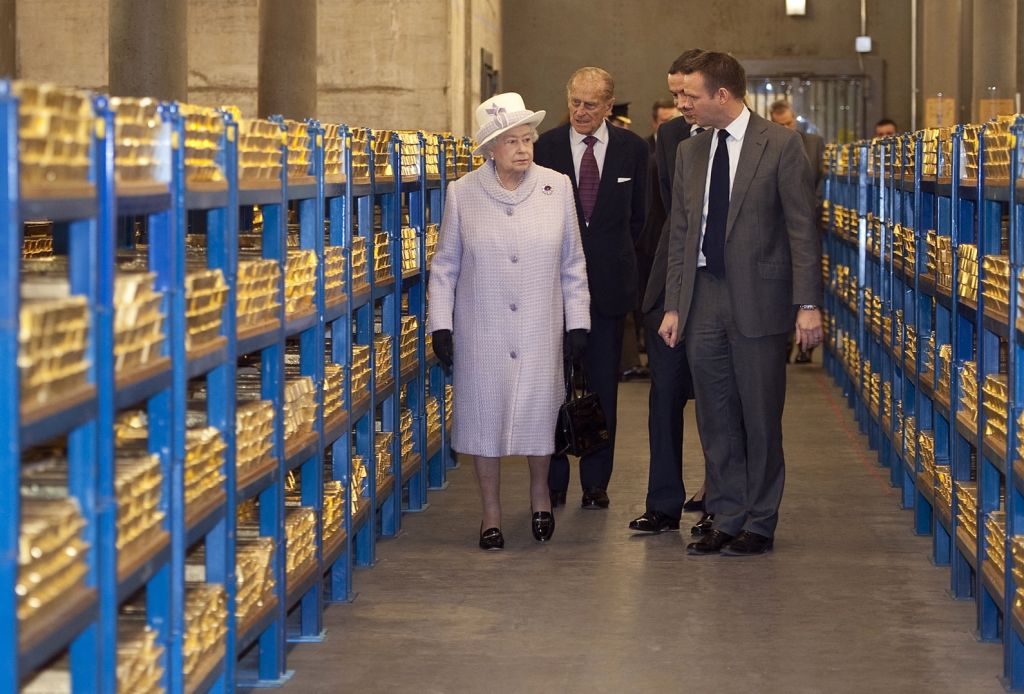
In news dated August 15, 2026, with the mediation of the United States, after nearly two weeks of negotiations, the Venezuelan government and the main opposition agreed to advance a crucial demand to retrieve around 31 tons of gold reserves from the Bank of England, valued at $40 billion.
The ownership of this fund has been a long-standing focus of legal disputes. Since 2018, the Bank of England has been waiting for clarity on control rights to release the huge amount of gold stored in its underground vaults, as they do not recognize the legitimacy of the Maduro socialist government.
In January 2026, Maduro was arrested by the United States, and Vice President Delcy Rodríguez assumed the position of interim president.
In a joint statement released on Wednesday, August 12, the Venezuelan government and the opposition announced their agreement to retrieve significant gold reserves from the Bank of England for reconstruction efforts following a June earthquake that resulted in over 6,000 deaths.
The earthquake caused Venezuela’s inflation rate in July to rise from 13.8% in June to 19.9%. Reuters estimates Venezuela’s annualized inflation rate to be as high as 575.9%.
The joint statement declared, “Both parties will concentrate efforts on reclaiming Venezuela’s international reserve assets stored in the Bank of England.”
Rodríguez had previously written to King Charles III of England in July, requesting the release of the gold stored in London for post-earthquake reconstruction.
She stated that the government and lawmakers have agreed to focus on projects aimed at rebuilding homes, enhancing medical capabilities, restoring power supply, and clearing debris. Therefore, they aim to regain control of Venezuela’s international assets held in the Bank of England.
A member of the opposition involved in the negotiations informed the Financial Times that the gold retrieval work would establish a “transparent mechanism” to prevent the government from misappropriating the gold.
“We are not naive,” the individual said. “We know that Rodríguez’s interim government is not a democratic reformist.”
The UK Foreign Office stated that the British government is not a party to the legal case determining the ownership of the gold control rights.
The Bank of England declined to comment. The bank has been waiting for legal clarity on the ownership of Venezuelan gold control rights before releasing the gold.
The United States has temporarily suspended some sanctions on Venezuela and is closely cooperating with Rodríguez to open up Venezuela’s abundant natural resources to attract foreign investment.
In the joint statement, both parties also agreed to initiate discussions on reforming the Venezuelan judicial system. However, the prominent opposition leader Maria Corina Machado did not participate in the meeting. She has been staying in Washington, D.C., and is prohibited from returning to Venezuela.
Since Maduro’s arrest, Venezuela has been gradually re-establishing channels to access international funds. In July, they received approximately $350 million from the International Monetary Fund (IMF).
The Rodríguez government is also seeking around $46 billion in Special Drawing Rights (SDRs) – a reserve asset of the IMF that member countries can exchange for other currencies.
After enduring decades of a brutal socialist model, Venezuela’s economy remains deeply troubled. According to a report by the Financial Times in June, Venezuela’s total sovereign debt is estimated to be around $240 billion.