
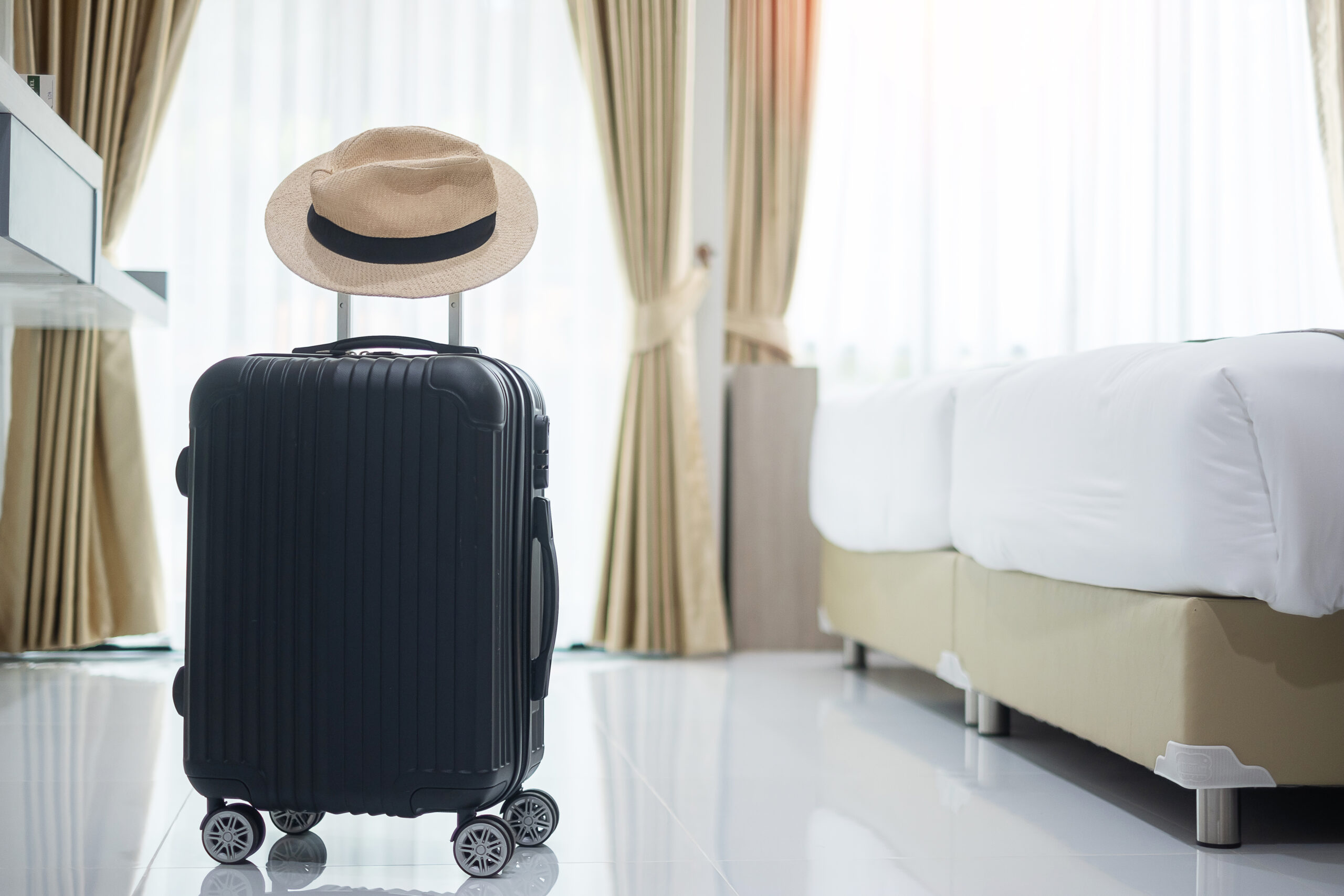
When checking into a hotel, many people have the habit of throwing their luggage onto the bed, sorting through it there, or going out for meals or shopping. However, this practice is not hygienic and could potentially make you sick, as research has shown that there are more bacteria on luggage than on a toilet seat, making it more likely to cause illness.
A study commissioned by the UK insurance company Insure and Go and published last year revealed that luggage can pick up a lot of bacteria during travels, including dangerous ones, but many people seem to be unaware. According to the study, 38% of travelers directly place their luggage on the bed to unpack or pack.
In this study, researchers sampled 10 hard-shell and soft-shell suitcases at a London airport train station and used different swabs for different parts of the luggage.
The results showed that the wheels of the luggage were the dirtiest part, carrying almost 58 times more bacteria than a public restroom toilet seat, including E. coli, staphylococcus, and black mold.
Microbiologist Amy-May Pointer, who conducted the study, confirmed that the wheels of the luggage are the dirtiest part. In terms of the level of contamination and diversity of bacteria and fungi, all the samples from the wheels ranked high.
Pointer said, “The wheels of the luggage are essentially rolling through a world full of bacteria and carrying a whole ecosystem, constantly coming into contact with various surfaces such as sidewalks, streets, airport restroom floors, and train station platforms, yet they are rarely (if ever) cleaned.”
Apart from the wheels, the bottom and handles of the luggage are also highly contaminated areas, ranking second and third, carrying bacteria tens of times more than a public restroom toilet seat.
The study also found that compared to hard-shell suitcases, soft-shell suitcases are more likely to carry bacteria, fungi, and other microorganisms. This suggests that the soft fabric material is more likely to accumulate moisture and dirt.
According to Travel + Leisure magazine in the United States, think about where your luggage has been before placing it on the hotel bed. Airport terminals, restrooms, dirty security conveyor belts, long streets, and various modes of transportation.
Timothy Southern, Director of the Nevada State Public Health Laboratory and Associate Professor of Biology and Immunology at the University of Nevada, Reno, says, “Your luggage may have been placed in areas with poor hygiene.”
Importantly, the contaminants on your luggage do not stay there indefinitely. Southern explains that luggage can act as a means of spreading contaminants, carrying them from one surface to another. Some bacteria and viruses can survive on the surface of luggage, contaminating bedding.
In addition to bacteria and viruses, bed bugs should not be ignored. These small insects often hide in luggage, clothing, bedding, and furniture crevices, with luggage being an excellent carrier as it moves with people.
Southern advises travelers to avoid placing luggage on the hotel bed to reduce the spread of bed bugs. Bed bugs spread quickly, and whether you are in a five-star hotel or a budget motel, they can still appear and potentially infest your luggage, accompanying you back home.
Pointer provides several professional suggestions to help reduce the risk of bacterial infections from travel luggage, making your journey more hygienic:
– Do not place luggage on the bed or table. Use a luggage rack or place it directly on the floor to avoid transferring dirt from the wheels or bottom of the luggage onto your bedsheets or dining table surface.
– Avoid dragging luggage into visibly dirty areas as much as possible. For example, try not to drag it into restroom stalls. The less contamination on the wheels, the fewer troubles later on.
– Wash your hands after handling or dragging luggage, especially before eating or touching your face.
– Wipe down the wheels and bottom of the luggage with disinfectant wipes or a cloth dampened with soapy water after your journey. This can significantly reduce bacteria attachment. This step is especially crucial if you have dragged your luggage through public restrooms or dirty streets to prevent bringing bacteria home.
– Cover the wheels or entire luggage when indoors. Consider using washable luggage covers or placing shower caps over the wheels when bringing luggage indoors to prevent them from transferring bacteria to carpets or beddings.