
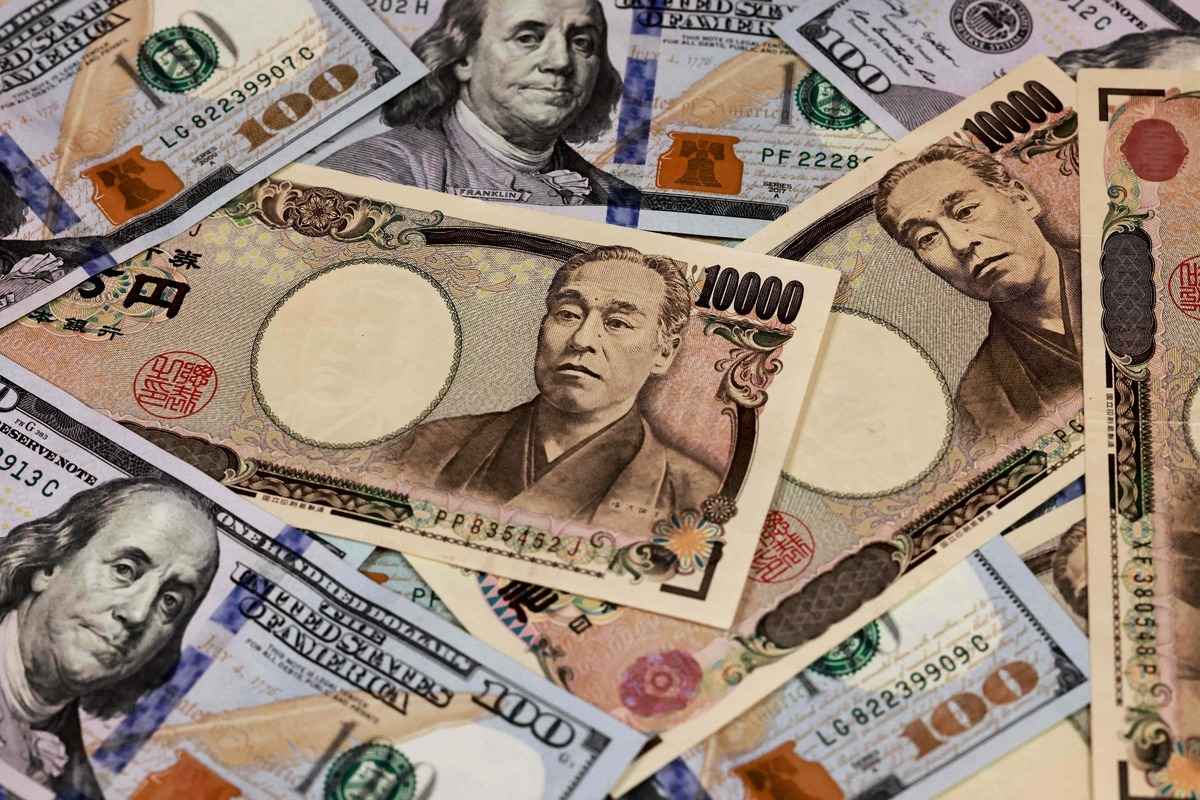
The Japanese Yen exchange rate has been on a downward trend due to factors such as the interest rate differential between the US and Japan, potentially returning to a depreciation posture. The minutes of the meeting released by the Bank of Japan, as the central bank, indicate that a rate hike is imminent.
On August 11th, the Japanese Yen exchange rate fell to 159.30 yen per US dollar. It dropped about 1% from the previous trading day, making it the worst performing currency among the G10 (Group of Ten) currencies.
According to The Japan Times, Lee Ferridge, a strategist at Nomura Bank, stated, “Without new intervention measures, the yen will continue to weaken. The market seems disappointed with the lack of further intervention measures we have seen.”
On August 3rd, the Japanese Ministry of Finance confirmed joint intervention in the foreign exchange market with the United States to address the recent excessive and disorderly fluctuations in the Japanese Yen exchange rate. The Ministry of Finance also emphasized that they will not hesitate to take further joint action with the United States.
The yen depreciated to around 164 yen per US dollar at the end of July, following which Japan and the United States conducted their first coordinated intervention to buy yen since 1998, pushing the yen exchange rate rebound from nearly a 40-year low to around 155 yen per US dollar.
Despite both Japan and the United States stating that they are prepared to take action again when necessary, the significant interest rate differential between Japan and the US, concerns about Japan’s fiscal outlook, and geopolitical uncertainties continue to suppress the yen exchange rate. Additionally, market speculations on the possibility of the Federal Reserve raising interest rates again by the end of the year are dragging down the yen’s performance.
Goldman Sachs mentioned in a report that the market’s reaction to this intervention is relatively mild, and unless there are global environmental changes or unexpected policy shifts, the pressure for the yen to depreciate will re-emerge over time.
Bank of America believes that in order for the yen to strengthen further, Japanese authorities need to take “more forceful” intervention measures or signal a rate hike by the Bank of Japan in September.
Nomura Securities stated in a report that market participants are currently closely watching official information, and “the market will continue to monitor the attitudes of Japanese and US authorities towards foreign exchange intervention.”
During a press conference for the launch of the Nomura Taiwan Japan Select Multi-Asset Fund on August 11th, Zhang Jiwen, head of strategy and marketing at Nomura Investment Trust, stated that in order to narrow the US-Japan interest rate differential and alleviate the depreciation pressure on the Japanese Yen, the Bank of Japan’s rate hike schedule is likely to be advanced. The market previously expected rate hikes every six months, but it now appears that the Bank of Japan is highly likely to raise rates again in September or October this year.
Market analysts interpret this as a strong determination on the part of Japan to combat currency inflation and stabilize the exchange rate. For investors, the lower limit of the yen exchange rate range has gradually become apparent.
According to the minutes of the July meeting released by the Bank of Japan on August 10th, some deliberation committee members stated, “Given that the core consumer price index (CPI) is close to 2% and there is a greater need to consider the risk of price increases than before, the pace of policy rate hikes will be faster than market expectations.”
Committee members urged that “the Bank of Japan needs to adopt a flexible approach to respond to changes in overseas financial conditions and discuss the magnitude of rate hikes, rather than sticking to a fixed pace of increases.”