
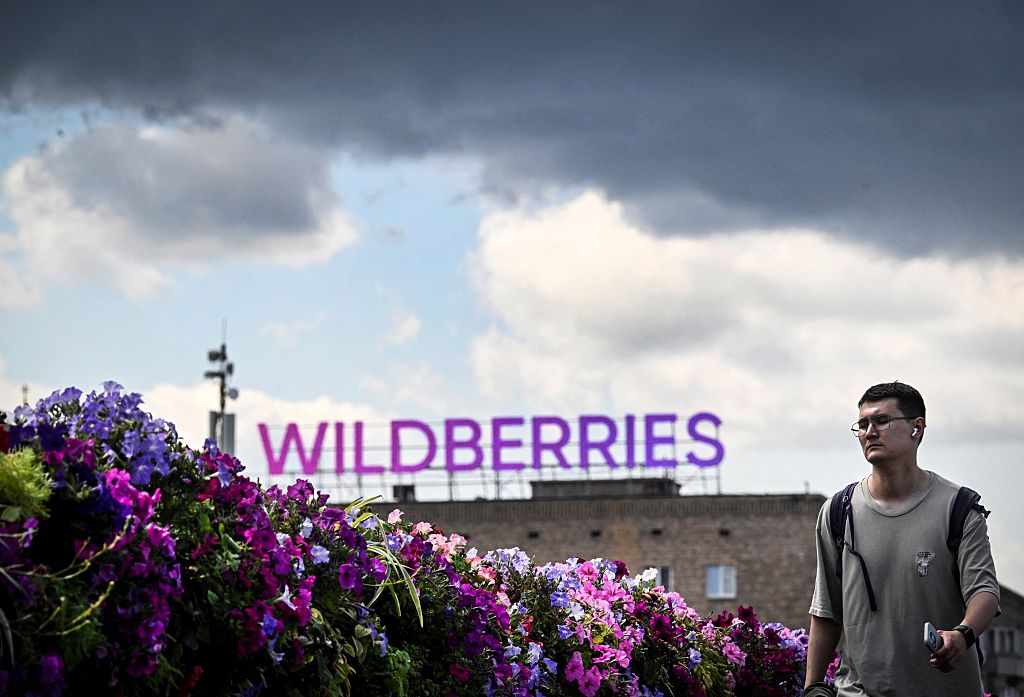
Russian e-commerce giant Wildberries warehouses have been repeatedly attacked, leading to a mainland children’s clothing merchant operating in Russia being forced to clear out their stock. He stated that within two weeks, he suffered losses of about 80,000 RMB, with losses exceeding thousands of RMB in a single day. The remaining goods can only be sold at cost or at a loss, and a more expensive self-delivery model is now being used.
According to a report by “First Finance” on August 5th, Zhejiang children’s clothing exporter Yao Dong operates an e-commerce business in Russia, with goods stored in Wildberries warehouses across the country valued at over 1 million RMB.
Wildberries, known as “野莓” in Chinese, is one of the major e-commerce platforms in Russia and Eastern Europe, often referred to as the “Russian version of Amazon.”
Yao Dong noted that clothing is highly flammable, and just one drone attack could destroy a large warehouse. Since the first attack on July 18th, the Wildberries warehouses containing his goods have been attacked seven times within two weeks, resulting in losses of around 80,000 RMB, with losses exceeding 10,000 RMB on the worst days.
According to a Reuters report on August 4th, since July 18th, approximately 20 Wildberries facilities have been targeted by drone attacks or become attack targets. In Samara region, a warehouse of around 180,000 square meters had 160,000 square meters burnt down.
On August 5th, a Wildberries logistics center in Tula region was attacked and caught fire again, resulting in one person being injured, employees being evacuated, and related distribution operations being transferred to other warehouses.
Before the attacks, about half of Yao Dong’s inventory was stored in self-operated overseas warehouses, while the other half was stored in Wildberries warehouses, where the platform was responsible for storage, distribution, and after-sales services.
To minimize losses, he has switched all goods to self-delivery, sending them from self-operated warehouses to platform sites, then handing them over to local third-party logistics for delivery. This model incurs higher platform service fees, and merchants need to arrange their own vehicles for delivery.
Yao Dong stressed that product safety is now more important than profit. He has been selling popular items at cost price and clearing out slow-moving items at a loss. Currently, he receives around 500 to 1000 orders per day and plans to clear over 20,000 items within two weeks, provided that the warehouse where the stock is located is no longer under attack.
According to a Moscow Times report on July 1st, a new version of the Wildberries seller agreement came into effect on July 7th, listing drone and missile attacks as force majeure events, allowing the platform to claim no liability for related goods damages.
Following this, Wildberries announced offering affected sellers discounts on warehouse fees, favorable loans, repayment extensions, and partial compensation. According to a Reuters report, a Russian merchant whose goods worth 1.5 million rubles were burnt only received a compensation of 8000 rubles, which could only be used for platform advertising. Upon learning that all inventory was destroyed, she said she “sat on the floor and cried.”
According to an Associated Press report, Sergei Semko of the Russian e-commerce research institute Data Insight mentioned that warehouse losses combined with tax increases, fuel crises, and regulatory obstacles are imposing multiple pressures on many small businesses.