
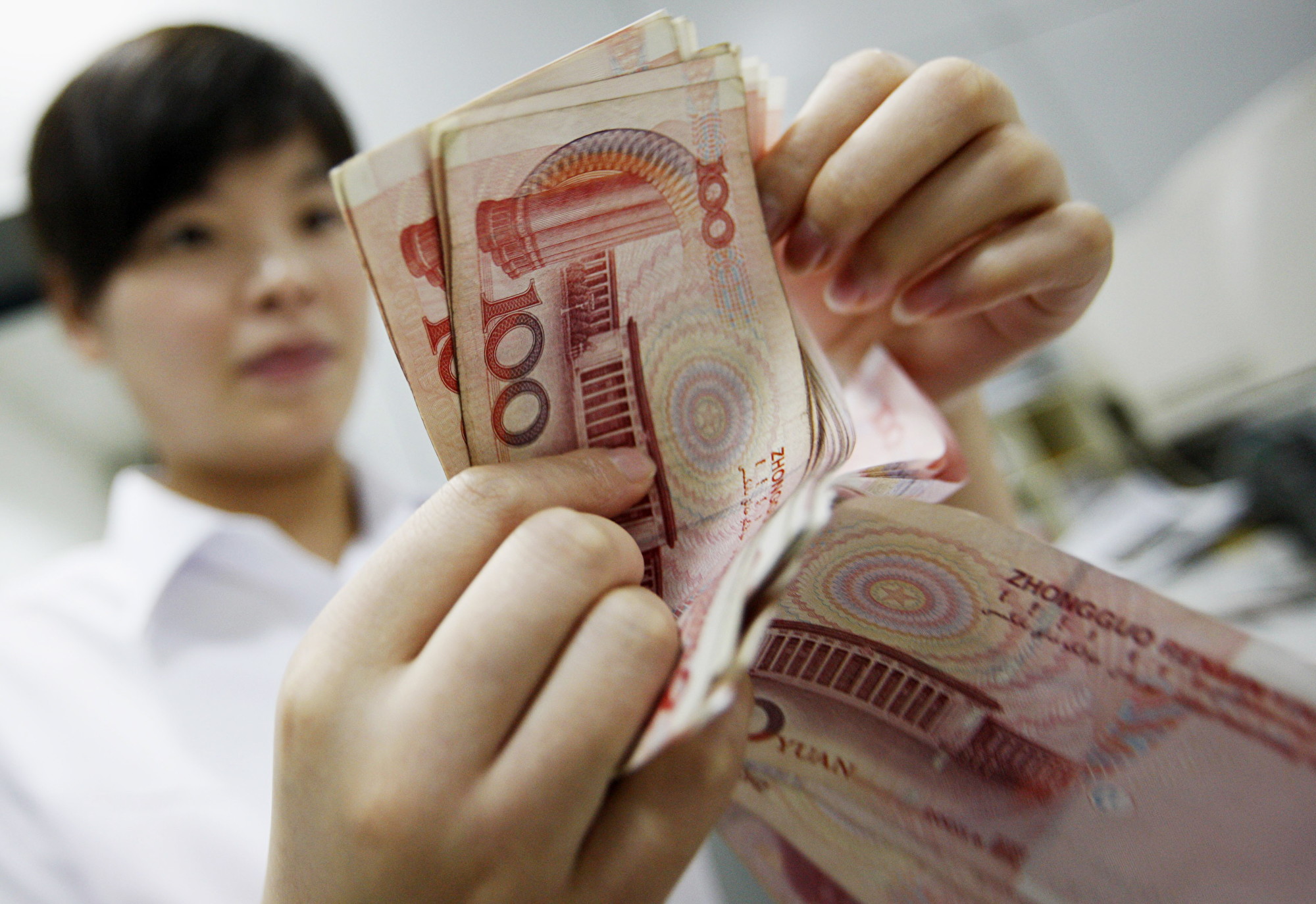
Affected by factors such as the real estate crisis and shrinking consumer market, various Chinese financial institutions, including state-owned banks, are accelerating the disposal of non-performing loans. However, analysis data indicates that the amount of hidden non-performing loans is higher, increasing financial risks and putting pressure on the economy.
According to a report by the mainland’s “Financial Times” on August 4th, so far this year, the entire Chinese banking industry has announced over 1080 instances of non-performing loan transfers, disposing of batches of non-performing loans in retail, corporate, and other categories, with transfer subjects covering state-owned banks, joint-stock banks, local small and medium-sized banks, and other types of banking institutions. The “Financial Times” is a financial media outlet supervised by the People’s Bank of China.
Since July, Industrial and Commercial Bank of China, Agricultural Bank of China, Bank of China, China Construction Bank, Bank of Communications, and Postal Savings Bank have issued multiple announcements on the transfer of non-performing loans through various provincial and municipal branch institutions. The focus of disposal is mainly on personal consumption-related non-performing loans.
According to data from China’s State Administration of Financial Supervision, in the first quarter of 2026, the non-performing loan ratio of commercial banks was 1.51%, an increase of 1 basis point compared to the previous period. Among them, the non-performing loan ratio of state-owned banks was 1.22%, remaining flat compared to the previous period; joint-stock banks were at 1.22%, an increase of 1 basis point; city commercial banks were at 1.85%, an increase of 3 basis points; and rural commercial banks were at 2.79%, an increase of 7 basis points.
Reportedly, Dong Ximiao, chief economist of Zhongtai Securities and executive director of the Shanghai Institute of Finance and Development, stated that in the first half of 2026, the disposal of non-performing assets in the banking industry showed three trends: a rapid increase in the scale of non-performing asset transfers; the transition of non-performing asset disposal from a staged action to a normalized behavior; and the shift in focus from corporate non-performing assets to a balance between corporate and retail non-performing assets.
Reuters recently reported that the risks of small and medium-sized banks are higher than those of state-owned banks, which may bring new financial concerns in the future. The consolidation of rural banks and rural credit cooperatives into large regional banks on a historic scale highlights the severe operating pressure faced by small and medium-sized banks. A greater challenge lies in the fact that most of China’s approximately 4000 small banks are heavily supported by debt-laden local governments, chiefly obtaining funding through the short-term money market and interbank lending. The collapse of a few among them could potentially jeopardize financial stability.
One contributing factor is that many small and medium-sized banks are severely impacted by slowing loan growth and a surge in non-performing loans, with the long-term depression of the real estate market being the largest source of risk for China’s small and medium-sized banks in recent years. Many local banks have heavily relied on real estate lending, with many developers and related companies being important clients.
The reporting emphasizes that on the other hand, the deteriorating finances of local governments further exacerbate the burden on banks. Over the years, local government financing platforms have raised large amounts of debt for infrastructure investment, with local commercial banks being one of the main sources of funding. As local land transfer revenues sharply decline, the weakened debt repayment capacity of many local governments has raised concerns in the market about the potential further spread of local debt risks to the financial system.
Bloomberg previously cited analysts’ estimates that the non-performing loan ratio in the Chinese banking industry is much higher than the official figure of 1.51%, possibly reaching 10%, which means that around $3 trillion (approximately 21 trillion yuan) in debt that should be classified as non-performing loans has not been included in statistics.
For example, one Mr. Hu, a plastic company owner, defaulted on a bank loan of $730,000 (about 5.1 million yuan), but the bank did not require immediate repayment and allowed for deferred payment. This not only enabled him to continue operating but also prevented the bank from adding another non-performing loan record to its books.
According to the regulations of the People’s Bank of China, loans that are overdue for more than 90 days and cannot be fully repaid by the borrower should be classified as non-performing loans. However, economists estimate that around 40% of loans in China have already met or qualified for certain leniency conditions, meaning that banks do not actively collect them, hence no need to recognize losses.
Professor Shi Zonghan from the University of California, San Diego, who researches Chinese financial issues, mentioned, “While a financial crisis has not erupted, there is no free lunch in economics. The cost is slowing growth, inefficiency, and weakened productivity.”