
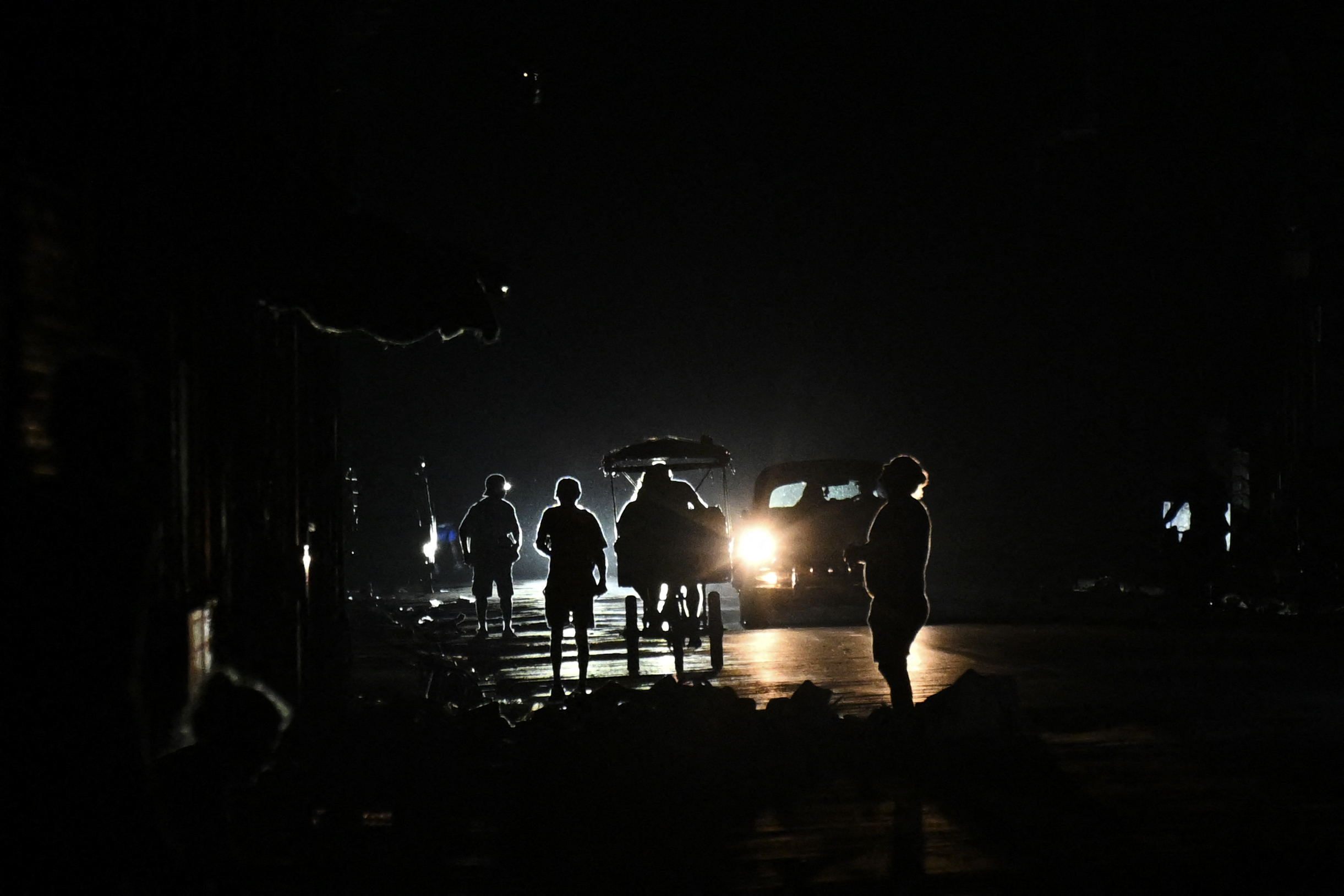
On Sunday evening (August 2), the national power system in Cuba once again suffered a comprehensive collapse, marking the sixth nationwide blackout in the country this year, affecting approximately 10 million people.
According to the Cuban National Union of Electricity (UNE), the power system experienced a “complete disconnect” at 10:43 p.m. that night.
The Cuban Ministry of Energy released a brief statement on social media confirming the collapse of the power grid without providing detailed information on the cause of the incident.
Prior to this nationwide blackout, the power system was already in a very fragile state. It was anticipated that there would be a 2,195-megawatt generation gap during the peak electricity usage period on Sunday. Due to the system’s fragility, Unit 4 of the Carlos Manuel de Cespedes thermal power plant stopped generating power that morning.
Currently, efforts are being made to restore power supply. As of Monday morning (August 3), authorities are attempting to prioritize the restoration of hospitals and water facilities by establishing small independent grids.
Two units at the Boca de Jaruco natural gas power plant east of Havana have been reconnected to the grid, restoring power to approximately 23% of the areas in Havana. Even on regular days when the grid is operational, most people still face rotating power outages lasting up to 20 hours a day.
In the western region of Cuba, including the capital Havana, 220 megawatts of transmission lines were damaged due to weather factors on August 1, resulting in localized blackouts. In July, the national grid experienced three collapses within nine days.
Data indicates that most of Cuba’s thermal power plant units have been operational for over 30 years. Due to a lack of long-term maintenance funding, the system lacks the capability to respond to emergencies effectively.
The power outage comes at a time when Cuba is facing its most severe economic crisis in decades. According to the International Energy Agency, as of 2023, Cuba’s oil production accounted for only about 40% of its consumption, heavily relying on imported fuel.
Previously, the United States arrested Venezuelan President Nicolas Maduro and implemented an oil blockade in January of this year. Venezuela has long been a major oil supplier to Cuba, and under pressure from the U.S., Mexico has also halted fuel supplies to Cuba.
Havana blames the crisis on the U.S. fuel blockade, while Washington holds the responsibility on the Cuban communist government for the deteriorating power system.
Frequent power outages have intensified growing discontent among the island’s residents. Just a week ago, protests erupted in Havana, with residents banging pots and pans, demanding, “turn on the lights.” The restoration of power across the island after the two blackouts last week took more than 24 hours.
March 16th
: the longest power outage of the year lasting 29 hours and 29 minutes.
March 21st
: a nationwide blackout occurred.
July 6th
: caused by the shutdown of Unit 6 at the Nuevitas thermal power plant.
July 10th
: due to a fault in the transmission lines.
July 14th
: an unexpected trip occurred in Unit 1 of the Felton thermal power plant in Holguín.
August 2nd
: the national power grid suffered another large-scale disconnection and is currently undergoing repairs.