
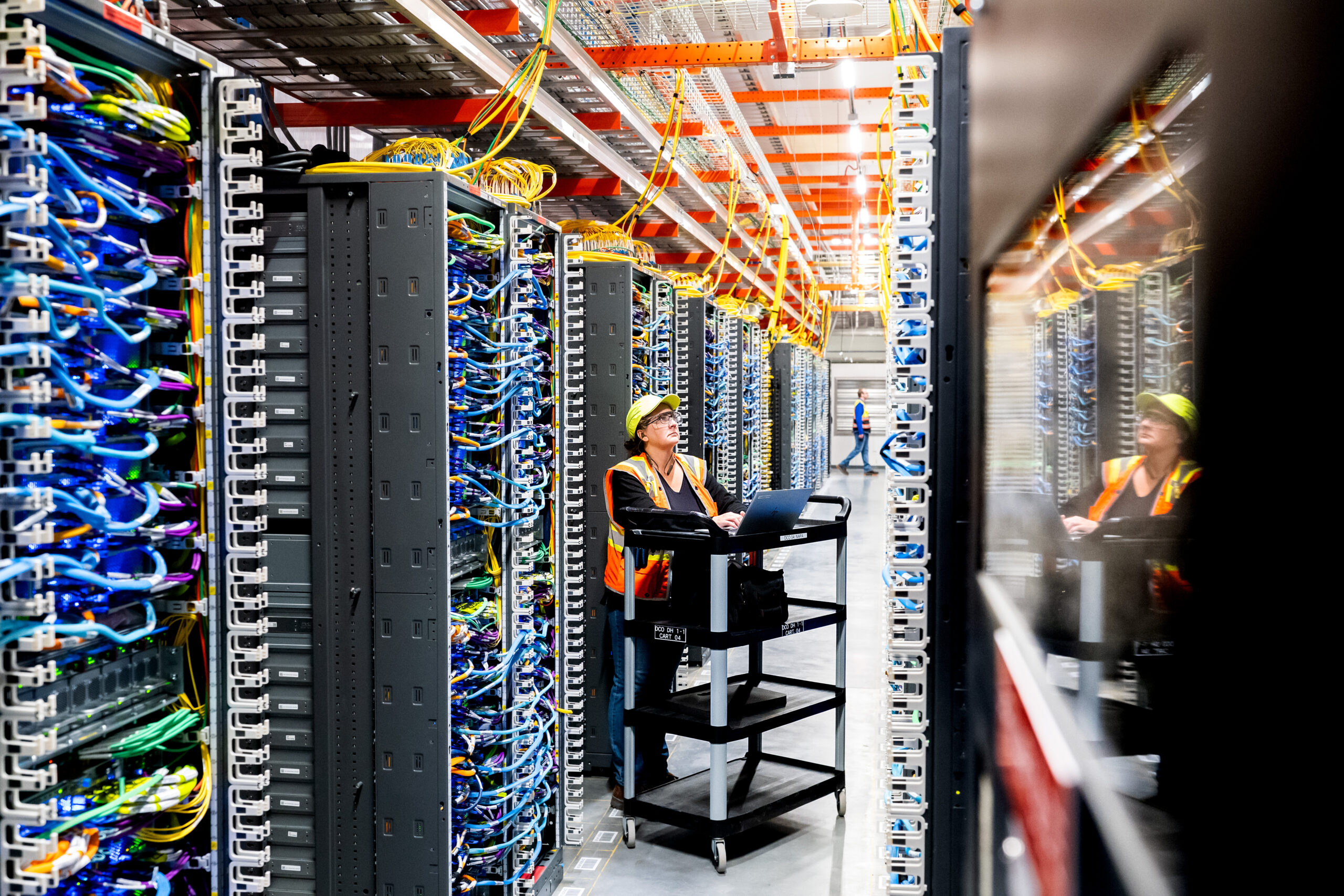
The European Commission representing the 27 member states of the European Union announced on Thursday (July 30) that the EU will provide €10 billion (approximately $11.4 billion) to fund the establishment of 7 artificial intelligence (AI) super factories (data centers) in order to narrow the gap with the United States and China in the field of artificial intelligence.
The European Commission hopes that through this public financing, an additional €20 billion (approximately $22.8 billion) in private investment will be attracted.
According to a report by the Associated Press, Henna Virkkunen, Vice President in charge of technological sovereignty of the European Commission, stated that with the accelerated development of artificial intelligence, Europe needs to establish these super factories.
Companies can now bid for contracts to build the super factories, which are planned to be equipped with at least 100,000 state-of-the-art AI chips, making their capacity approximately four times that of current EU data centers.
The EU’s current computing capacity is provided by a network of 19 AI data centers. Once these 7 super factories come online, the overall computing capacity will increase by over double.
According to an assessment report by the Federal Reserve Board of Governors in 2025, in key areas of artificial intelligence development, Europe lags far behind the United States and China. China has a huge data center power capacity, while the United States dominates the vast majority of private investments in AI.
According to a report submitted by the European Commission to the European Parliament in June, many of the millions of components required for data centers are not produced in Europe. Additionally, the cost of electricity in the EU may be two to three times that of the United States and China.
The report also pointed out that European companies and public institutions rely on American AI service providers, as the top five cloud service providers in the EU are all American companies.
“The reliance on mega-scale cloud computing and artificial intelligence computing service providers, especially in highly critical application scenarios, will continue to expose data to third countries, bringing risks to service continuity, jeopardizing operational autonomy,” the report stated.
However, concern over the economic disruption and privacy impacts brought by AI technology still prevails throughout the European continent.
The European Commission stated that as the data center network continues to evolve, artificial intelligence products will “comply with EU standards on data protection, security, and ethics.”