
In a recent development of the “Chinese Couple Spy Case” in Germany, more details have been exposed. German media further revealed how Chinese spies lured top German researchers to China under the guise of cooperation and exchange programs.
The German police arrested a Chinese couple suspected of engaging in espionage activities for the Chinese Communist Party in Munich in May this year. Both individuals hold German citizenship. According to German privacy regulations, the couple’s names were partially disclosed as Xuejun C. and Hua S., and they were accused of attempting to obtain advanced military technology intelligence.
In relation to this case, investigative media in Germany, CORRECTIV, recently disclosed more details. It was reported that Hua S., posing as an intermediary named “Anja,” directly contacted German professors via email, which initially seemed innocent. Specifically, “Anja” invited German professors under the guise of an automotive association in Berlin to collaborate in China (e.g., lectures, on-site guidance, academic exchanges, etc.). Upon arrival in China, these scholars were actually arranged to provide briefings and lectures to personnel from military enterprises.
According to the collected “recruitment emails” by CORRECTIV, Hua S. using the pseudonym “Anja” offered German scholars a high five-figure (tens of thousands of euros) reward and provided an all-expenses-paid trip to China lasting several weeks, sponsored by the so-called “organizer.”
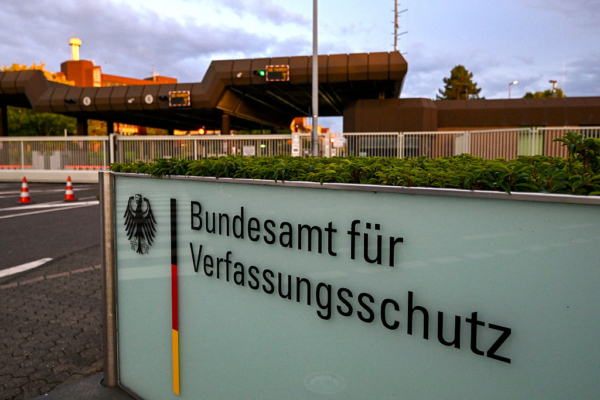
This “organizer” is the State Administration of Foreign Experts Affairs (SAFEA) of the Chinese government, which has previously entered the surveillance scope of various intelligence agencies abroad. SAFEA is responsible for coordinating various controversial “talent introduction programs” in China. Over the years, both the German Federal Office for the Protection of the Constitution (BfV) and the Federal Bureau of Investigation (FBI) in the United States have assessed such programs as major tools for the Chinese authorities to gather intelligence and infiltrate.
Historical cases show that in the early 2000s, two colleagues employed by SAFEA successfully recruited engineer Noshir Gowadia, involved in the development of the B-2 stealth bomber in the United States. Gowadia was sentenced to 32 years in prison in 2011 for disclosing sensitive military technology.
In this German case, the involved spies also showed a keen interest in top-notch technologies with military applications. CORRECTIV’s report pointed out that one of their targets includes the related technology of military reconnaissance drones, which is currently a highly sought-after key technology in the global military domain.
Despite ongoing security warnings, it is known that nine scholars from eight German universities have fallen into the trap set by this couple of espionage suspects. These scholars are currently listed as witnesses in the judicial proceedings related to the espionage case.
According to investigations, this couple of spying suspects are connected to a vast network composed of cover associations and front companies specializing in recruiting “talents” in Germany. The recruitment baits are abundant, including offering substantial funds and luxury cars, apartments in China tailored to personal preferences, exclusive translation services, and priority enrollment privileges for children in local schools.
A source familiar with security affairs at German universities revealed that “excellent professors receive invitations of this kind almost every day; this is not a new recruitment model.”
The cover organization Hua S. used at that time under the alias “Anja” was the “Sino-German Society of Automotive Engineering” (VECA). The association was registered in Berlin in 2011 and declared dissolution in 2021. Although legally dissolved, the organization remains active. In 2024, its board members attended a conference in China under this association’s name, and in 2025, the network even jointly organized online activities with multiple overseas institutions.
Currently, university professors in Germany still have a high degree of “academic freedom” in choosing personnel for hiring, collaboration partners, and where to give lectures.
To address the increasingly severe potential risks, the Federal Ministry of Education and Research in Germany plans to significantly strengthen consultations and advocacy work on security risks and espionage threats for researchers starting from 2027.