
On Thursday, July 30, the U.S. Department of Commerce released data showing that economic growth in the second quarter was lower than expected, and the inflation rate in June remained significantly higher than the target set by the Federal Reserve.
According to seasonally adjusted data, the Gross Domestic Product (GDP), a broad measure of goods and services output, only grew by 1.5% during the April to June period of the second quarter.
Economists surveyed by the Dow Jones had predicted a 1.8% growth rate for the second quarter GDP, while the actual growth in the first quarter was 2.1%.
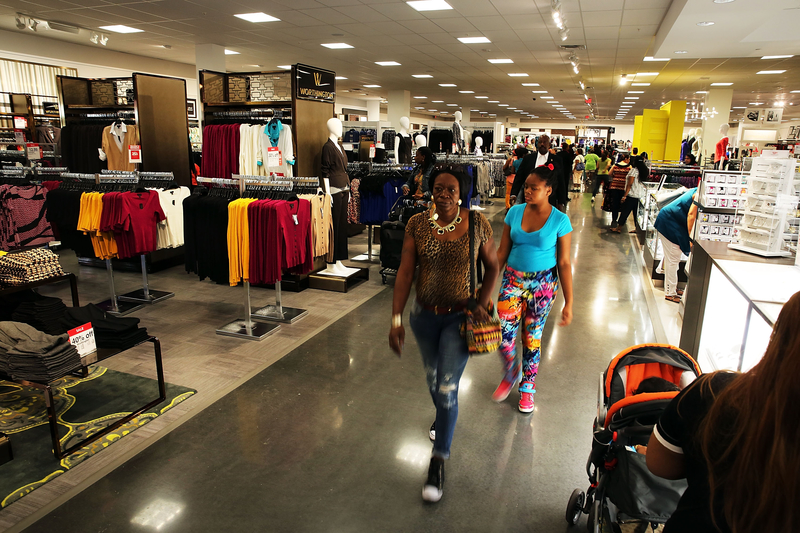
The slowdown in U.S. economic growth in the second quarter was mainly attributed to a surge in imports to meet the demand for artificial intelligence technologies and a decrease in government spending. Meanwhile, despite the conflict with Iran pushing up gasoline prices, consumers were not significantly impacted and actually increased their spending. Data shows that household spending in spring this year experienced the fastest growth since the third quarter of last year. Business investments remained robust, with companies continuing to invest in IT equipment and software to support artificial intelligence infrastructure.
Another report indicated that the Personal Consumption Expenditures (PCE) price index, which is a key indicator for the Federal Reserve, decreased by 0.1% after seasonal adjustments, keeping the annual inflation rate at 3.7%, in line with expectations.
Excluding food and energy prices, the core PCE increased by 0.1% month-on-month, rising by 3.3% compared to the same period last year; previous expectations were for a 0.2% increase and a 3.3% rise, respectively.
Although the Federal Reserve officially considers overall PCE data when formulating policies, most officials believe that the core PCE inflation rate better reflects long-term trends.
After the release of the report, stock market futures rose while U.S. Treasury bond yields saw a significant increase.
Despite the GDP data falling below expectations, it seems that this gap was mainly due to decreased federal government spending and inventory reductions. Other sectors of the economy showed strong performance.
Key areas of the economy continued to improve: following a modest 0.4% increase in the first quarter, personal spending grew by 2.1%; at the same time, a key indicator of potential demand, “final sales to domestic purchasers,” saw a robust growth of 3.9%. However, inventory decreased by 0.7% and federal spending reduced by 0.3%, dragging down the overall data performance.
Private domestic investment grew by 0.5%, exports also increased by 0.5%, while imports declined by 1.5%. Typically, exports boost the GDP, while imports act as a drag.
Employment growth remained stable in the second quarter, with the unemployment rate staying low. Apart from the impact of gasoline prices, Americans felt some relief from inflation pressures in June: according to labor data, excluding food and energy prices, overall prices remained relatively stable.
On Wednesday, Federal Reserve Chairman Kevin Warsh gave an overall positive assessment of the economy and labor market, citing strong productivity and investments in the field of artificial intelligence. Warsh, in a press conference after the Federal Reserve’s interest rate meeting, stated, “The economy has shown remarkable resilience.”
In terms of inflation data, the actual figures were close to expectations but still significantly higher than the Federal Reserve’s 2% target level.
Previous inflation data had shown a slowdown, but after attacks on Iran by the United States and Israel in late February, inflation accelerated. The attacks led to a surge in energy prices, with Fed officials concerned that this price increase could have wider implications on the economy.
Energy goods and services prices in June saw a significant drop of 5.9%, mainly due to a temporary easing of tensions in the Middle East, leading to a 9.2% decrease in gasoline prices. In the housing sector, inflation pressures also eased, with prices rising by only 0.2%. Overall, commodity prices fell by 0.6%, while service prices rose by only 0.1%.
Looking at the quarterly data, the Personal Consumption Expenditures (PCE) index increased by 5.1% overall, and the core PCE index rose by 3.4%.
Consumer spending remained resilient in June, with a 0.3% growth in personal spending, in line with expectations. Personal income increased by 0.2%, just below the expected 0.3%.
However, consumers had to dip into savings to maintain their daily expenses, with the personal savings rate dropping to 2.7%, hitting a four-year low.
The day before, the Federal Reserve voted 9-3 to keep the benchmark lending rate between 3.5% and 3.75% unchanged. This rate level has been maintained throughout the year.
As the labor market stabilizes this year, inflation has become a focus for Federal Reserve policymakers; the three Regional Federal Reserve Bank Presidents who voted against cited concerns about rising prices and the slow progress in achieving the Fed’s goal of price stability.
Economists also point out that energy price shocks are the main risk facing the economy in the second half of the year as rising inflation could prompt the Fed to tighten its rate policy. The reigniting of geopolitical tensions pushed up oil and gasoline prices for most of July.