
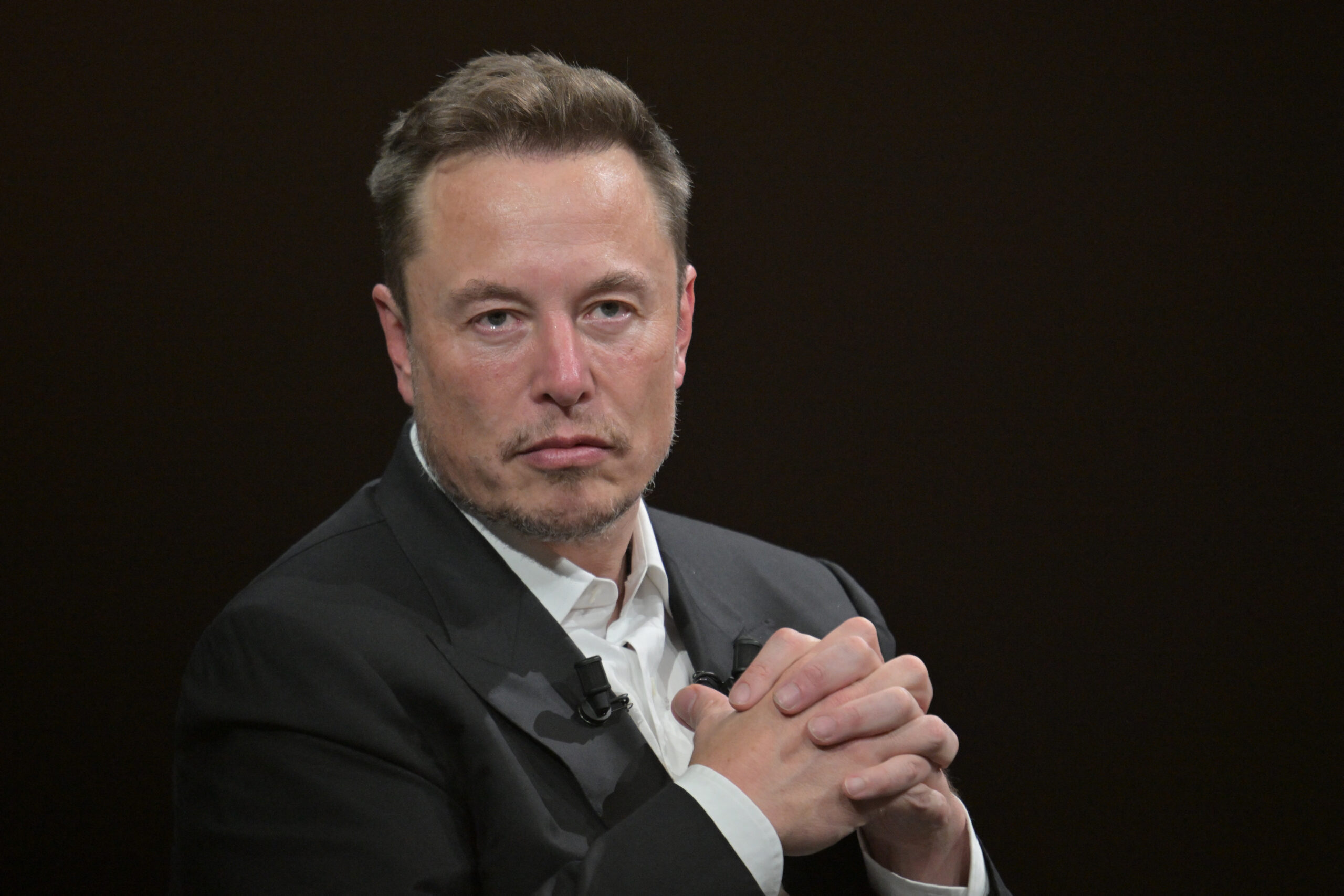
American rocket and satellite manufacturer SpaceX is taking strict measures aimed at completely excluding “Chinese influence” from the company’s global supply chain.
According to Nikkei Asia, SpaceX, led by Elon Musk, is implementing measures to safeguard the production of crucial technologies vital to U.S. national security. The company is not only eliminating key components produced by Chinese suppliers or within China but also requiring suppliers to refrain from assigning or employing Chinese nationals at facilities producing products for SpaceX. Surveillance and network equipment made in China must also be replaced.
Multiple industry insiders revealed that SpaceX has deployed teams to review existing and potential suppliers, demanding that partners not assign or employ Chinese nationals at facilities producing products for SpaceX, covering managers, employees, and senior executives.
A senior industry executive with direct knowledge of the matter stated, “One of SpaceX’s top priorities is to check if a factory, even if located outside China, has any managers, employees, or executives from China. They require these personnel to be removed from all facilities and projects serving SpaceX.”
The executive added, “Otherwise, SpaceX would warn the supplier that they would no longer place orders with them.”
SpaceX also does not procure key components or parts from Chinese suppliers or facilities within China, even if the related factories are owned by non-Chinese suppliers.
In addition to personnel and component scrutiny, SpaceX also inspects the monitoring systems and network equipment used in the factories.
Several industry managers stated that even if the factories are located outside China, any equipment produced by Chinese companies such as Hikvision, TP-Link, or other Chinese firms must be replaced.
Another SpaceX supplier executive mentioned, “None of our equipment can use components or parts supplied by Chinese companies. The employees and engineers we send to support SpaceX must also be non-Chinese nationals. If this is not achieved, our product line cannot pass verification.”
Apart from mitigating Chinese supply risks, SpaceX is also working on establishing a so-called “non-China, non-Taiwan” (NCNT) supply chain to reduce the risk of supply disruptions during escalating tensions in the Taiwan Strait region.
SpaceX’s efforts to reduce risks from Taiwanese suppliers can be traced at least back to 2024. At the time, Reuters reported that SpaceX had requested Taiwanese suppliers to move some production overseas.
Printed circuit board manufacturer Chin-Poon stated that SpaceX, for geopolitical reasons, required the company to shift production of new orders from Taiwan to Thailand. Another supplier, WNC, has been producing Starlink routers and other networking equipment in Vietnam, with local expansion largely driven by SpaceX orders.
A source mentioned, “We strive to comply with these requirements, which is understandable. This technology involves national security, especially as SpaceX also has a commercial relationship with NASA.”
Nikkei Asia noted that SpaceX’s exclusion of Chinese nationals and suppliers is more stringent compared to consumer electronics manufacturers like HP and Dell.
HP and Dell are establishing two separate supply chains: one located within China to meet local demand, and another outside China to serve other markets. Elon Musk’s car manufacturing company Tesla is also implementing a similar dual supply chain strategy.
This risk prevention against China is not limited to physical supply chains. During its initial public offering (IPO), SpaceX appeared to have set restrictions on online access for users from mainland China and Hong Kong.
After SpaceX launched its IPO roadshow in New York this June, Reuters reported that users from China and Hong Kong were unable to access the company’s website and IPO promotion documents, with the page displaying an “Error 1009” message.
Cloudflare, a web security service provider, mentioned that the most common reason for this message is that the website owner prohibits users from specific IP addresses or regions. An information technology professional in Hong Kong stated that such restrictions are typically made by companies.
Reuters could not confirm the reason for SpaceX’s access restrictions. However, preventing “Chinese risks” is likely one of the considerations.
Bloomberg, citing sources, reported that SpaceX’s underwriters excluded investors from China and Hong Kong from participating in the IPO due to compliance considerations under U.S. laws such as the International Traffic in Arms Regulations (ITAR) governing the export of defense-related technology and technical data.
In February this year, two Democratic senators urged the Pentagon to immediately review SpaceX amid allegations that Chinese investors secretly acquired their shares through overseas offshore companies like in the Cayman Islands and the British Virgin Islands. Due to SpaceX handling a significant amount of U.S. core defense and Starlink business, this action could pose a threat to national security and lead to the leakage of sensitive technology.
With a potential $75 billion IPO for SpaceX, it was reported that Chinese and Hong Kong investors were reportedly rejected.