
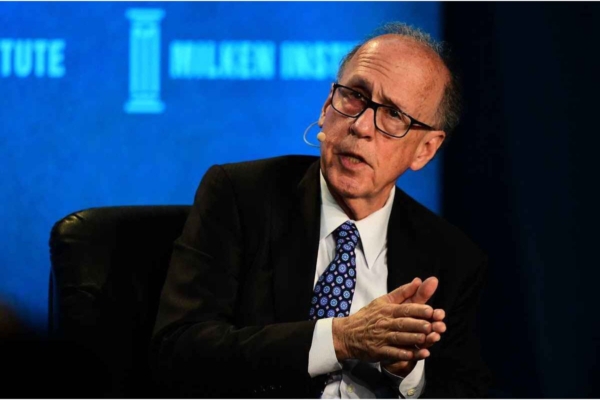
In a recent article by Stephen Roach, former chief economist for Morgan Stanley in Asia and current senior fellow at Yale University Law School, he once again weighed in on the state of Hong Kong. In 2024, Roach wrote an article declaring that “Hong Kong is over,” and now he asserts that “the Hong Kong of Old is Over.” Despite reclaiming the top spot in the global IPO market last year, Hong Kong’s reliance on mainland Chinese companies going public in the city and the erosion of its rule of law and freedom due to national security laws have led Roach to this conclusion.
Roach’s article, published on the 23rd of this month, points out that while pro-China factions continue to praise Hong Kong’s resilience, the reality is that this so-called resilience now depends heavily on direct intervention by Chinese authorities, making it more of a product of “Made in China” rather than “Made in Hong Kong.”
Two and a half years ago, Roach first proclaimed that “Hong Kong is over.” Despite efforts by supporters of the city to counter this narrative with the rebound of the Hang Seng Index and the topping of the IPO rankings, Roach argues that Hong Kong has effectively become another major Chinese city under Beijing’s hostile takeover following the anti-extradition bill protests. The city’s Mandarin name, “Xiānggǎng,” now seems more fitting than the English “Hong Kong.”
Roach highlighted that the surge in Hong Kong’s IPO market last year was predominantly driven by listings of mainland Chinese companies such as CATL, Luxshare Precision, Z.ai, Momenta, and Montage Technology, which collectively accounted for up to 95% of the fundraising amount.
He also criticized Beijing’s imposition of the National Security Law in Hong Kong via bypassing the local legislative council, resulting in a crackdown on public debate, harsh sentences for activists, closure of independent bookstores, and erosion of press freedom. The recent resignation of six overseas non-permanent judges from the Court of Final Appeal has raised serious concerns about judicial independence in Hong Kong.
Roach further noted a significant shift in Hong Kong’s workforce composition, with a noticeable outflow of expatriates, including many high-level professionals, and a surge in Chinese labor influx from the mainland since 2020, making Mandarin as prevalent as Cantonese on the city’s streets.
In Roach’s view, these changes represent a fundamental transformation of the unique characteristics of Hong Kong, rendering the city’s allure as a global financial hub increasingly dependent on China rather than its own competitiveness and innovation.
He pointed out that although the Hong Kong government sees the centralization and planning akin to mainland China as a source of new economic hopes, any conclusion about Hong Kong’s resurgence remains premature without substantial testing against potential economic or market downturn risks.
Roach concluded by acknowledging the backlash he faced for his previous assertion that “Hong Kong is over,” and when asked about whether this declaration still holds true in light of the unexpected surge in the Hong Kong stock market, he reiterated that “the Hong Kong of old is, indeed, over. Go to Xiānggǎng and see for yourself.”