
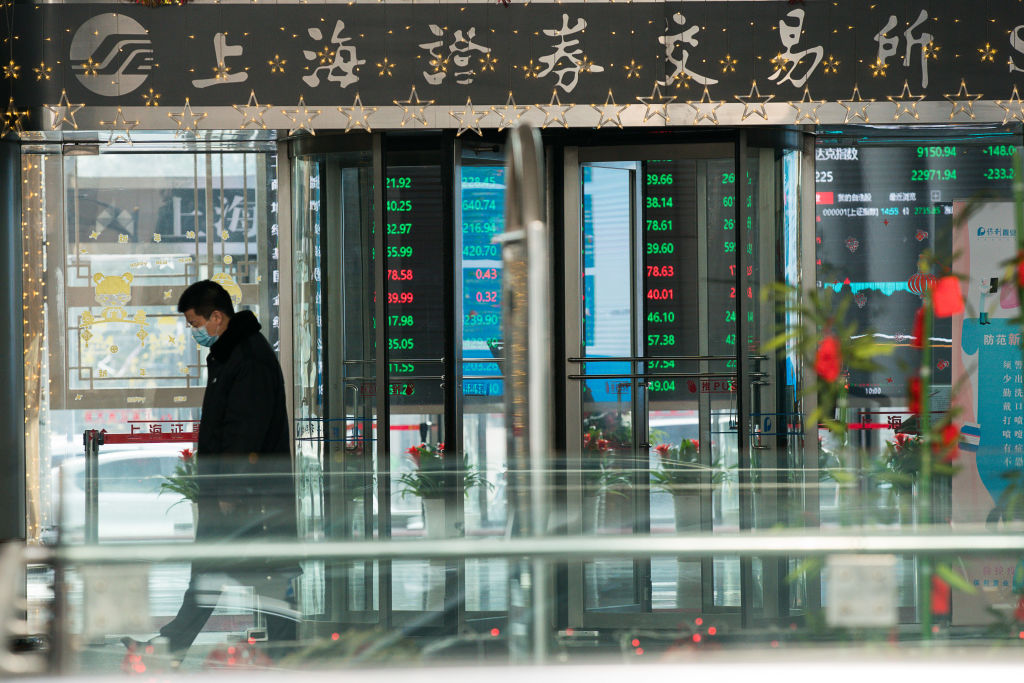
On July 28th, the A-share market experienced a heavy setback with indexes plummeting across the board. The Shanghai Composite Index narrowly held above 3800 points, while technology stocks faced a “Black Tuesday,” with the ChiNext Index dropping over 7%, leading to a prevailing sense of pessimism in the market.
The three major A-share indexes all opened lower that day and maintained a downward trend throughout the day, with the losses gradually widening, although individual stocks saw mixed movements in terms of gains and losses.
By the close of trading, the Shanghai Composite Index fell by 1.16% to 3813.31 points, barely holding above 3800 points; the Shenzhen Component Index dropped by 4.52% to 13,509.68 points; and the ChiNext Index plunged by 7.35% to 3327.03 points, dragging down the STAR 50 Index by 6.33% and the STAR Market Index by 5.93%.
Data from Wind showed that out of a total of 5366 stocks listed on the Shanghai and Shenzhen stock exchanges and the Beijing Stock Exchange, 2601 stocks saw gains, 2765 stocks witnessed declines, and 161 stocks remained unchanged.
The total turnover of the Shanghai and Shenzhen stock markets amounted to 2.0258 trillion yuan (RMB), a decrease of 50.8 billion yuan compared to the previous trading day’s turnover of 2.0766 trillion yuan. Specifically, the Shanghai market’s turnover was 949.7 billion yuan, down by 81.6 billion yuan from the previous trading day, while the Shenzhen market’s turnover was 1.0761 trillion yuan.
According to data from Dazhihui VIP, there were 82 stocks across the exchanges with gains of over 9% and 170 stocks with losses exceeding 9%.
In terms of market performance, the consumer goods sector demonstrated strength against the trend, with sectors like liquor, dairy, brewing, beverage manufacturing, tourism, and hotels leading the gains. In the pharmaceutical industry, companies involved in DRG/DIP, brain-machine interfaces, and hyperbaric oxygen chambers showed active performances. Meanwhile, the banking sector experienced volatile gains.
On the downside, the focus was on high-growth sectors like AI hardware and semiconductors. Within the semiconductor and computing hardware industries, there was a significant adjustment, with categories like CPO, storage, and PCB leading the declines. Stocks related to rare metals, CRO, solar energy, lithium batteries, and commercial aerospace concepts were among the top losers.
Specifically within the telecommunications sector, stocks such as Xinyisheng, Zhongjixuchuang, Jianguantech, Tianfutelecom, Ruijie Networks, Dingtong Technology, and Changfei Optical Fiber either hit the daily price limit down or dropped by over 10%. In the electronics sector, stocks like Xi’an Yicai, Puran Shares, Hengyunchang, Yuanjietech, Changguanghuaxin, and Guangzhikeji also saw trading halts or drops exceeding 10%.
The performance of A-shares has left the market extremely pessimistic, leading related topics to once again dominate hot searches on social media platforms like Weibo.
A fund blogger with the handle “MayorLooksGood” wrote, “Just when you thought the market was turning around after a big jump yesterday, reality hits you hard today, that’s the A-share market for you.”
Financial blogger “61MiddleRoad” commented, “If some people were still hopeful about the tech sector during the recent sharp declines, Tuesday’s drop probably dashed most of those hopes. The tech sector declined on Tuesday for a variety of reasons, including institutions sounding bearish, coupled with the production stimulus of a certain our machine, and the collective downturn in overseas markets, ultimately highlighting the fragile market sentiment. Meanwhile, the consumer sector at lower levels is attempting to ferment. The panic selling in the afternoon was quite noticeable.”
Tech blogger “MissQiuWithAttitude” expressed, “Looking back at the market, many funds that doubled in value in the first half of the year have now seen widespread retracements of 30% to 40% in the second half. The previous bullish market scenario has turned into a brutal downturn in this round of corrections, making the extreme roller-coaster market agonizing. In this July pullback, public funds, private funds, quantitative funds, speculative funds, and retail investors all suffered losses without exception; the market’s highs and lows are shared by all. Everyone is in the same boat. A sincere hope is for A-shares to stabilize and rebound quickly, as many investors are on the verge of exhaustion.”