
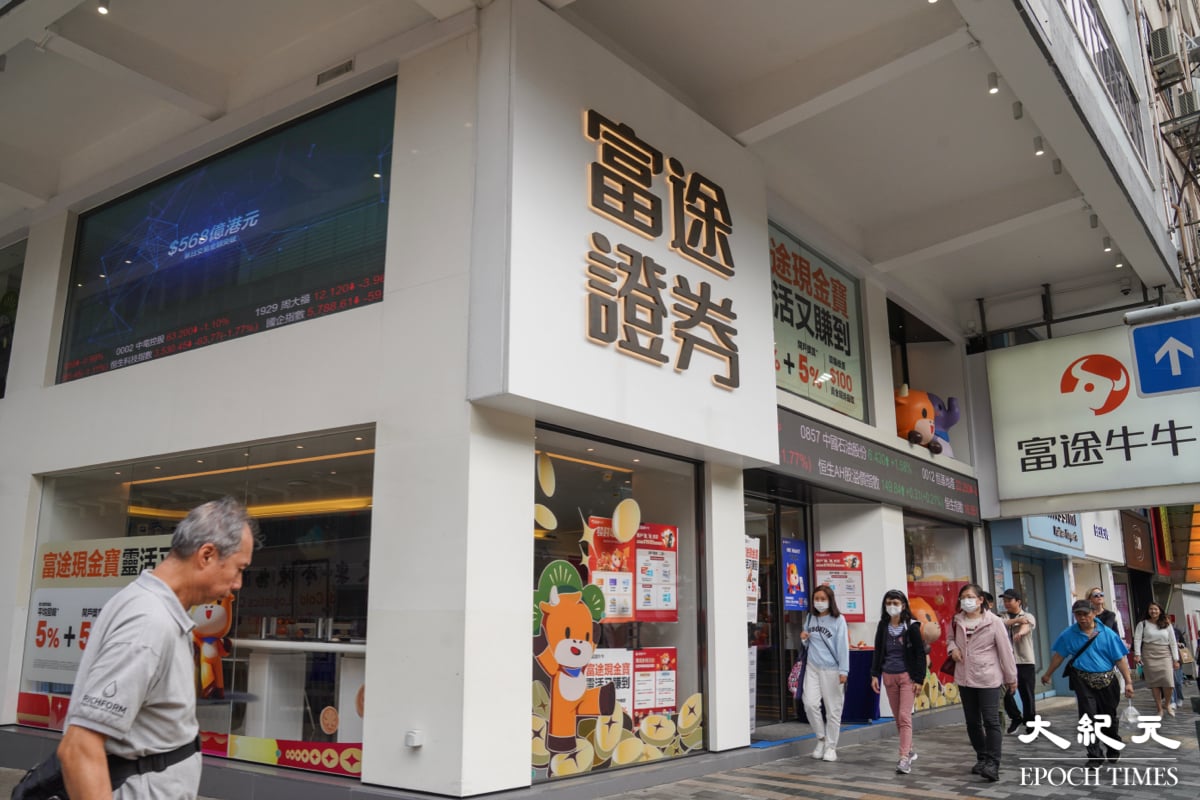
Several cross-border brokerage firms, including Futu and Tiger Brokers, have been punished for using insider information to short stocks accurately before facing penalties, making profits of at least 100 million dollars. The U.S. options trading giants, Susquehanna International Group (SIG) and Castle Securities, have filed lawsuits as plaintiffs, and the identities of the defendants are being gradually exposed.
According to the lawsuit filed by SIG, traders were likely informed in advance by personnel from China’s financial regulatory authorities or employees of Futu and Tiger Brokers. SIG claimed in the lawsuit that they had suffered losses exceeding 70 million dollars. This is being referred to as “one of the largest insider trading cases on record in recent years”.
In response to the plaintiff’s requests, the U.S. Federal Court for the Southern District of New York issued a temporary restraining order on June 29th: accounts that purchased short-term put options on Futu and Tiger through Interactive Brokers, Futu, and Tiger Brokers between May 7th and May 21st, 2026 were frozen.
Due to the asset freeze orders issued by the federal court, several originally anonymous defendants have voluntarily submitted statements to the court to apply for the unfreezing of their assets. As of July 23rd, a total of three defendants’ identities have been revealed.
According to a statement submitted to the U.S. court on July 23rd, the third defendant to reveal their identity was Yang Jingyao, also known as Yang Jingyao in Chinese, a Hong Kong resident since 2020. Yang Jingyao stated, “My personal assets far exceed my personal debts” and “I have no outstanding debts to repay”.
According to public documents from the Hong Kong Stock Exchange, Yang Jingyao is the single largest shareholder of the Hong Kong-listed company, Rongzun International, and was also the offeror in a previous mandatory general offer.
Yang Jingyao is described as a businessman and private investor who has long invested in listed securities, information technology companies, startups, and other financial assets through brokers and a wholly-owned private investment company established in Hong Kong and the British Virgin Islands.
In a public announcement made by Rongzun International in May of this year, it was disclosed that Yang Jingyao, who is 32 years old, received substantial financial assistance from his mother, a wealthy individual from mainland China, in the form of approximately 190 million yuan worth of shares in the listed company. In addition to the financial assistance received from his mother, Yang Jingyao’s investment capital did not come from any third-party funds.
Another defendant, Andy Wenlei Song was also under scrutiny. According to a report by China Cai Xin, Andy Wenlei Song, born in 1981, previously worked at CITIC Securities, a subsidiary of the state-owned enterprise, CITIC Group, before immigrating to Australia.
Foreign media reported that in November 2016, stock trader Andy Wenlei Song from China purchased a luxury home named Portofino in the upscale area of Point Piper in Sydney from car importer Neville Crichton for 60.66 million dollars. The property included a gym, private dock, and 6 bedrooms and was listed as the seventh highest selling property transaction in all of Australia in 2019.
Political observer Xia Yan believes that the gradually disclosed identities of the individual defendants exhibit a high degree of similarity. Their backgrounds intertwine within the political and business circles of mainland China and Hong Kong. It is observed that they all decided not to short regular stocks but rather mutually agreed to buy high-risk short-term put options through Futu and Tiger in the two weeks leading up to the official announcement of the penalties against them by the Chinese Securities Regulatory Commission on May 22nd, 2026. This indicates that they shared a common, high-level source of insider information from the Chinese regulators.
Furthermore, another defendant, a entity known as New Frontier Investment Management Limited, was exposed. The similarity in the entity’s name to New Frontier Group in Hong Kong has also garnered widespread attention.
Public records indicate that New Frontier was jointly founded in 2016 by former Hong Kong Financial Secretary, Leung Kam-chung, and former Managing Director of Blackstone Group, Carl Wu. In 2019, they invested 1.44 billion dollars in acquiring the high-end medical brand, United Family Healthcare.
However, New Frontier clarified in a statement that the entity involved, “New Frontier Investment Management Limited”, is not a subsidiary or affiliate of New Frontier Group in any capacity, legally or otherwise. The New Frontier Group and all its subsidiary entities have never been involved in any U.S. public stock transactions related to the lawsuit. The board, executives (including Leung Kam-chung, Carl Wu), and all employees of the group have not received any subpoenas, investigative inquiries, or contact documents from U.S. courts, regulators, or enforcement agencies.
Currently, the U.S. court is still investigating the actual controlling individuals behind the implicated institutions.