
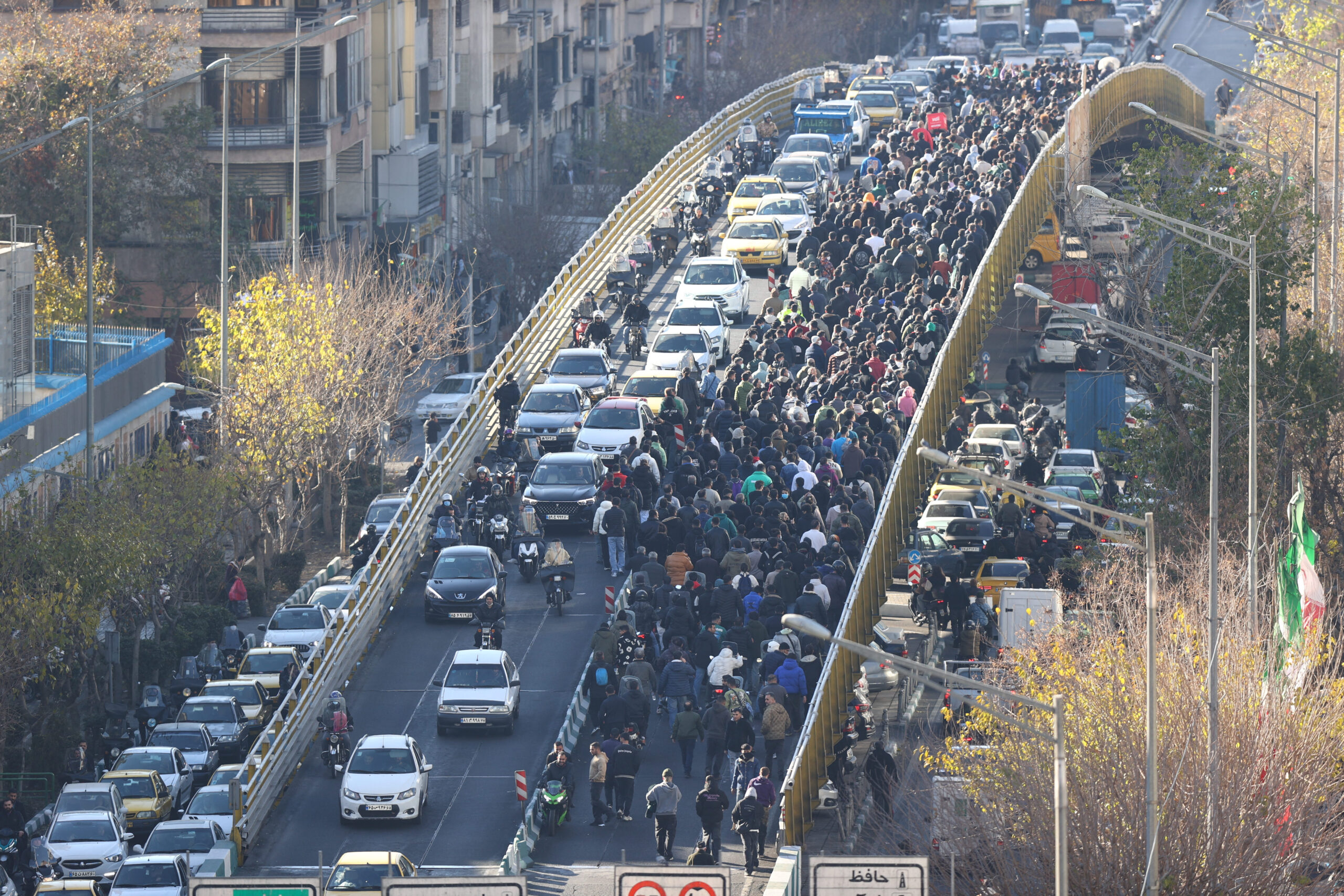
Several human rights organizations have expressed concern that since the outbreak of the conflict between the United States and Iran, Iranian authorities have executed dozens of individuals involved in political cases, including protesters, individuals accused of being affiliated with banned groups, and those suspected of engaging in espionage activities. Human rights groups have warned that as the conflict continues, the Iranian authorities may increase the number of executions to intimidate dissenters.
According to reports from Agence France-Presse, the Norway-based “Iran Human Rights” (IHR) organization stated that since the start of the war, Iran has executed 24 individuals linked to the protests in January of this year, with another 2 individuals executed over their involvement in the protests from 2022 to 2023. Additionally, 13 individuals were executed on charges of having connections with banned groups like the “People’s Mujahedin of Iran” (MEK) and others, while 10 individuals were executed on espionage charges.
The head of the organization, Mahmood Amiry-Moghaddam, mentioned that hundreds of political prisoners and protesters are facing death penalty charges, with around 100 already sentenced to death; in the Dastgerd Prison in Isfahan alone, over 70 individuals are facing execution.
He called on the international community, especially the European Union, to prioritize demanding an immediate halt to executions when engaging in dialogue with Iran.
One of the recent individuals executed was Vahid Baniamerian, a 34-year-old physics teacher. He was accused of joining the “People’s Mujahedin” group and was sentenced to death along with five other defendants, all of whom have been hanged.
Family members stated that they only learned of his imminent execution after the Supreme Court’s approval of the death sentences was reported in Iranian state media, with his lawyer not being informed beforehand. The family criticized the authorities for disregarding legal procedures, labeling the entire execution process as “completely unlawful.”
IHR pointed out that Iran has carried out over 400 executions so far this year, with political cases not being the primary type of execution, as most cases involve drug crimes and murders.
Recently, in the Ghezel Hesar Prison near Tehran, several drug case inmates were placed in solitary confinement before their executions, leading to discontent among prisoners. Since July 13, some inmates have staged sit-in protests against the ongoing executions. Videos released by human rights groups show protesters chanting anti-death penalty slogans, emphasizing that many drug offenders simply strayed due to economic hardships and should not be deprived of their lives for a single mistake.
According to IHR statistics, Iran has increased executions in political cases since the start of the conflict this year. Human rights groups believe this may be aimed at preventing anti-government protests and intimidating dissenters through aggressive means.
Iranian officials claim that those executed were involved in crimes such as attacking security forces, damaging public facilities, or endangering national security, with related judgments made lawfully. However, international human rights organizations have accused that many cases involve torture, forced confessions, unfair trials, and swift convictions.
According to Amnesty International, Iran executed at least 2,159 individuals in 2025, marking a new high in decades. Aside from China, Iran remains one of the countries with the highest known number of executions globally.