
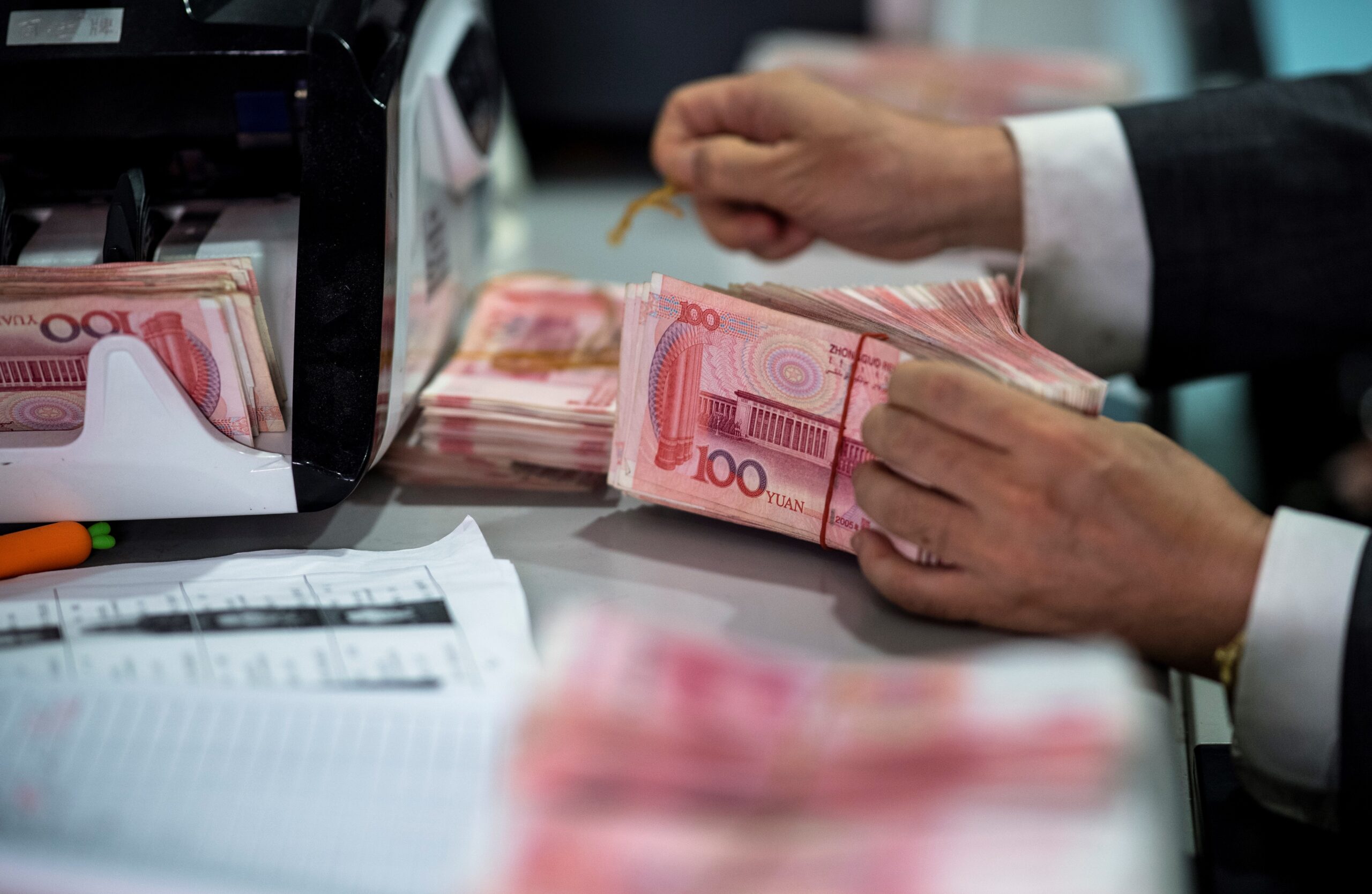
The Chinese Ministry of Finance has released data on the fiscal revenues for the first half of the year, revealing that the self-sufficiency rate of provincial finances is below 100%, with all provinces failing to cover their expenditures. Analysts point out that the contradiction between central and local fiscal revenues is becoming increasingly prominent.
According to the data published by the Chinese Ministry of Finance on July 22, the general public budget revenue for the first six months of the year reached 12.1 trillion yuan (RMB), a 4.7% increase compared to the previous year. Among them, the national tax revenue for the first half of this year was 9.79 trillion yuan, a 5.3% increase year-on-year, with a growth rate 3.1 percentage points higher than that of the first quarter. Personal income tax showed a rapid growth rate (13.1%) and became the third largest tax category. Import value-added tax, consumption tax (11.8%), and customs duties (5.1%) also increased rapidly. However, the consumption tax decreased by 3.4% annually, falling to the fourth largest tax category. Due to the sluggish real estate market, deed taxes decreased by 14.7% annually, while land value-added taxes decreased by 15.3%.
The Ministry of Finance of the Chinese government indicates that the general public budget revenue consists of tax revenue and non-tax revenue. Besides tax sources, non-tax revenue mainly includes special revenue, administrative and operational charges, fines and confiscations, as well as revenues from the paid use of state-owned resources (assets) and state-owned capital operations.
The data shows that in the first half of this year, none of the 31 provincial-level administrative regions in China achieved a self-sufficiency rate of 100%. The total local fiscal self-sufficiency rate for all provincial-level administrative regions is 56.3%, indicating that local government revenues are insufficient to cover the huge fiscal expenditures, including in economically strong regions like Shanghai.
The fiscal self-sufficiency rate refers to the ratio of local general public budget revenue to expenditures. It is an indicator of the financial strength of local governments, with a higher value indicating a stronger ability for local governments to cover social public expenditures with their own fiscal revenues.
During a press conference held by the Ministry of Finance of the Chinese government, Tang Zaifu, the Deputy Director of the Budget Department of the Ministry of Finance, admitted that “having a fiscal self-sufficiency rate below 100% is the norm.” Local finances rely on central government appropriations to achieve financial balance. As of the end of June, the central government has allocated 9.4 trillion yuan to local governments in transfer payments, accounting for 90.3% of the initial budget for the year.
Zhang Yu, Chief Economist at Huachuang Securities, expressed on July 23 that there is a natural fiscal gap in local finances. The division of general public budget revenue between the central and local governments is approximately 45:55. Among the four major tax categories, the domestic value-added tax is evenly split between central and local governments, while corporate income taxes and personal income taxes are divided 60:40 between central and local governments, and the domestic consumption tax all goes to the central government. However, in terms of expenditure, in 2025, for every 100 yuan spent nationally, local governments spend 85 yuan, while the central government at both levels spends 15 yuan.
Political observer Xia Yan stated that the central government continues to strengthen financial centralization, with a majority of revenue from the main tax categories being collected by the central government, while responsibilities for grassroots “stability maintenance” and infrastructure expenditures are shifted to local governments. This “revenue centralization, authority decentralization” structure has led to a long-term mismatch in the fiscal balance of local governments. Local officials face pressure from central government assessments on one hand and increasingly more cases of rights protection by the public on the other, resulting in dissatisfaction with the central government by local authorities, leading to governance laziness and neglect.
Xia Yan further explained that nearly half of local fiscal revenues rely on central government transfer payments annually. This high level of dependence further strengthens the central government’s control over local fiscal resources, intensifies conflicts between local and central governments, and exacerbates institutionalized internal struggles.