
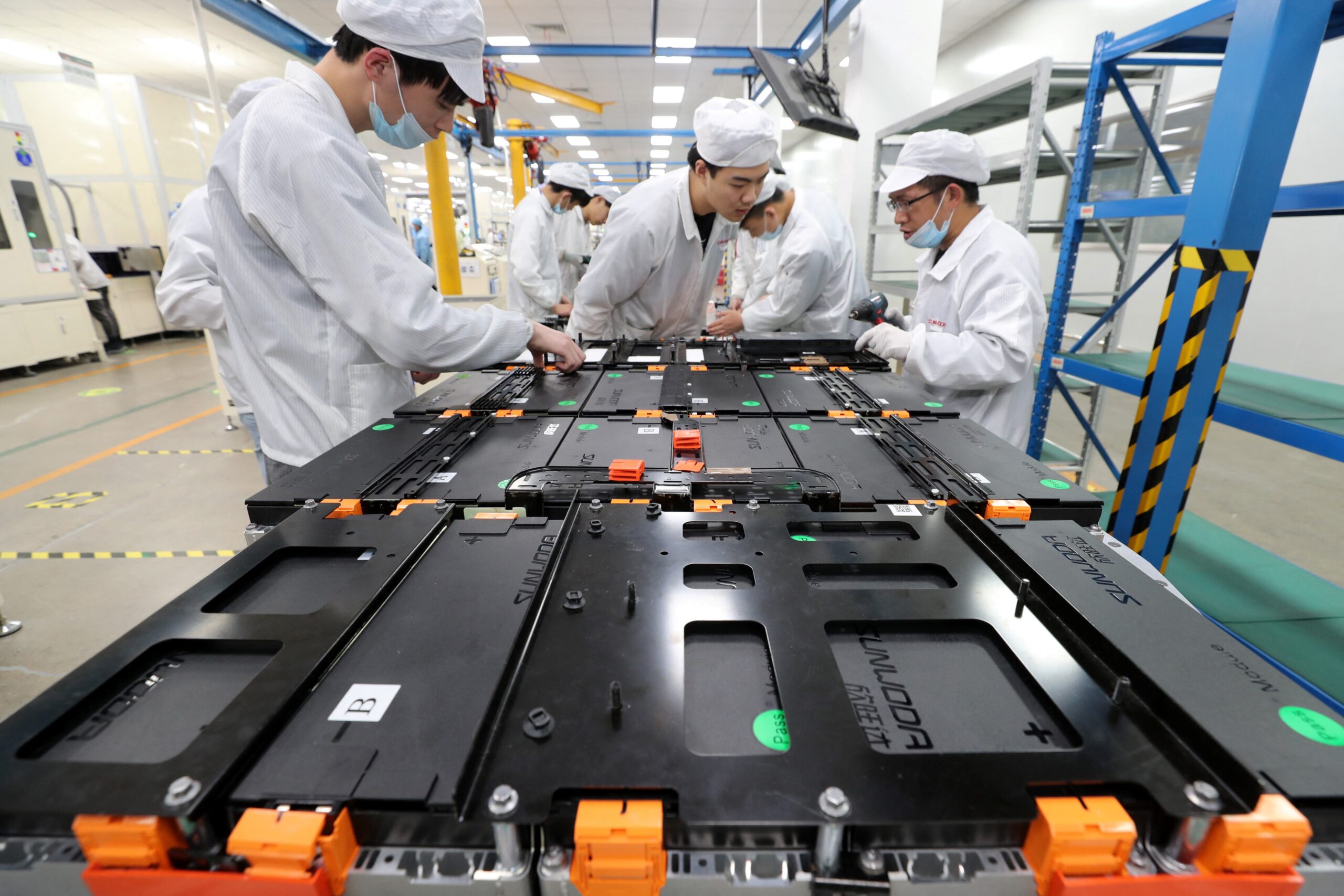
The Chinese Ministry of Finance and two other departments recently announced that starting from September 1, a 2% consumption tax will be levied on lithium batteries, with plans to gradually increase the tax rate and coverage. Analysts believe that this move will have a significant impact on multiple industries, especially the new energy vehicle sector.
The Ministry of Finance, General Administration of Customs, and State Taxation Administration released the “Announcement on Adjusting the Consumption Tax Policy for Certain Batteries” (No. 20 of 2026).
According to the announcement, starting from September 1, 2026, a 2% consumption tax will be imposed on lithium batteries, which will increase to 4% starting from September 1, 2027. Sodium-ion, solid-state, and calcium-titanate batteries will be exempt from tax until the end of 2028. This is not a new tax category but a restoration of the tax exemption clause from the existing 4% battery consumption tax implemented in 2015.
Eve Energy, the world’s third largest listed energy storage battery manufacturer, responded to the policy changes on July 21 by stating that they will carefully analyze and plan to share the additional tax burden upstream and downstream. Additionally, the company will continue to optimize efficiency, enhance internal management accuracy, and strategically invest in sodium-ion and solid-state batteries to enjoy long-term tax benefits.
The cancellation of the tax exemption for lithium batteries by the Chinese government, as reported by “First Financial” on July 21, is expected to have a profound impact on the new energy vehicle industry, which is the largest application area for battery technology. The consumption tax, being an indirect tax, will inevitably be reflected in the final product prices.
Furthermore, the report indicates that the introduction of a consumption tax on certain batteries is a clear policy signal that will reshape the underlying competition logic of the industry. The policy specifies that taxpayers do not need to pay consumption tax on batteries produced for their own use. This implies that vehicle manufacturers producing their own batteries and directly integrating them into cars can avoid or offset the consumption tax, while those relying on external suppliers will have to bear the transferred tax cost from the battery producers. This indicates a potential shift of competition in the automotive industry towards the upstream of the supply chain.
At a recent summit on the high-quality development of the Chinese automobile industry, Chen Shihua, Deputy Secretary-General of the China Association of Automobile Manufacturers, pointed out that the industry is facing challenges with historically low profit margins. The profit margin of the automotive manufacturing sector stands at a mere 1.5%.
Chen stated that compared to traditional automotive supply chains, the increasing share of batteries, chips, and intelligent components in the total vehicle cost within the smart electrified vehicle industry chain further squeezes the profit margins of enterprises.
Industry data reveals that in the cost structure of new energy vehicles, especially pure electric vehicles, the power battery system represents the highest cost component, accounting for 30% to 40% or even more of the total manufacturing cost of a vehicle.
“Autohome,” China’s largest automotive internet service platform, published an article on July 21, suggesting that if the consumption tax on batteries is gradually raised to 4% during production, contract manufacturing, or imports, it would mean that battery manufacturers or vehicle assemblers must internally absorb the additional tax cost or pass it on downstream.
Taking an example of a pure electric vehicle with an 80kWh battery pack costing around 50,000 yuan, calculated at a 4% consumption tax rate, this would result in an approximate increase of 2,000 yuan in direct tax burden. In a scenario where profit margins are already thin, this additional tax burden could potentially be the straw that breaks the camel’s back.
Political observer Xia Yan believes that starting from the reduction of the new energy vehicle purchase tax (from full exemption to 5% rate) earlier this year, with plans to revert to a normal 10% rate by 2028, and now with the restoration of the battery consumption tax, the root cause is the Chinese government’s financial shortfall, necessitating an increase in tax revenue. Regardless of how it is collected, ultimately consumers will bear the burden, and the new energy vehicle industry is poised for restructuring.