
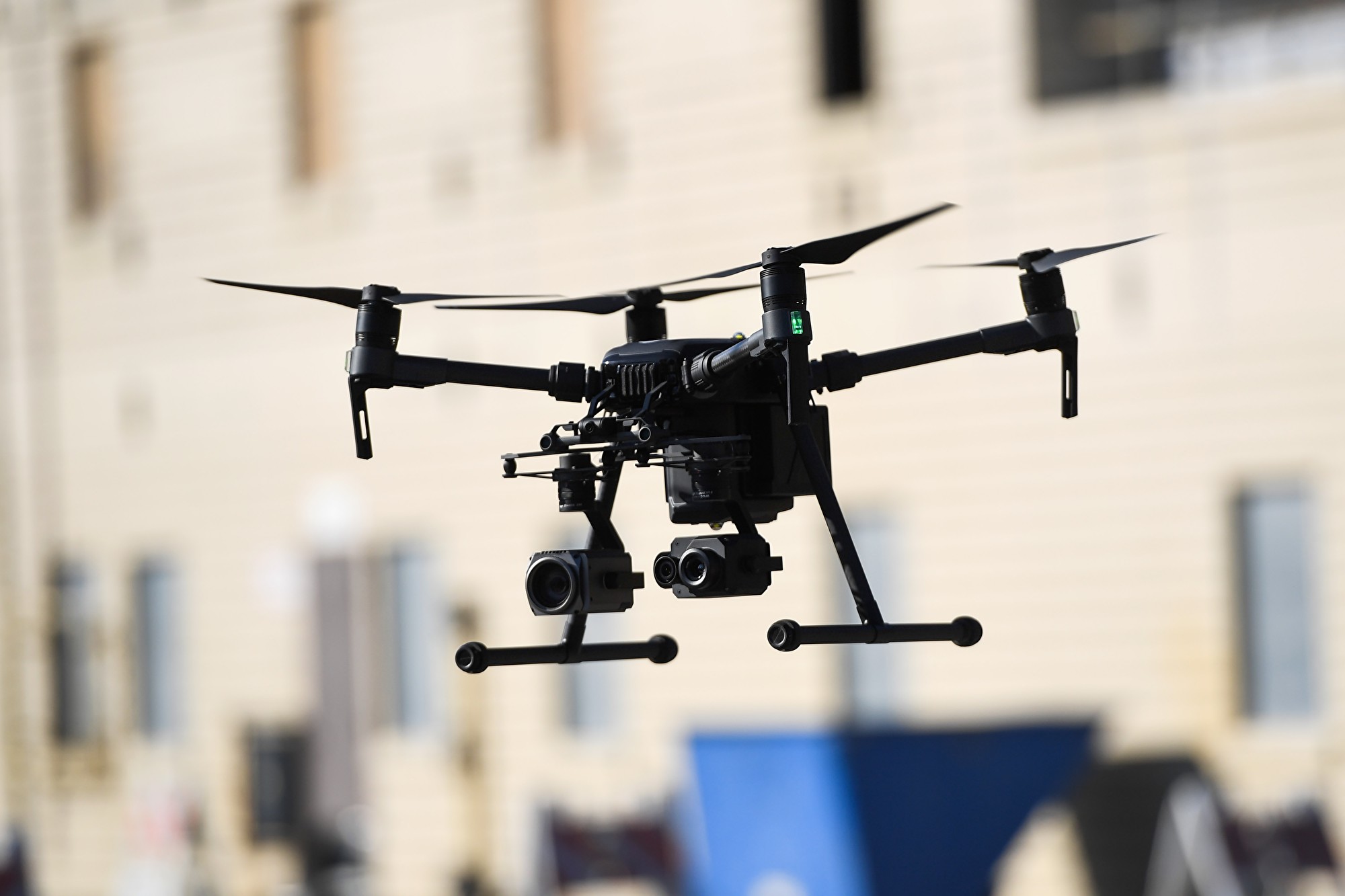
The Federal Communications Commission (FCC) of the United States issued a public notice on Tuesday, July 21st, regarding the possibility of further prohibiting the import, sale, and marketing of “foreign-made military-grade drones” and their key components not on the “Covered List.” This move aims to prevent potential risks to national security. FCC also extended the exemption period for some trusted drones and key components to strengthen the domestic drone manufacturing market in the United States.
The proposed measures primarily target foreign-produced “military-grade drone” systems with specific features such as a weight of over 55 pounds (approximately 25 kilograms), the ability to spray “economic poisons” like pesticides, herbicides, fungicides, defoliants, and disinfectants, integration of thermal imaging sensors, LiDAR systems, support for docking stations, integration with defense equipment, and swarm coordination capabilities.
According to FCC, larger drones typically have higher payload capacities, longer range, and better endurance, allowing them to conduct wide-area surveillance, electronic warfare, and supply missions. Drones equipped with LiDAR systems can create high-precision 3D maps in complex environments like forests, assisting in autonomous navigation when GPS signals are restricted. Docking stations enable 24/7 continuous operation, while drones designed for defense integration can be easily modified into low-cost precision weapons. Drones with swarm coordination capabilities may pose higher risks to public and national security by potentially bypassing existing air defense systems.
If the proposal is approved, the new regulations are expected to take effect 180 days after being published in the Federal Register. The ban will not impact already purchased related drones, as consumers can continue to use them. The prohibition also excludes US government procurement and non-military-grade drones or key components.
Earlier in December 2025, FCC announced placing DJI drones and other foreign-made drones, as well as drone key components, on the “Covered List,” prohibiting the import or sale of most new models due to unacceptable risks to US national security. However, the ban only applies to new drone models.
Once listed on the “Covered List,” restrictions include not obtaining new FCC Equipment Authorization, denial of new equipment licenses by FCC, and prohibition for the US federal government to purchase relevant equipment using certain federal grants.
It is worth noting that being listed on the FCC’s “Covered List” does not mean an immediate comprehensive ban on imports or sales. The existing system primarily restricts new products from obtaining FCC Equipment Authorization.
The current proposal seeks further restrictions on equipment listed on the list, aiming to block potential loopholes in the existing system that may allow non-federal government users to import, market, or sell foreign-produced military-grade drones and related components.
While tightening restrictions and combating red supply chains, FCC also announced an extension of partial exemptions for trusted supply chains. The exemptions apply to drones and key components listed on the Blue UAS list and in compliance with the Buy America Act (assembled in the US with at least 65% US-made components) extended until January 1, 2028.
Additionally, FCC permanently eliminated expiration date limits for drones and components conditionally approved by the Department of War, ensuring that manufacturers relocating production lines to the US will not face restrictions due to deadline expiration.
Since initiating the “Covered List” action in December last year, more than $4 billion has flowed into the US domestic drone and related manufacturing industry, creating hundreds of thousands of square feet of manufacturing facilities and thousands of job opportunities.
FCC mentioned that the extension of key exemption periods provides greater certainty for decisions by drone manufacturers investing in the US or seeking Blue UAS or conditional approval.
On the same day, FCC initiated a withdrawal procedure for Odyssey Robotics, accusing the company of falsely claiming its drone production in the US to evade origin prohibitions when obtaining FCC equipment authorizations.
This proposal is part of FCC’s continued tightening of control measures for foreign drones in recent years.
Many US congress members argue that Chinese drones pose unacceptable risks to US national security. Last week, FCC solicited sales ban opinions on specific controlled devices manufactured by several Chinese companies.
July 2026 has been one of the most active months for regulatory actions affecting the UAS market, with coordinated actions by FCC, the Department of Justice (DOJ), and the Department of Homeland Security (DHS) aimed at tightening drone regulations and restrictions significantly on grounds of national security, enhancing anti-drone capabilities.
These initiatives demonstrate the US government’s high regard for and proactive measures in mitigating security risks associated with drone systems.
DJI, the world’s largest drone manufacturer headquartered in China, filed a lawsuit against FCC in February this year, questioning the legal basis for FCC’s restrictions. DJI derives 80% of its revenue from markets outside China, and it holds a high market share in the US consumer drone and emergency rescue drone markets.
(Note: This article is a rewritten translation based on information from a Chinese news source and does not include the original reporter’s, publisher’s, or editor’s names or the publication date.)