
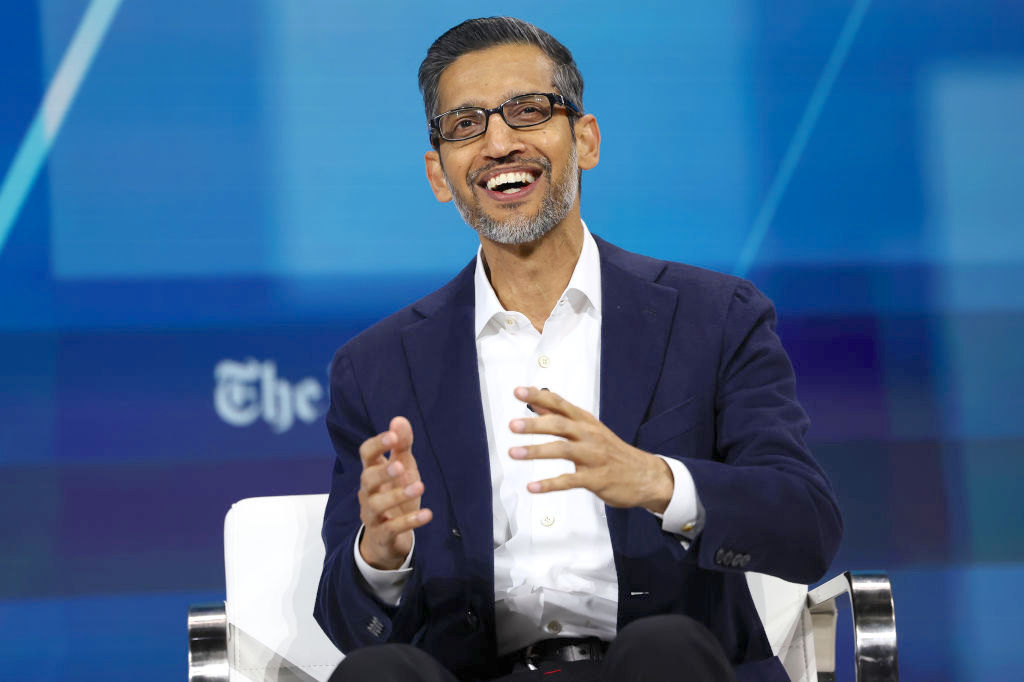
After graduation, the question of what job to pursue is a dilemma for many young people entering society. Sundar Pichai, the CEO of Google, reminds the younger generation that while the first job is important, they should not overly stress about it or see it as the key to determining their entire career success.
Pichai returned to his alma mater, Stanford University, this year and shared in his commencement speech that there are actually few moments in life that truly have a decisive impact, and the first job may not necessarily determine future achievements. Rather than fixating on choosing the right path from the beginning, he advises maintaining an open mindset and exploring one’s possibilities with each endeavor.
He told graduates, “I want to share a little secret with you: while these things may seem very important in the moment, in reality, they do not have as big of an impact on your life as you might imagine. You may have failed a biology exam, skipped class, or never learned to play the tuba. But even so, you are likely to still be standing here today.”
Pichai shared that this is a life lesson he personally experienced. While studying materials science and engineering at Stanford University, he often obsessively focused on academic performance and career prospects, anxiously trying to plan the direction of his future. However, an unexpected trip to Las Vegas changed his perspective on life.
He recalled that a classmate convinced him to skip class and drive to Las Vegas. For him, who had never skipped class before, this decision was quite out of character. However, during the journey, he saw snow for the first time and learned to play Blackjack.
“I realized for the first time that as long as you relax a little, the sky won’t fall down. Life does have some important decisions that must be made thoughtfully, such as choosing a life partner, deciding whether to start a family, or making a major career change. However, besides these, the truly key moments that determine success or failure in life are ‘few and far between’.”
He emphasized the importance of distinguishing between what is urgent and what is important, stating, “If you can discern the truly important information amid the chaos, you can make appropriate adjustments during these key moments and steer your life in the direction you desire.”
Pichai is not the only corporate leader encouraging young people to let go of rigid career plans and face setbacks with resilience. Amazon CEO Andy Jassy also advised new professionals to start from the grassroots and not solely focus on rapid advancement, as success often comes not without obstacles but through gradual accumulation after experiencing setbacks and challenges.
On the “Power of Advice” podcast by Capital Group, Jassy said, “If you are not willing to start from the bottom, put in the effort and pay the price, it’s difficult to achieve success. You must be willing to start from the most basic level of work and, within reason, accept tasks assigned by others.”
He pointed out that setbacks are inevitable in one’s career, and only by maintaining curiosity, continuous learning, and adaptability to change can one keep growing. He said, “You need to continuously absorb new knowledge and keep learning like a machine.”
Jamie Dimon, CEO of JPMorgan Chase, also shared a similar viewpoint, but his advice to young people is more straightforward and his tone is more assertive. Speaking at an economic forum, he said, “Every job requires hard work and silent dedication. Accept this reality.”
Dimon also warned against job-hopping just to avoid friction or conflict, stating, “Don’t change jobs at the drop of a hat. Some people are always thinking about whether to switch jobs, making a mess of their own lives, when they should actually learn to enjoy what they are currently doing.”
This article references a report from Fortune magazine.